CHAPTER 1 Where the King & Queen Play, Windsor Castle
Kathie and I had the pleasure of visiting Sicily for 19 days in May-June of 2025. The following is our account divided into chapters. There is someone that may enjoy our stories and actually have the will to visit Sicily someday.
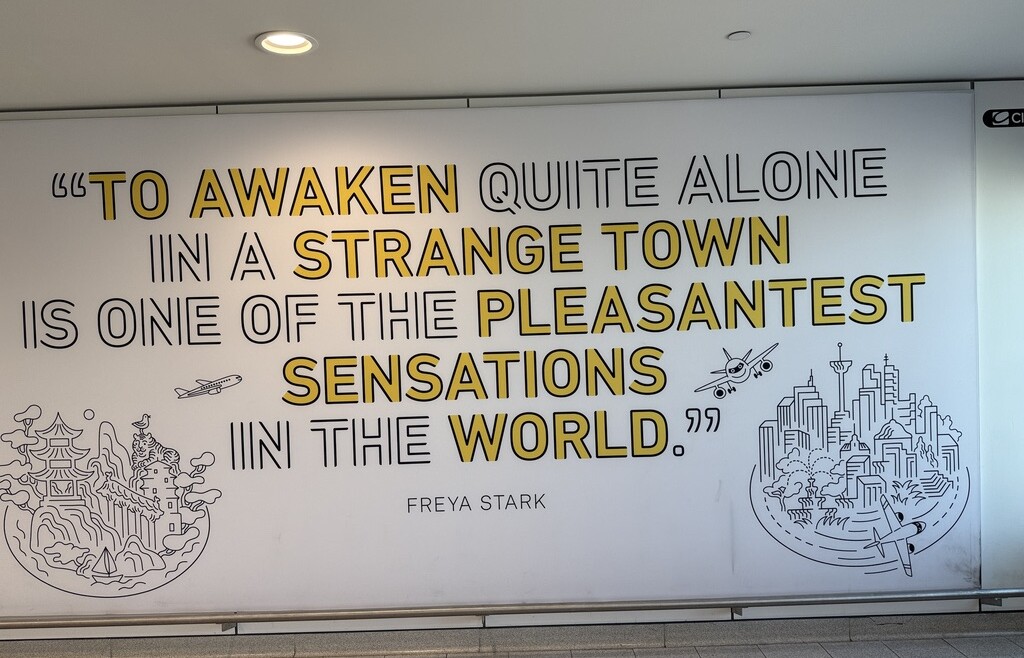
We start most of our journeys from West Palm Beach (PBI). Kathie does not like long flights and thus we break up the flights into smaller segments. She does not like the “small” bathrooms in planes either. We usually take off from the USA to Europe at JFK. The quote we found on a JFK marque is apropos for travelers:
Once again, I stayed up most of the night on the plane. For some reason, I have a difficult time getting to sleep on a flight. And I refuse to take a sleeping pill. We collect airmiles during the year. Both Kathie and I find flying First Class is a waste of airmiles. Although flying premium with 2 seats together is fine for us and a whole lot less miles. We have found ex-teachers to be cautious on where every dollar is spent. In essence, we live below our means to travel better and more.
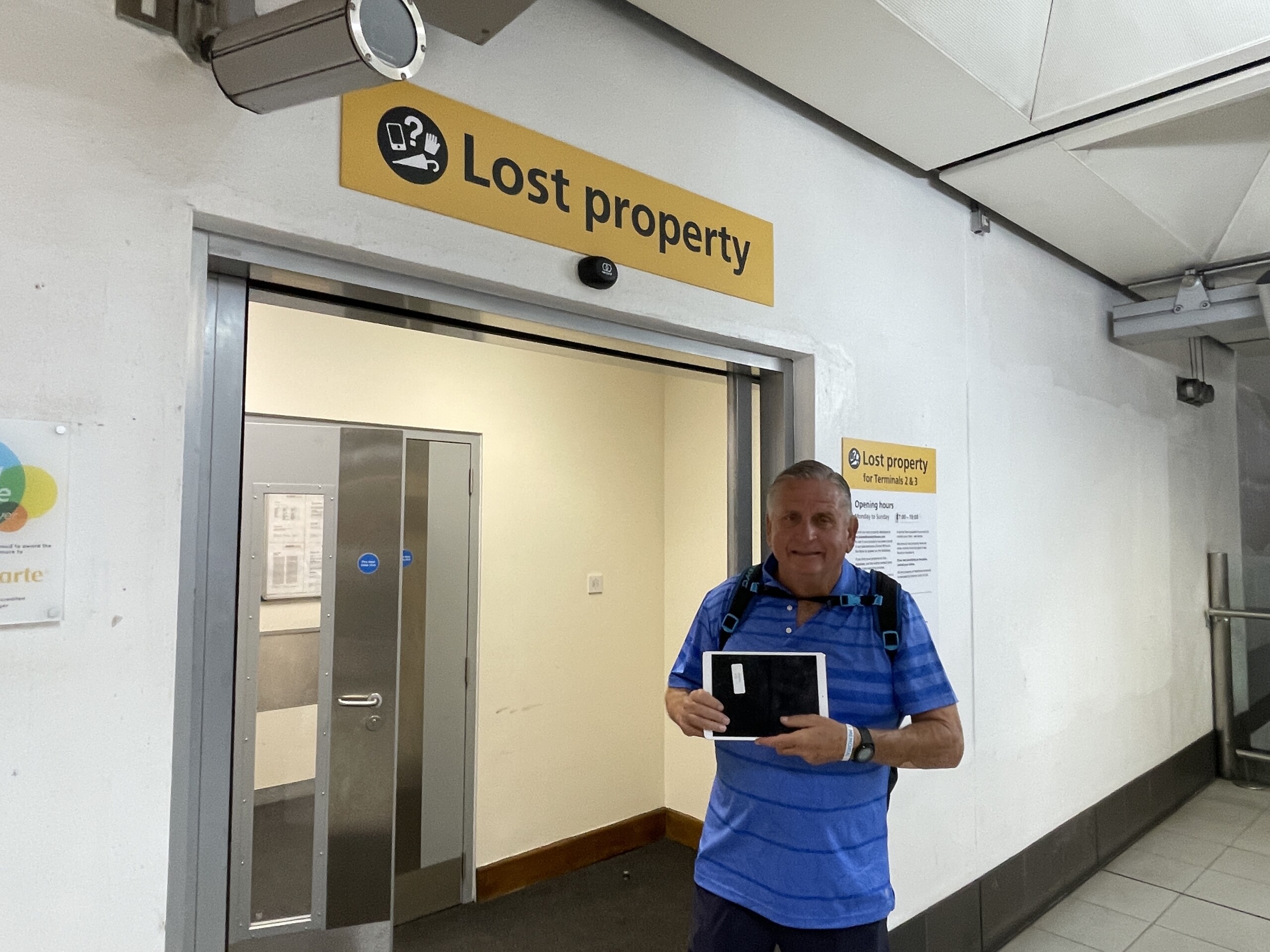
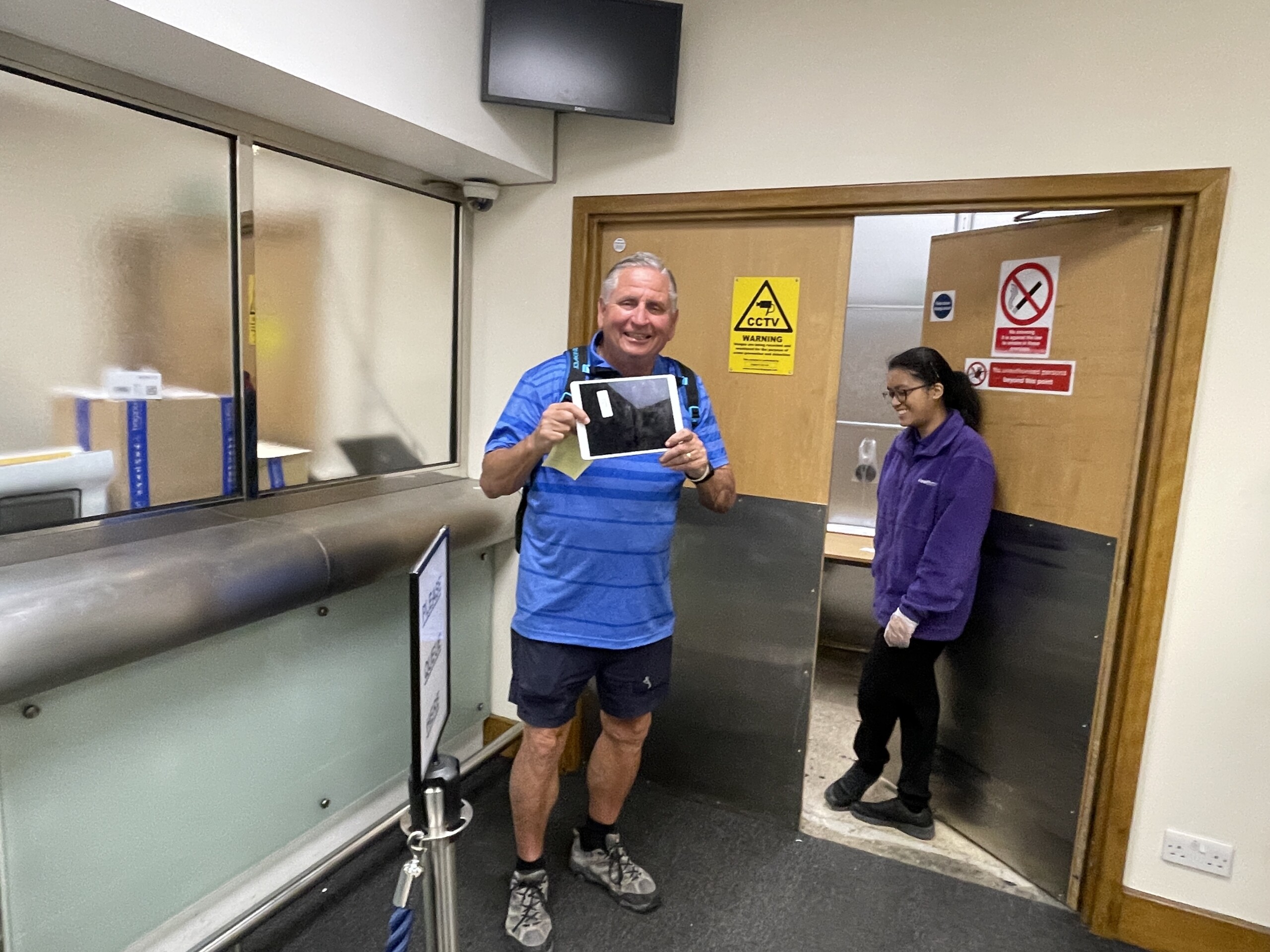
Unlike 2024, I did not leave my I-pad on the plane this time. There is an entire office at Terminal 3 at Heathrow airport dedicated to the “Lost and Found.” You will be surprised how many people leave their possessions on planes and at airports. For a nominal fee of $25 dollars, I was able to retrieve my prized possession.
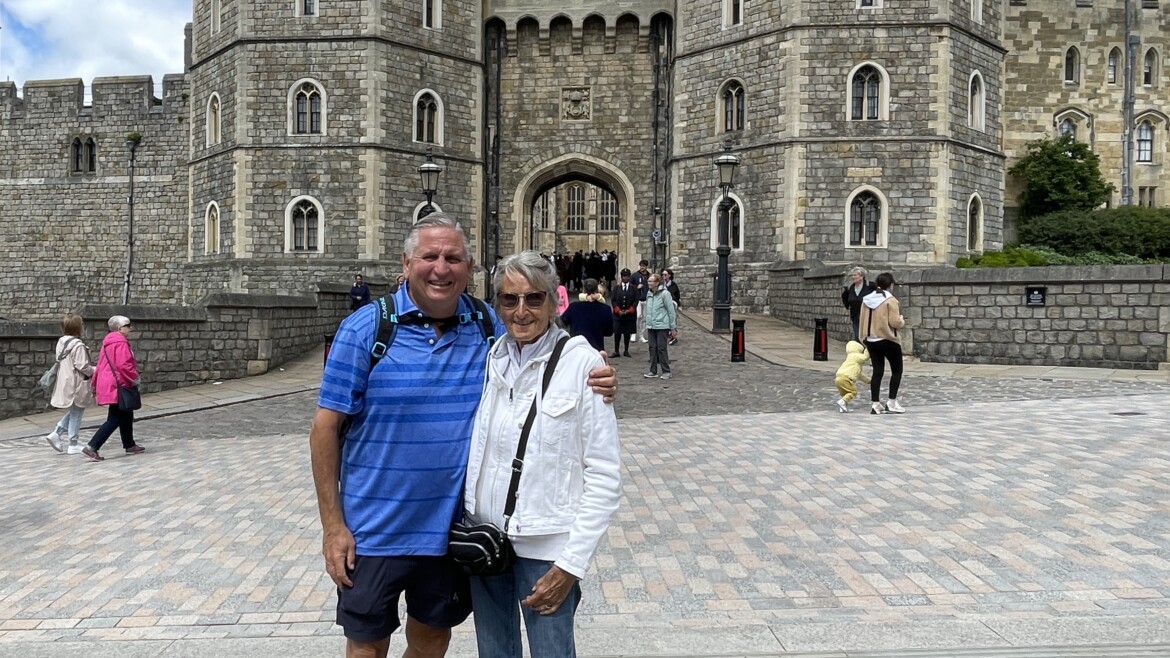
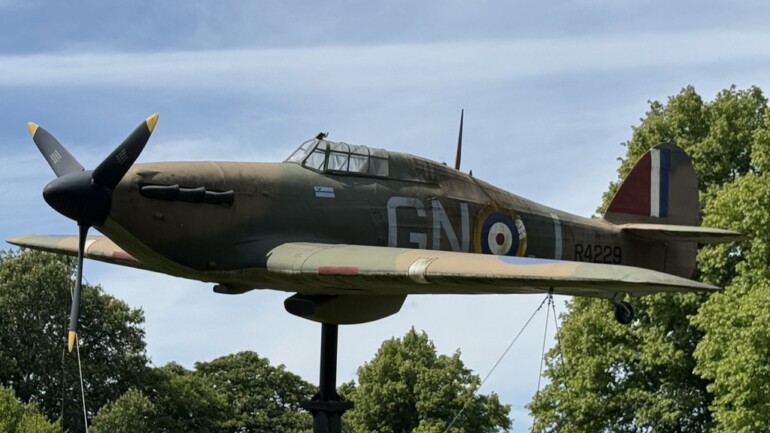
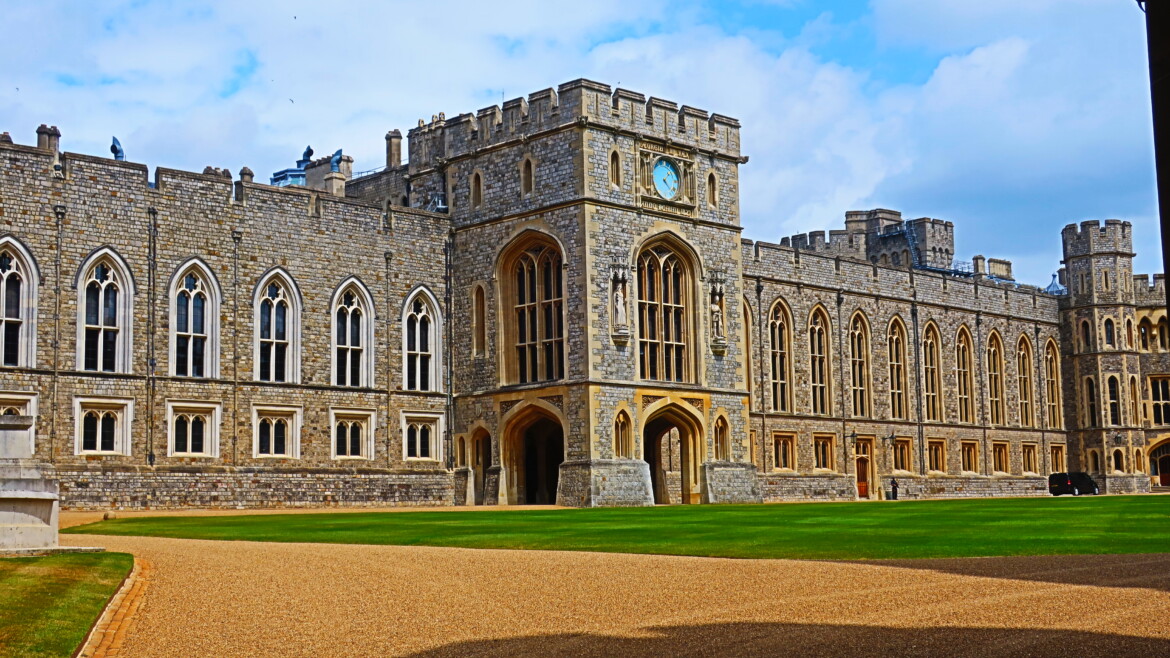
We usually take our time skipping around in Europe. This year we decided to spend 3 days in the village of Windsor, about 45 minutes west of Heathrow Airport—and 20 miles from London. We had visited Windsor for half a day in 2024 and thought it was a worthwhile place to revisit. I think seeing the WWII “Hurricane” plane enticed us to come back.
We had purchased tickets into the 11th century Windsor Castle months before. Waiting in line at Queen Mary’s miniature Doll house, a clerk pointed out that we had purchased season tickets. The woman advised us to come back before Christmas and see the Castle all decked out in Holiday display. Kathie is not one for being cold, or being in the rain though. Windsor is the oldest inhabited castle in the world.
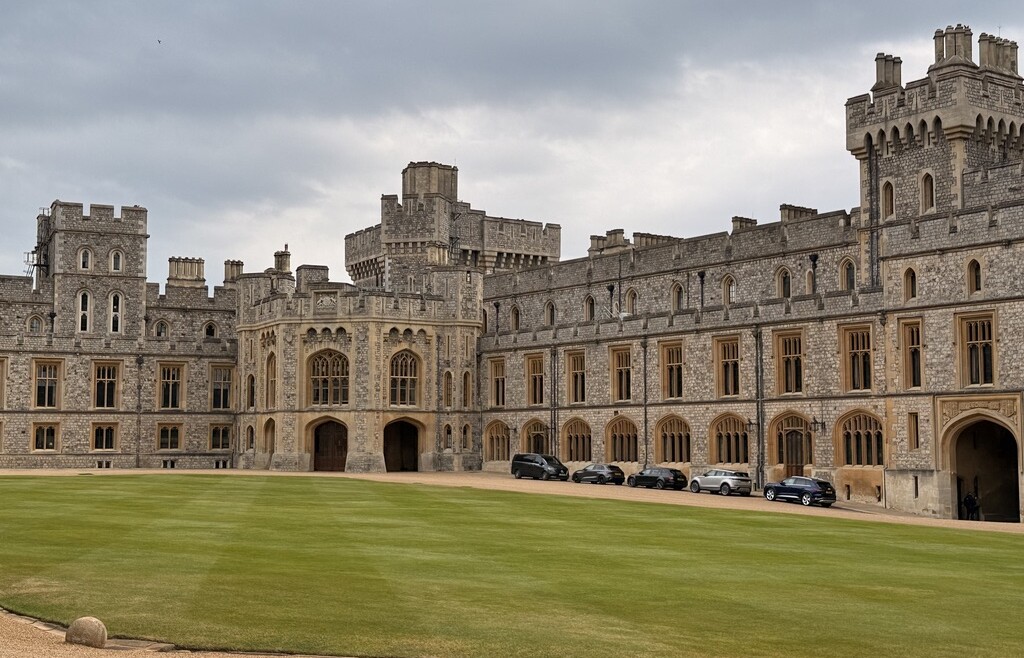
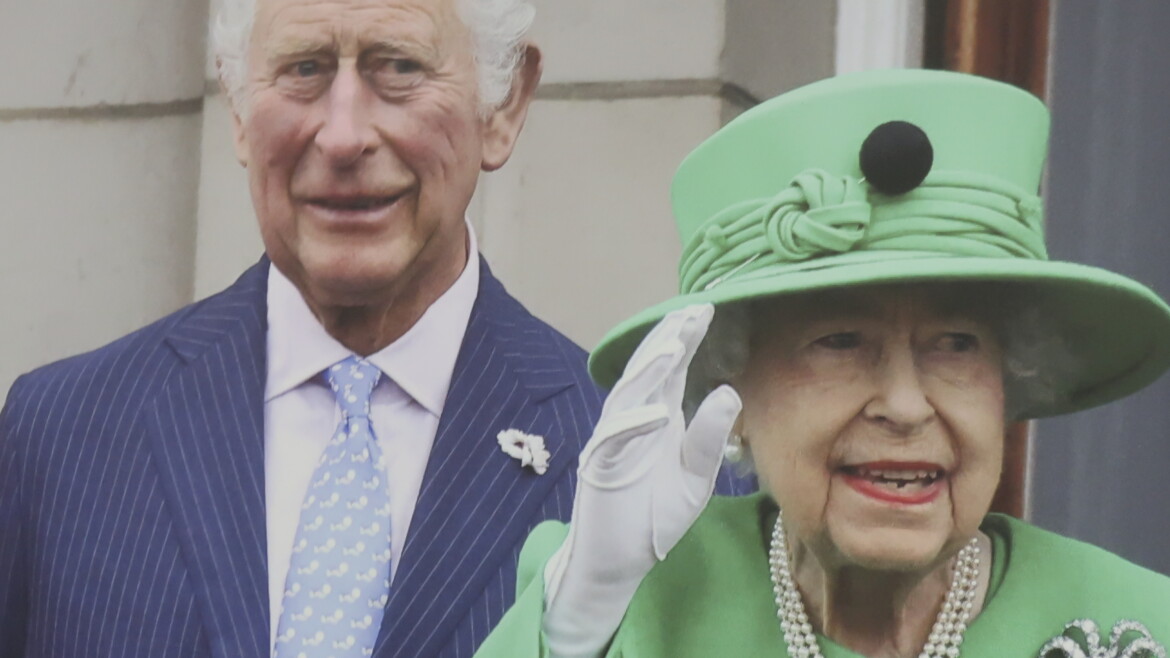
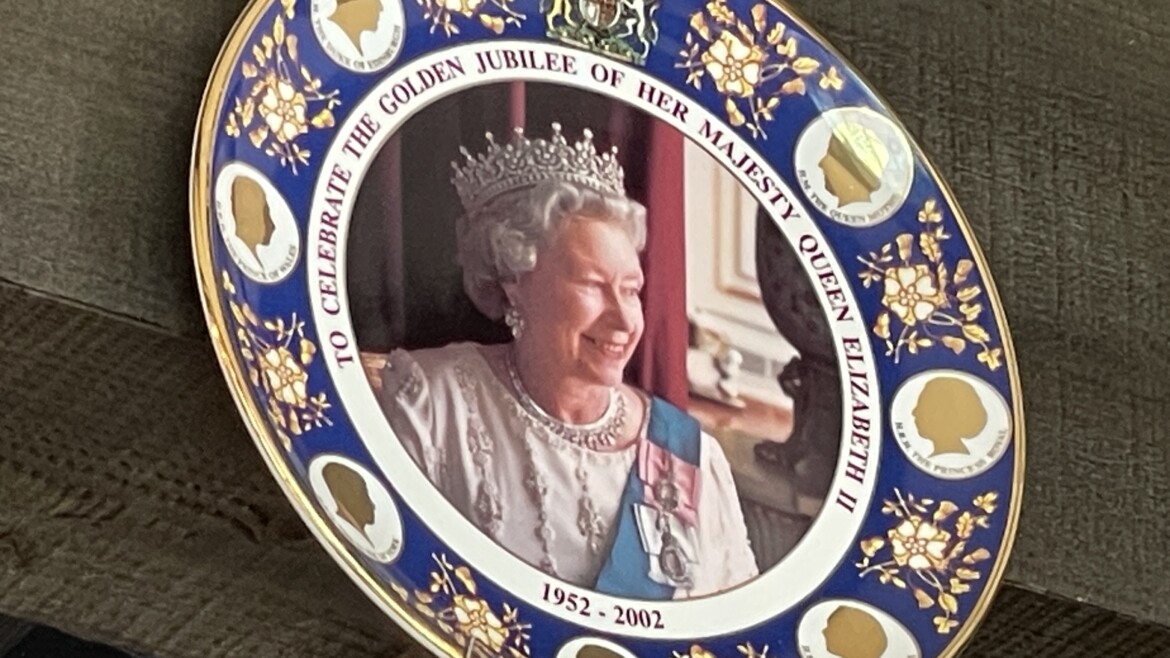
On September 8th, 2022 Queen Elizabeth passed away. She was Queen for 70 years–for most of our lives. We saw where she is buried. Unfortunately, no pictures are allowed, and for that matter the entire inside castle is off-limits for pictures.
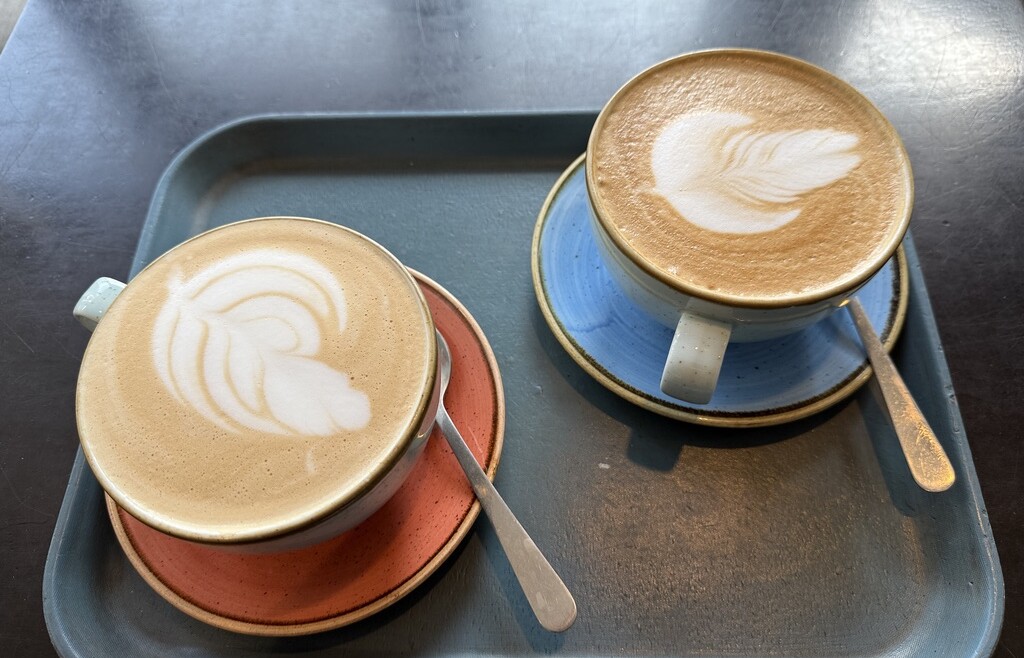
In our 3 days we saw the marching parade twice. Once from the coffee shop next to our hotel. We became acquainted on how good “Café Latte’s” are.
Royal Guards march from their barracks to the castle and back.
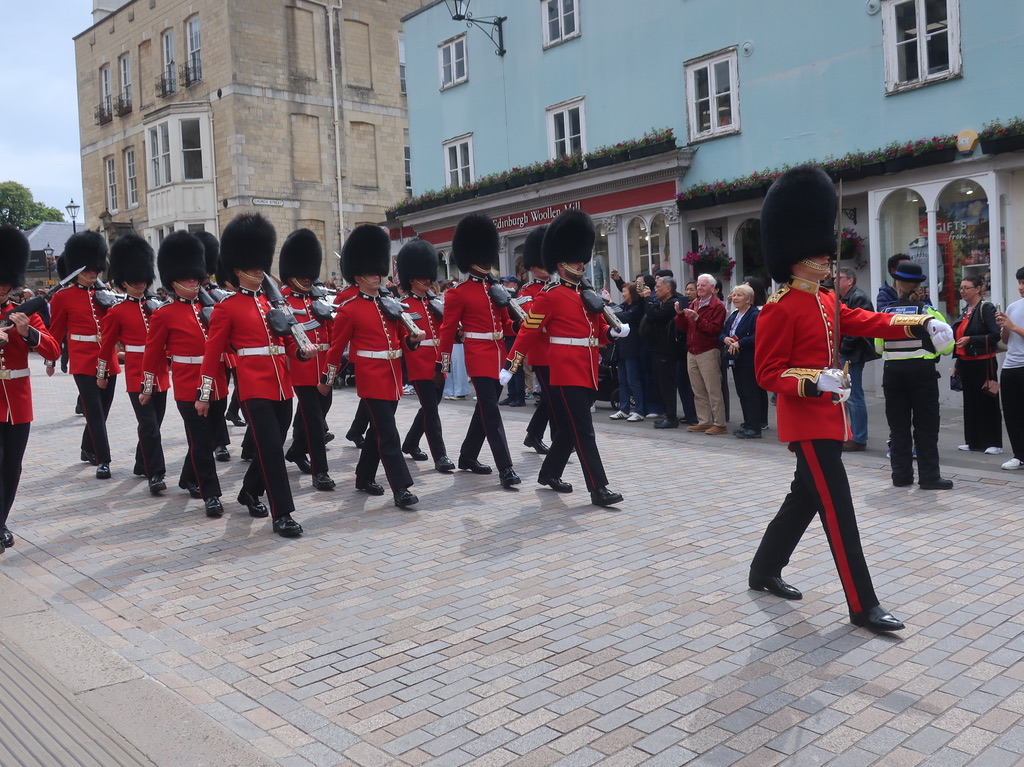
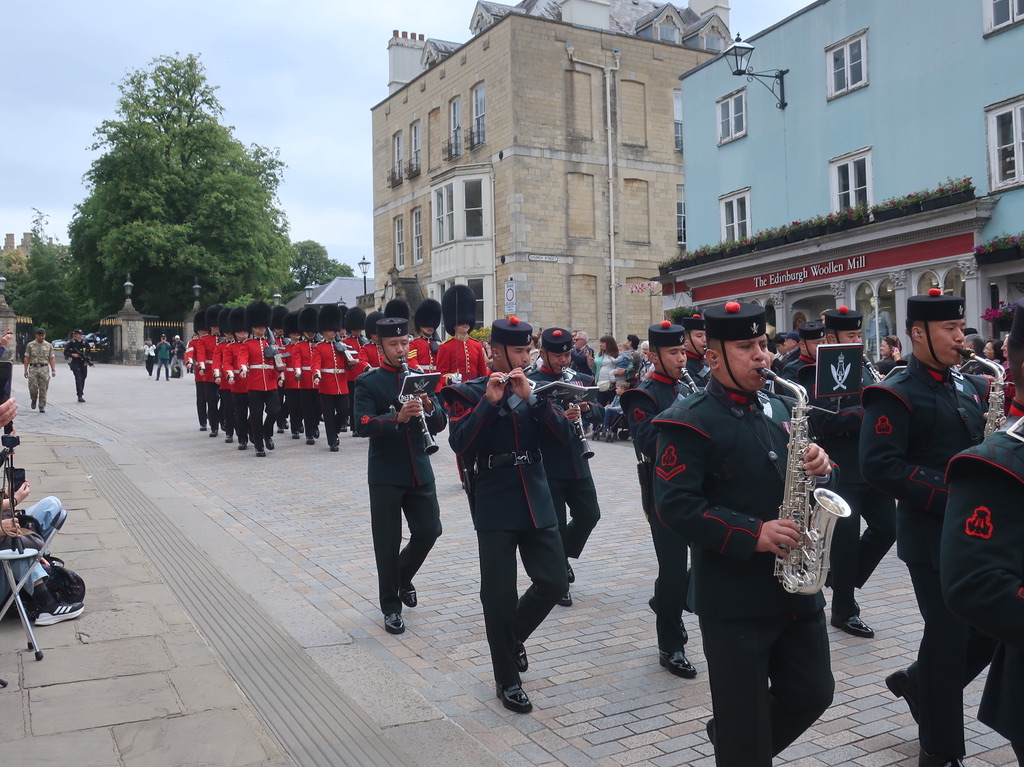
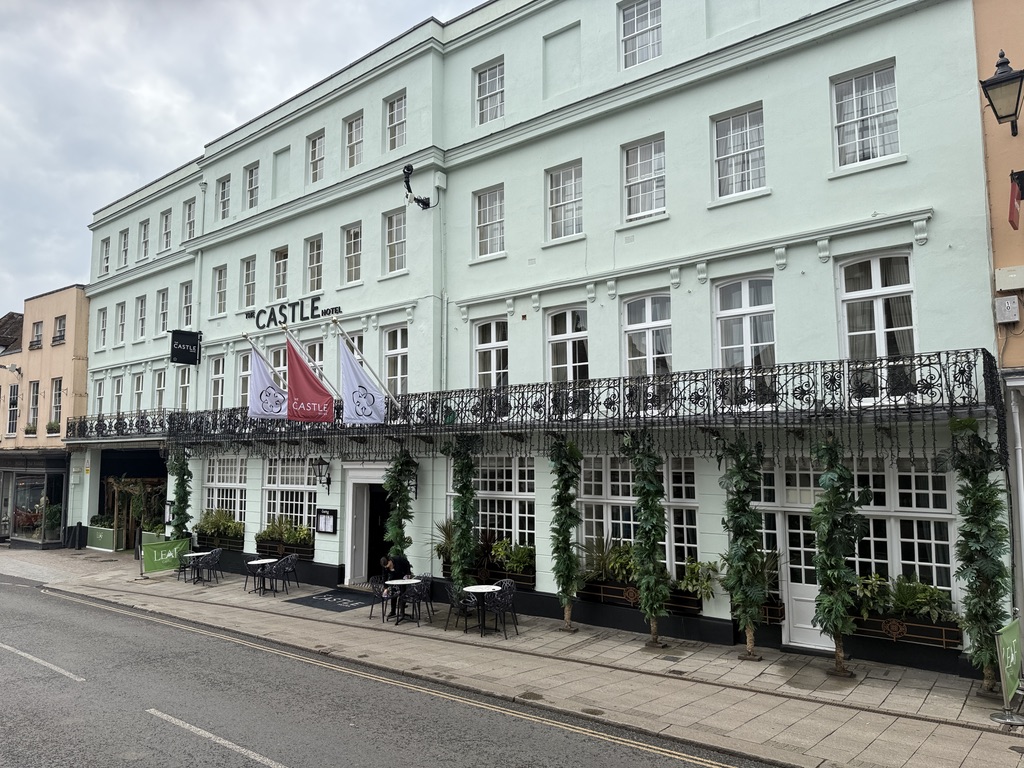
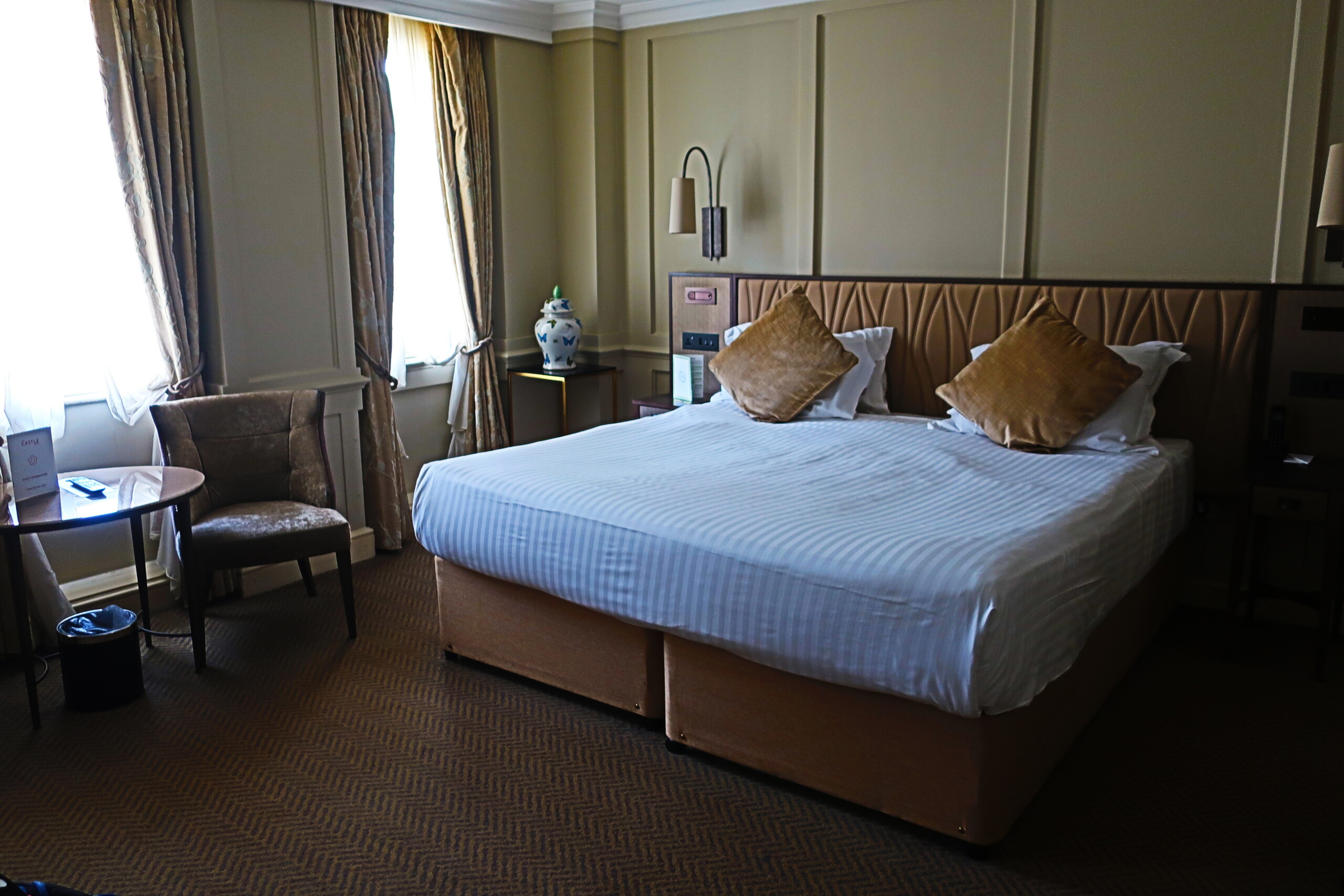
Our Castle Hotel was the perfect spot to watch them marching.
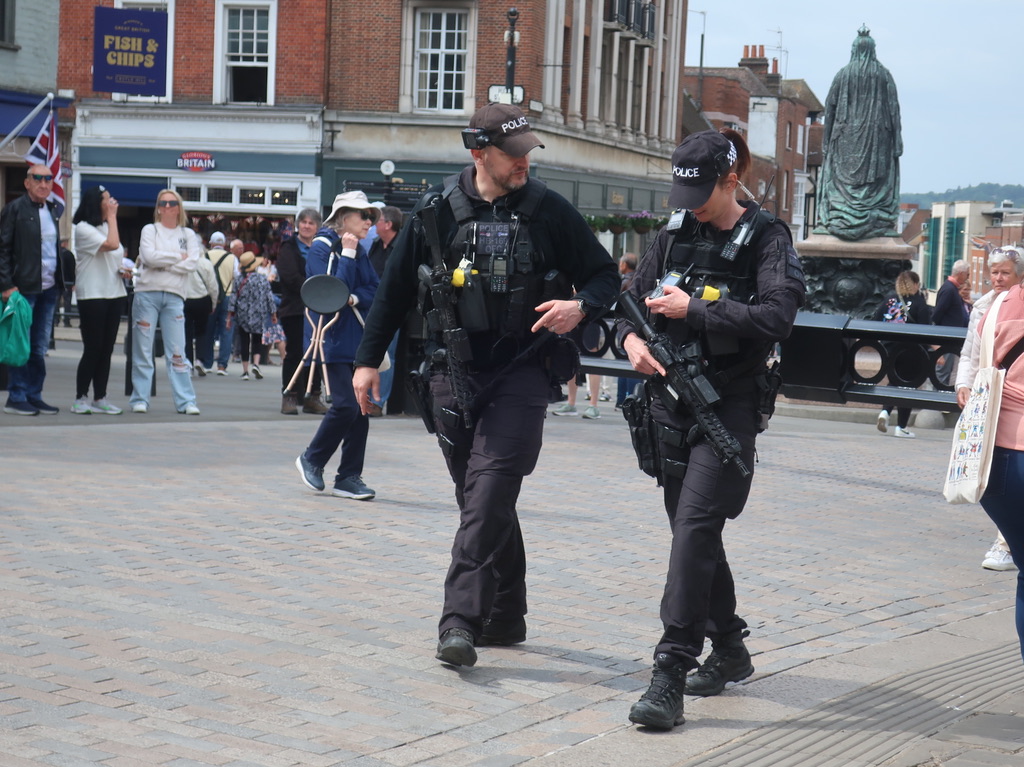
Along the street are policemen well-armed to protect against any ill-will bystanders or even terrorists.
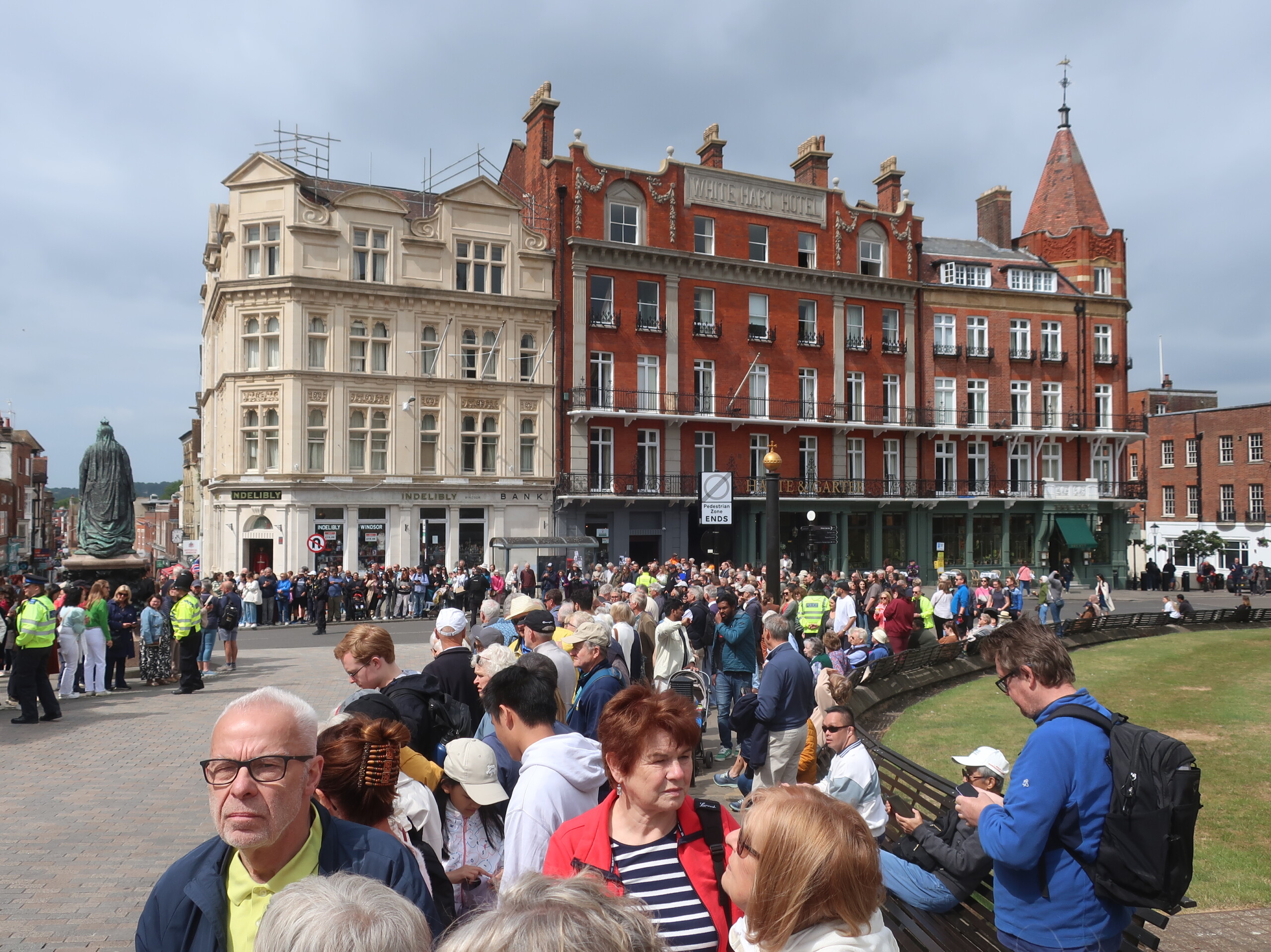
Literally thousands of people come to see the Windsor parade. On our second viewing we snagged a spot on a long bench by the castle.
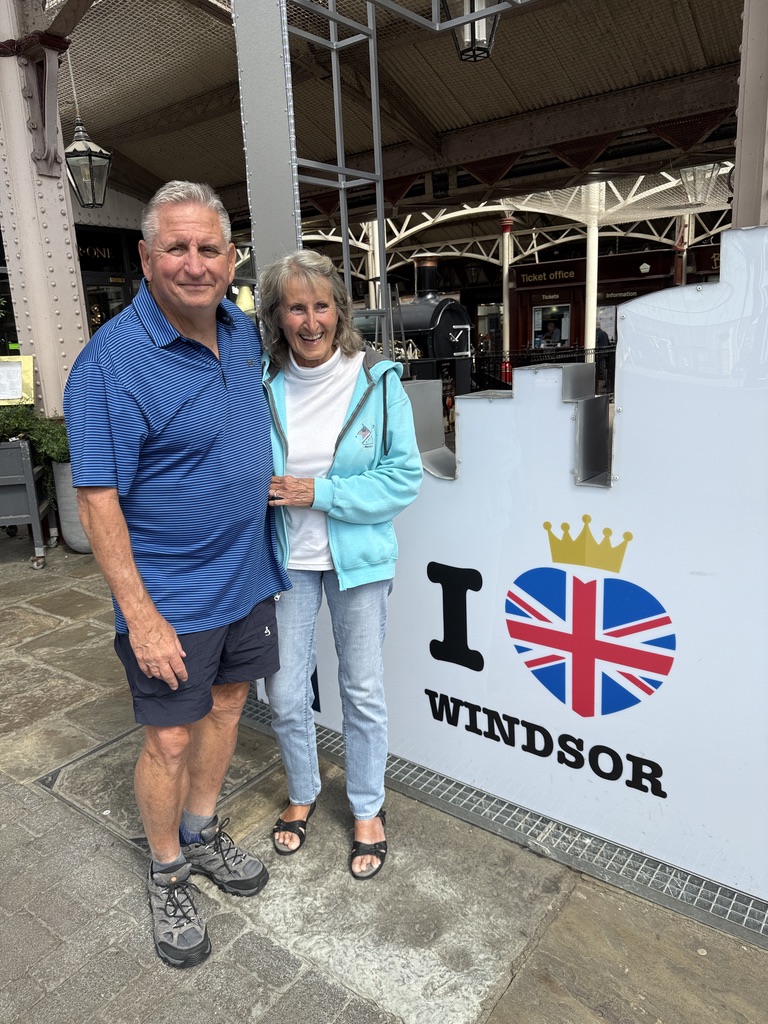
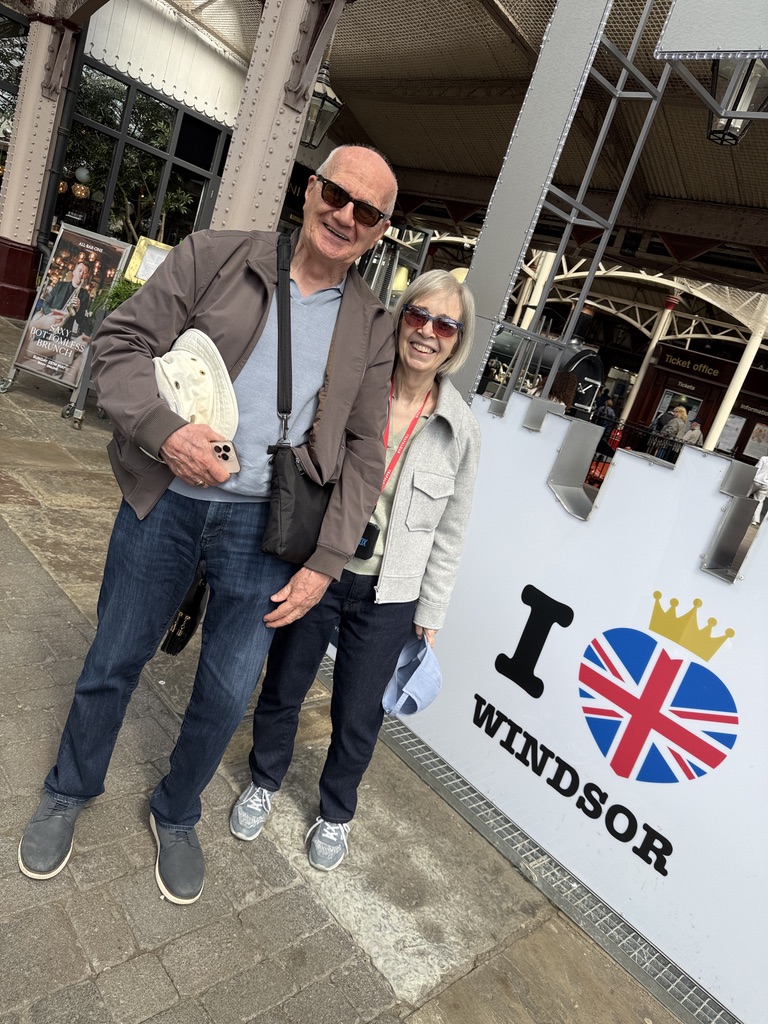
As we were sipping our coffee, we met a couple on a tour from Michigan. Some comment was made and there we were talking to them for 20 minutes. Some friends are made for a moments time; some are close for a year or two; and some friends are made for a life time. We exchanged pictures as it was indeed a splendid English day in Windsor.
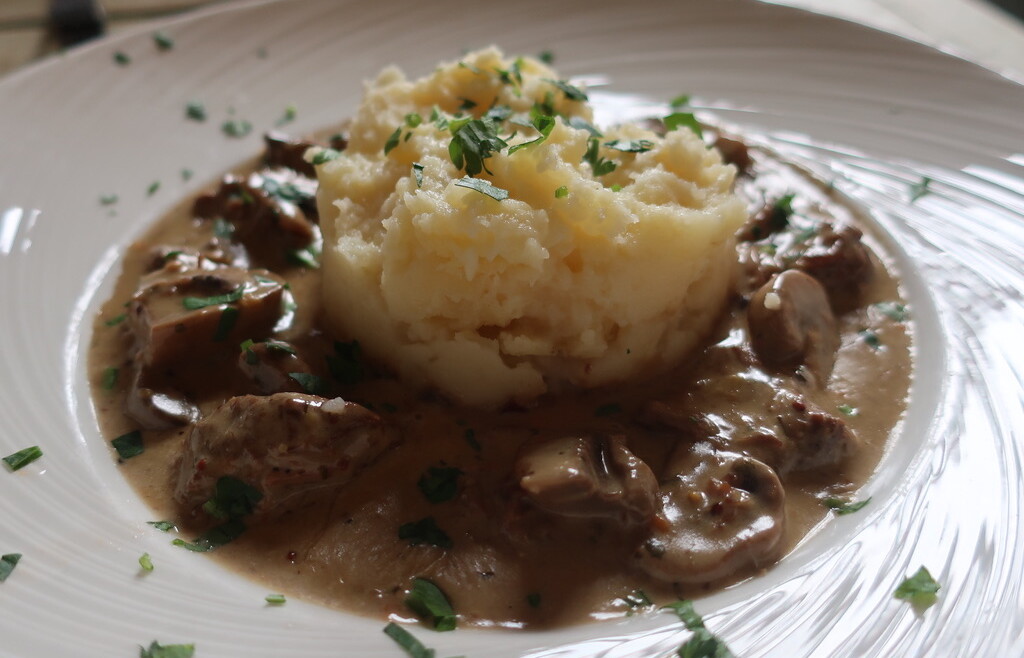
We did have a superb Beef Stroganoff at the Clarence Brasserie & Tea Room. The year before they had sold out of this dish. I remembered the disappointment. This Stroganoff is made with mashed potatoes and not pasta.
Close by was the Village of Eton, famous for its schools. We enjoyed an afternoon stroll across the river Thames.
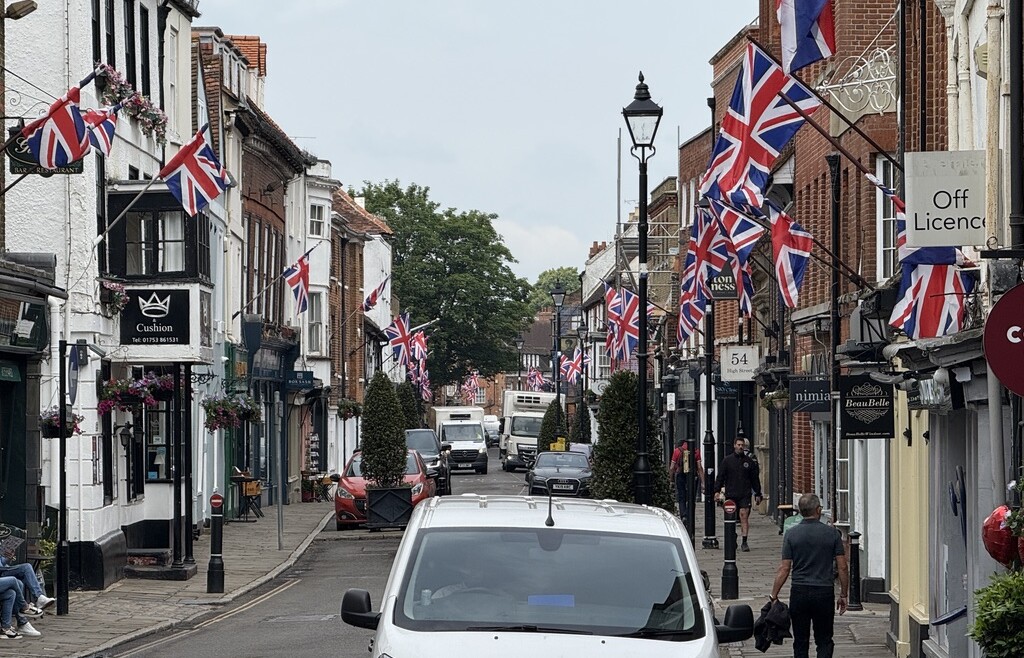
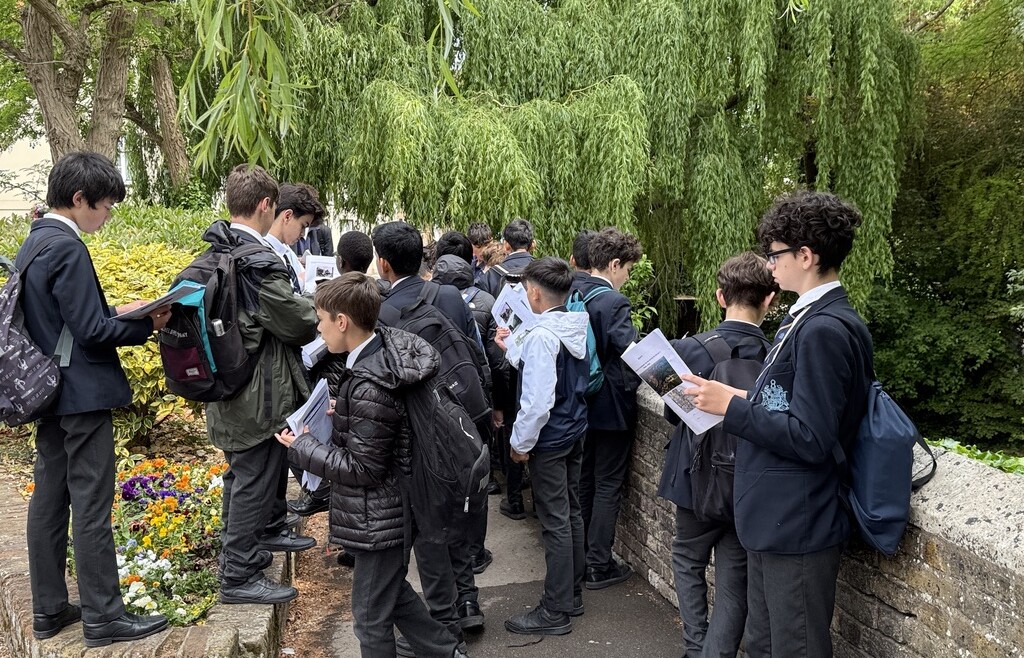
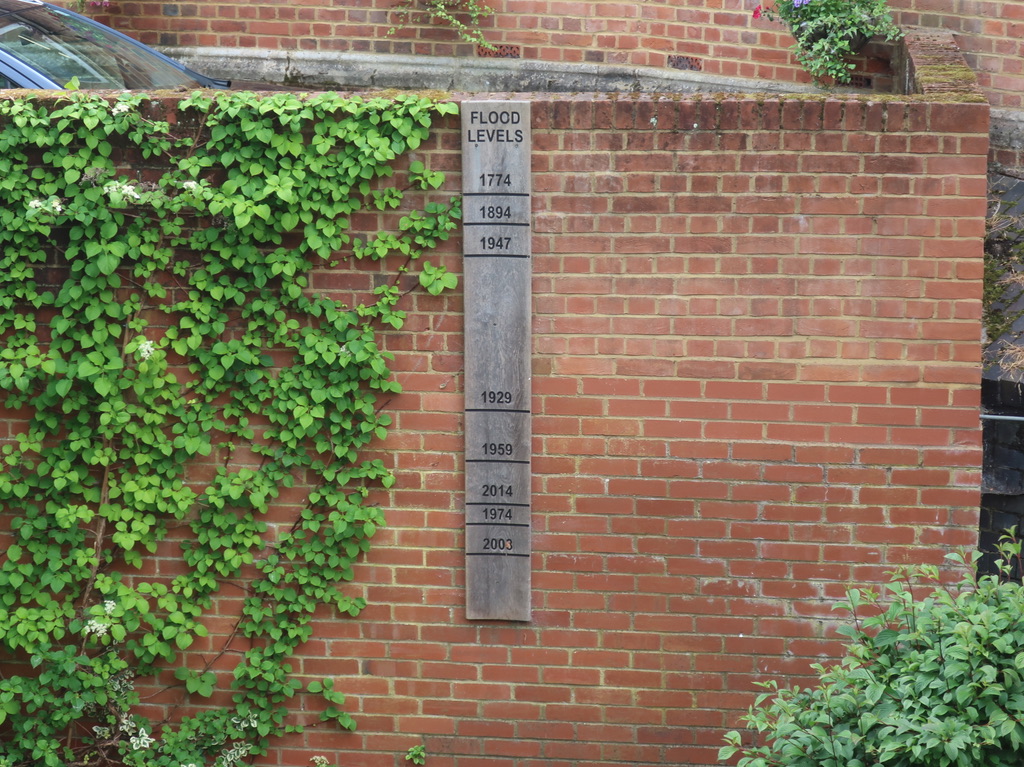
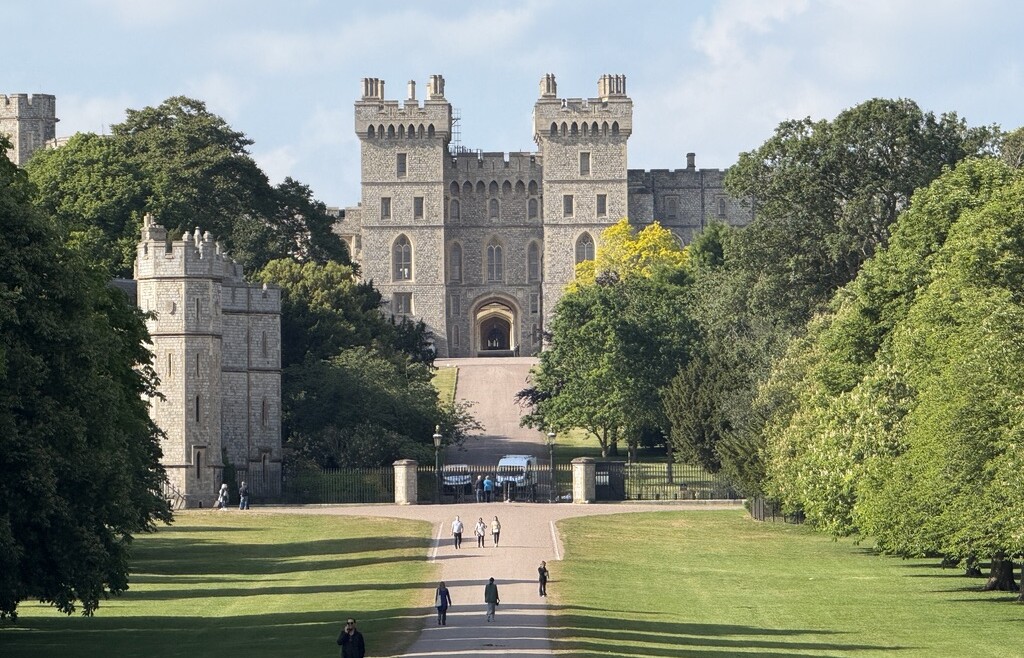
On our wanderings of Windsor, we came upon “The Long Walk Road” or also known as the “Queens Walk.” 5000 acres south of the town is dedicated to the Royal Park. Most people come here just to walk. Little do these people know that over 1,000 species of fungi live in the area.
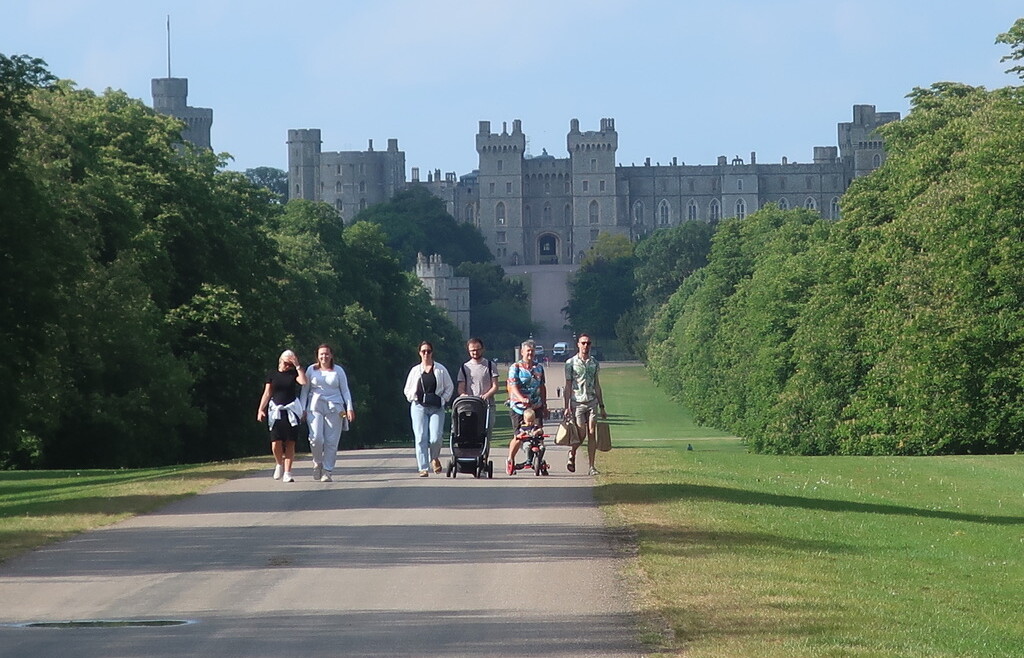
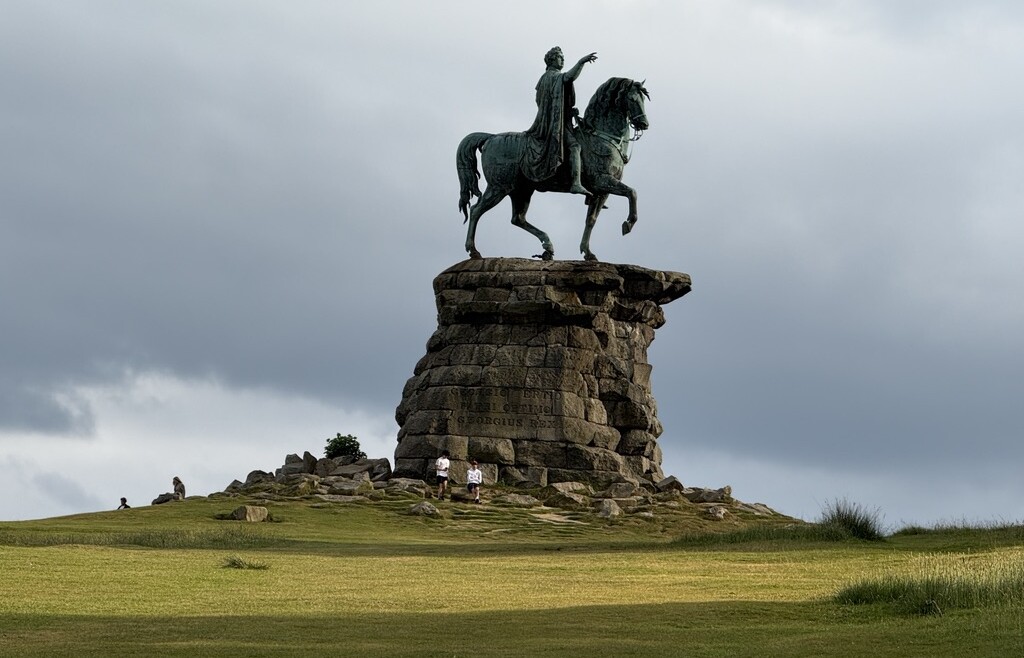
Queen Anne had a road built in 1710 for her coaches to travel upon. In the distance one could see a large statue. Who could that be?
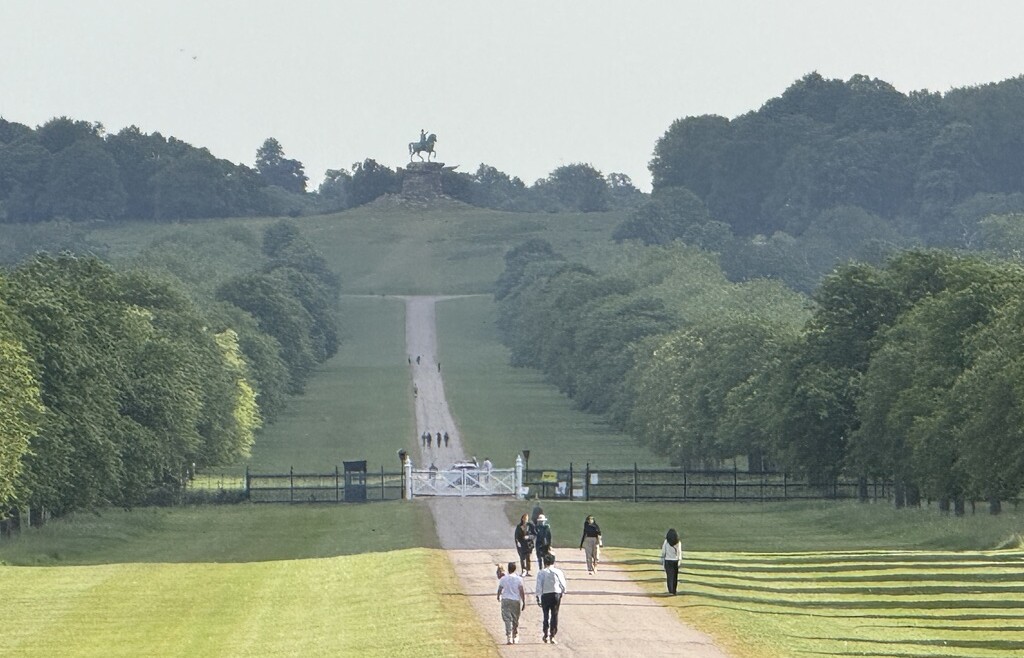
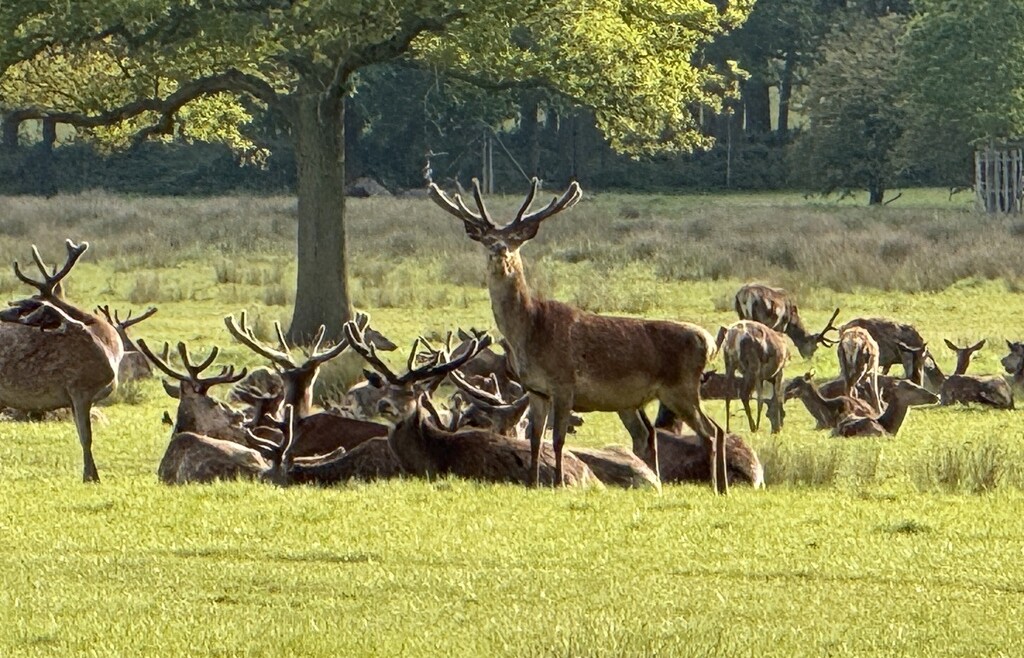
Kathie allowed me to go on my own to explore the mystery. Along the walk, I came upon the famous herd of “Red Deer.” The deer were hunted for nearly a thousand years. Conservation helped to preserve the numbers.
A man on the horse, a statue of King George III, known as “The Mad King” is at the end of walking 3 miles (and 3 miles back!). At the statue, I had a conversation with 2 teenage boys: Markus and Ryan. They lived in the town of Windsor and did a weekly walk together. I asked them who was on the horse? They said it was a Prince. I told them the story of King George III who basically helped create the United States. They did not go to the private school of Eton, but enjoyed their public school nevertheless.
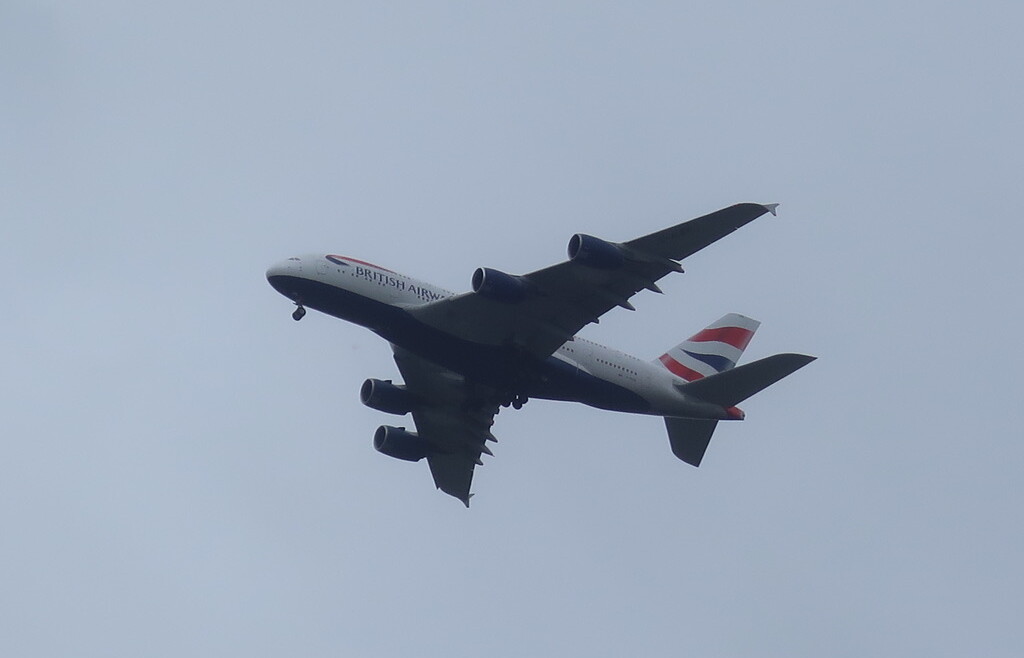
I asked them, “What did they not like about Windsor?” Both of the them agreed the noise pollution from the plans that keep flying into and out of Heathrow 9 miles away is a major nuisance. I wholeheartedly agree. I guess there isn’t much that the King and Queen of England can do about it.
CHAPTER 2 PALERMO, Sicily, “Kingdom of the Sun”
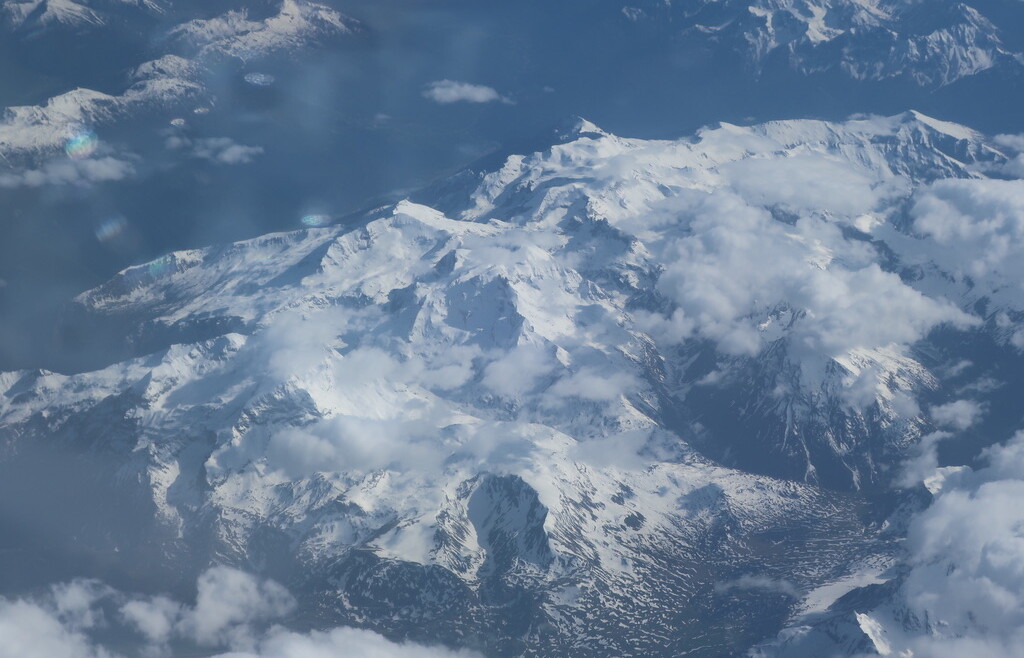
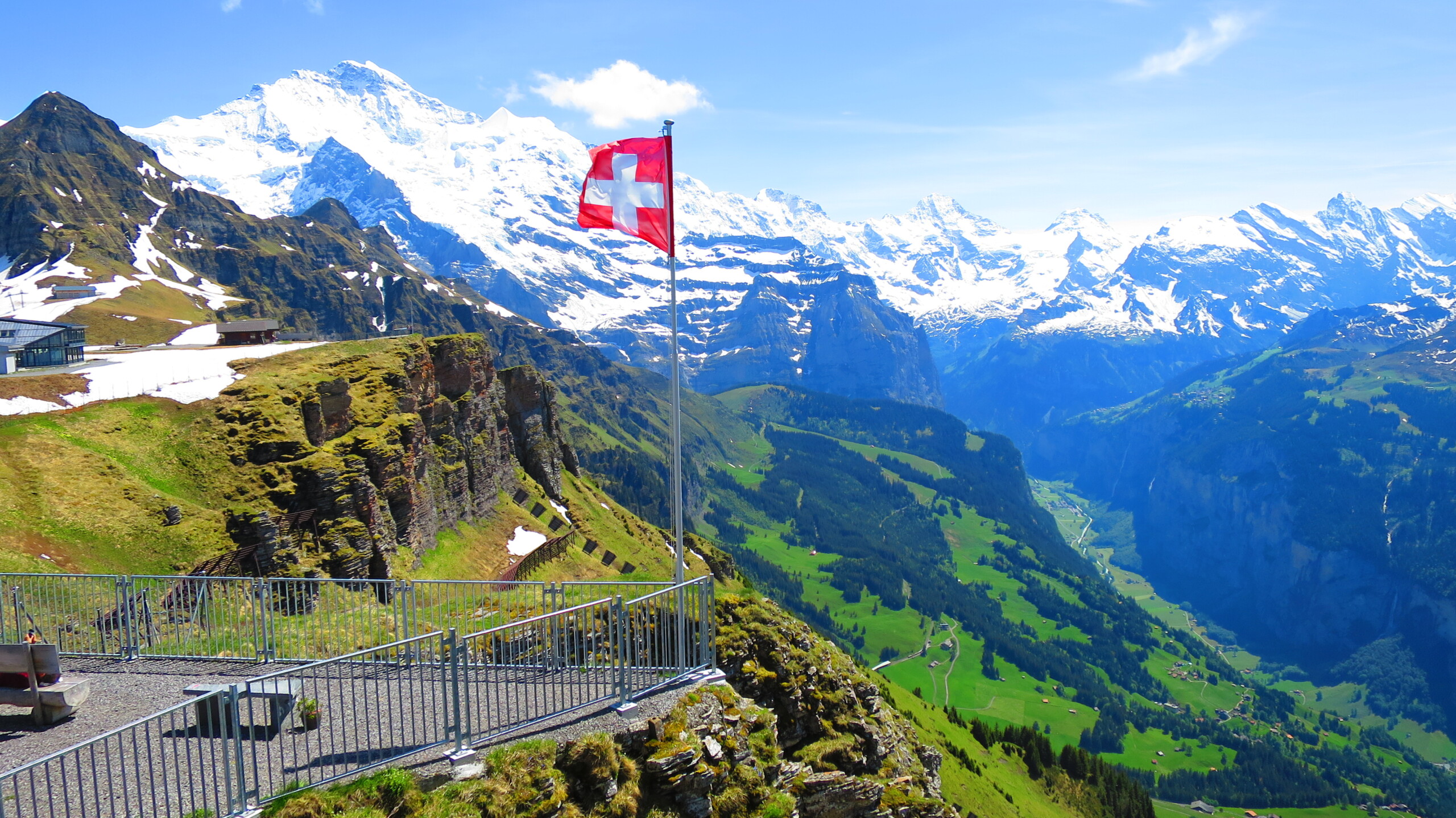
We love flying over the Swiss Alps on a clear day. In May there are snowcapped mountains still visible.
In 2016 we stayed in the valley of Lauterbrunnen. On our last day we caught the weather just right for a spectacular Swiss vista.
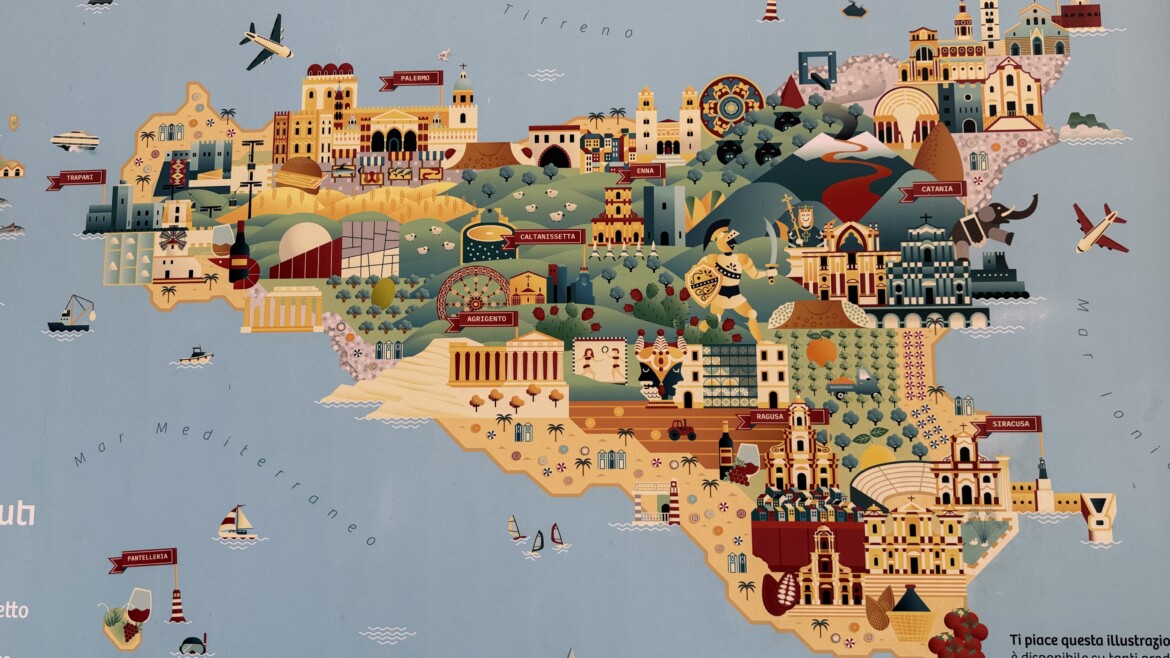
The island of Sicily sits at the bottom of the “boot” of Italy. It is like a soccer ball ready to be kicked. An island with over 5 million people. A history filled with many different nationalities—Phoenicians, Greeks, Romans, Normans and even the USA have left their mark in one way or another. Some of the best Greek ruins are on this island. A geography that is varied from one end to another. An active volcano, Mt. Etna, that is relatively young, dominates the scene.
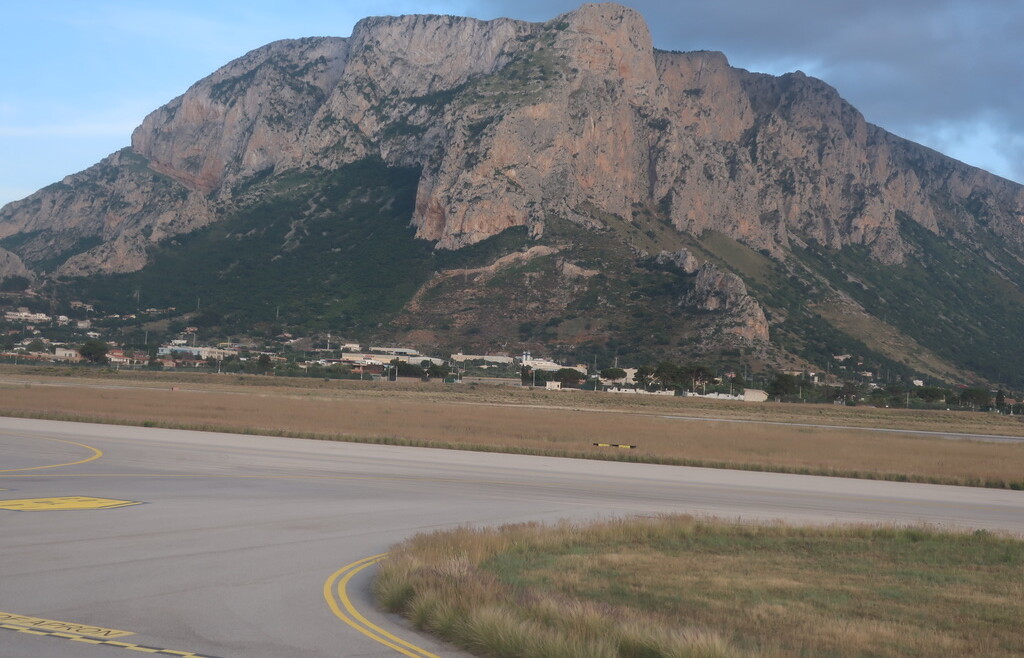
One can’t help but to notice the huge mountain next to the Palermo airport, Monte Pecoraro. It is nearly 5,000 feet. High.
We found a reasonable priced van to take us 20 miles to our city center hotel Alma.
We used the internet to book our hotels, buy tickets and travel on our time. We found long ago that organized tours are usually regimented. Bus times are set; how long you can stay in one place in some cases, what you have to eat is already planned. We usually use as many resources as possible to learn about an area. In this case, Rick Steves book on Sicily became a major read.
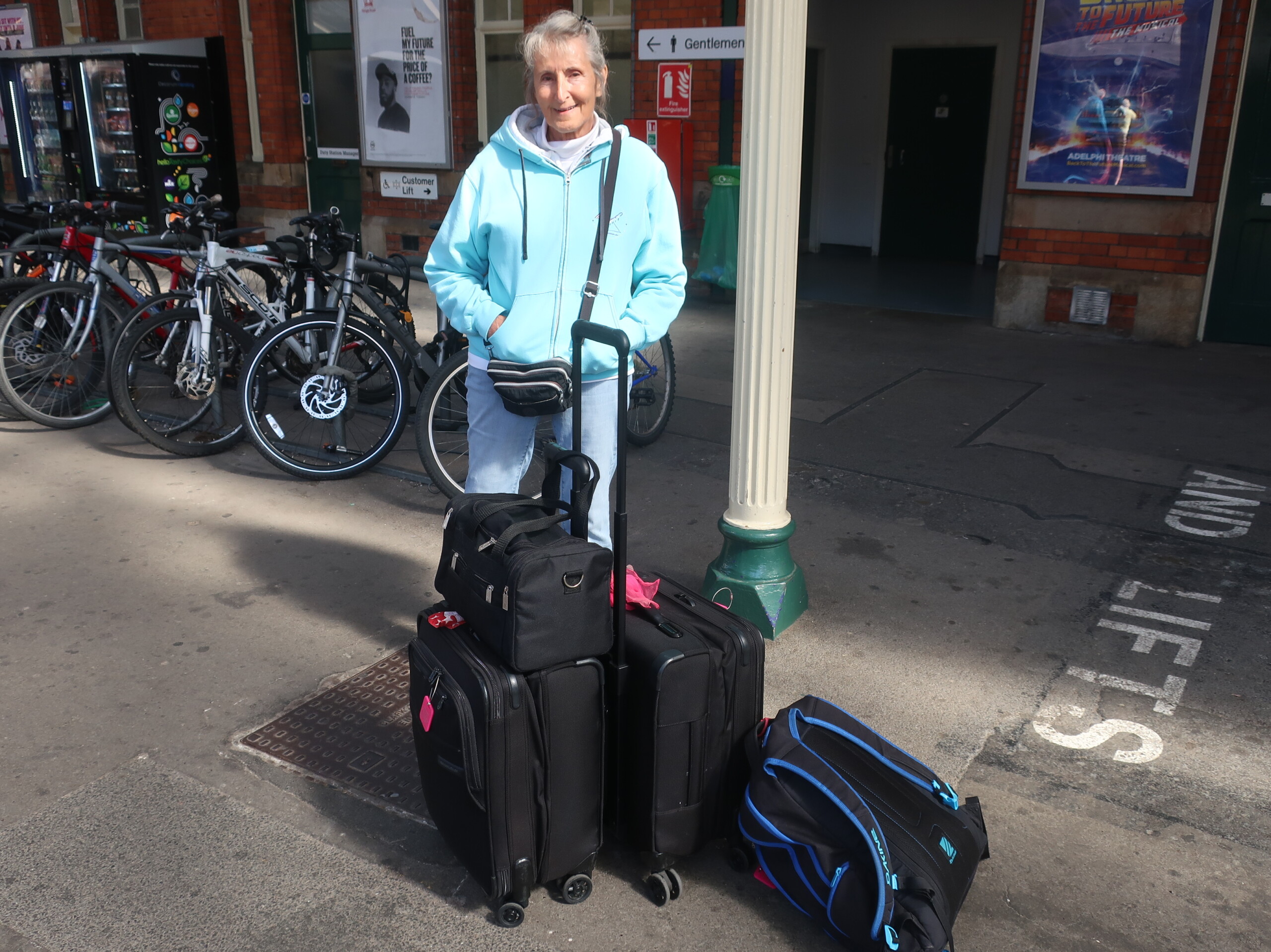
We also carry several credit cards and have some cash. Making sure the passport is up to date is a must. And these days countries are requiring visas. The most important advice to is travel light. We carry a back-pack, a small duffle bag and two 18-inch suit-cases. In Paris in 2008 we had four large suit-cases. A French taxi driver refused to take us. We learned our lesson.
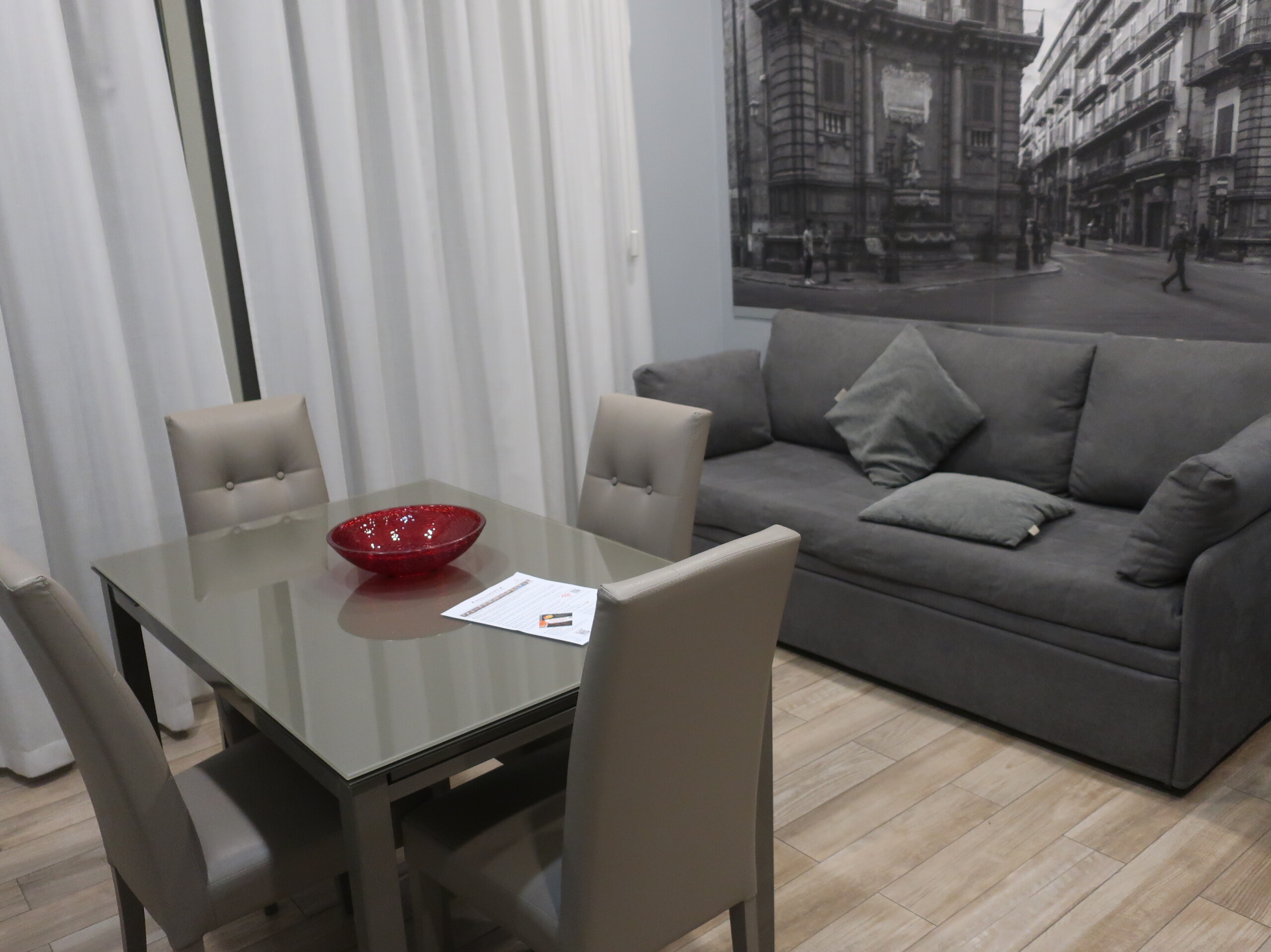
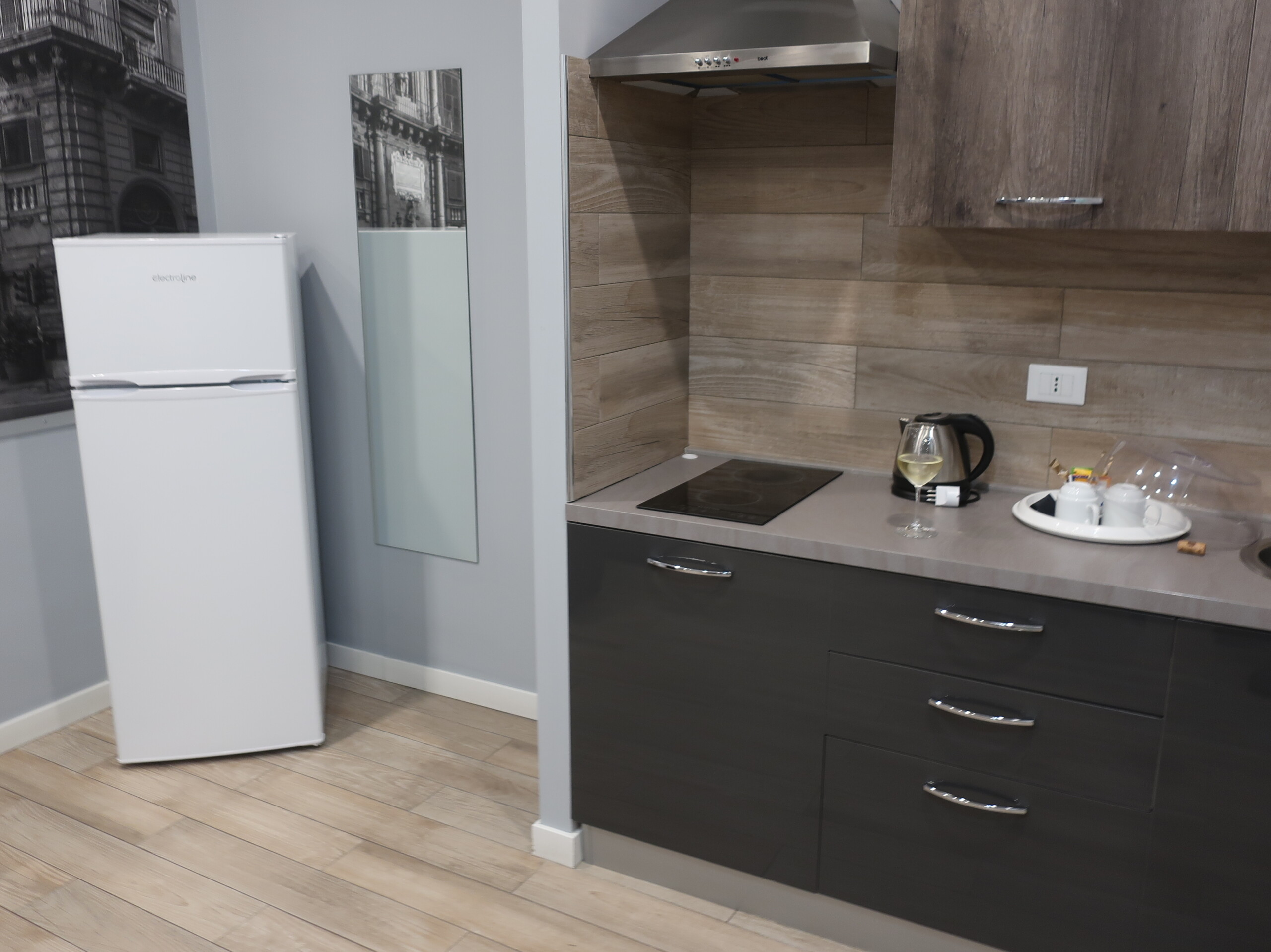
Our Alma room was large for European standards. This budget style hotel was operated by informative young attendants.
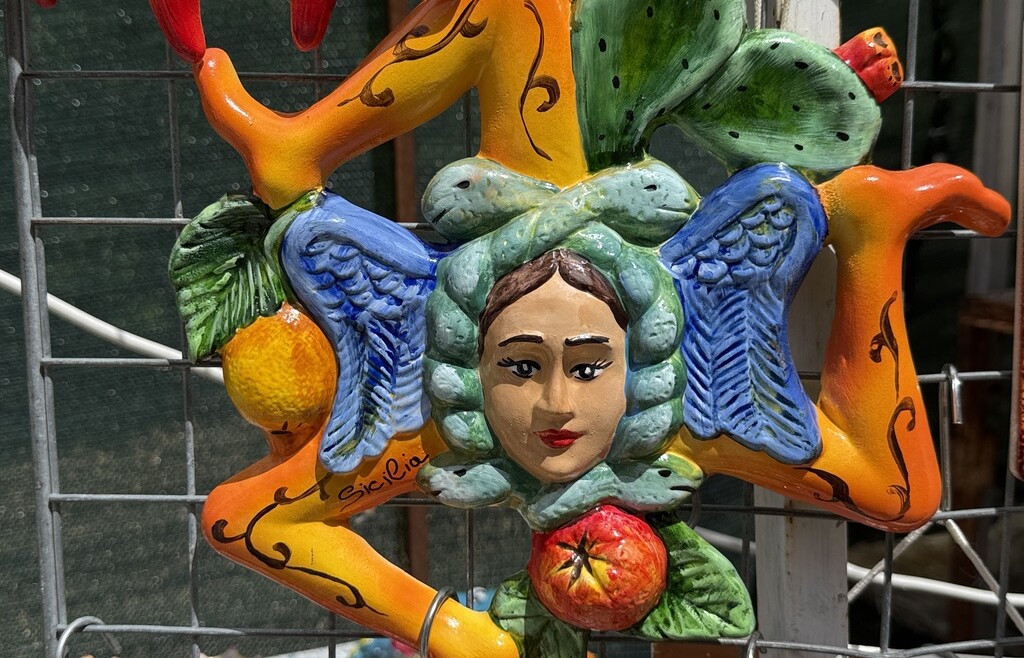
On our first walk in Palermo, we noticed an odd figurine in the windows known as “The Trinacria.” A Medusa like head with three legs. The face is on the Sicilian flag. The three corners represent the corners of the island. This figure dates back well beyond 7th century B.C. Some say it was a symbol to scare off other superstitious settlers.
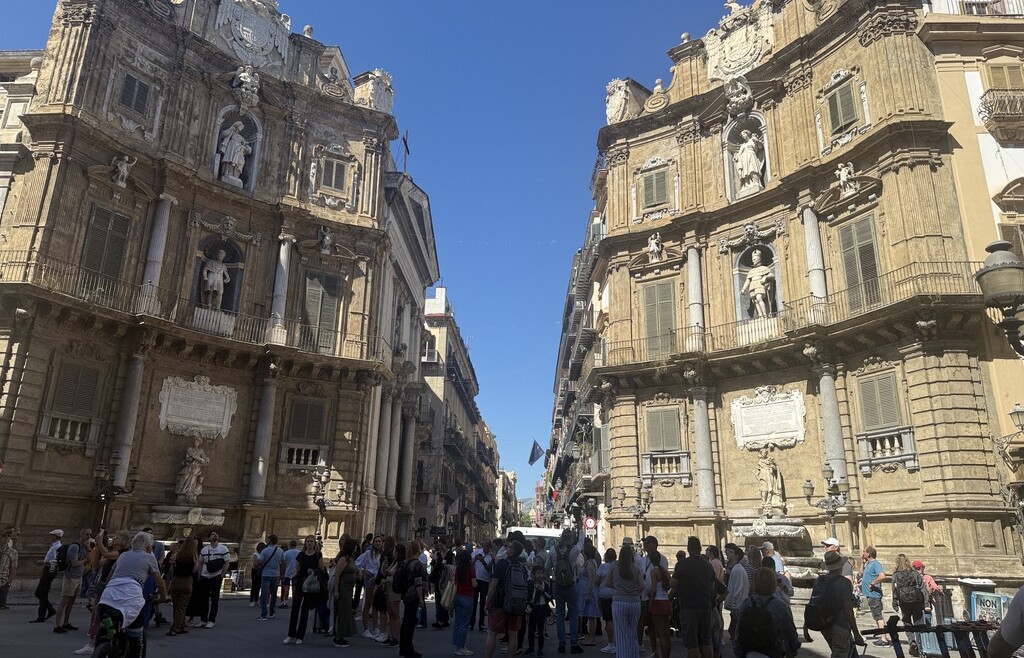
One of our first attractions was walking to Quattro Canti, also known as “Four Corners.” This intersection became our reference point in our walking around the city. Literally four corners come together in Baroque architecture represented in statues of the four seasons.
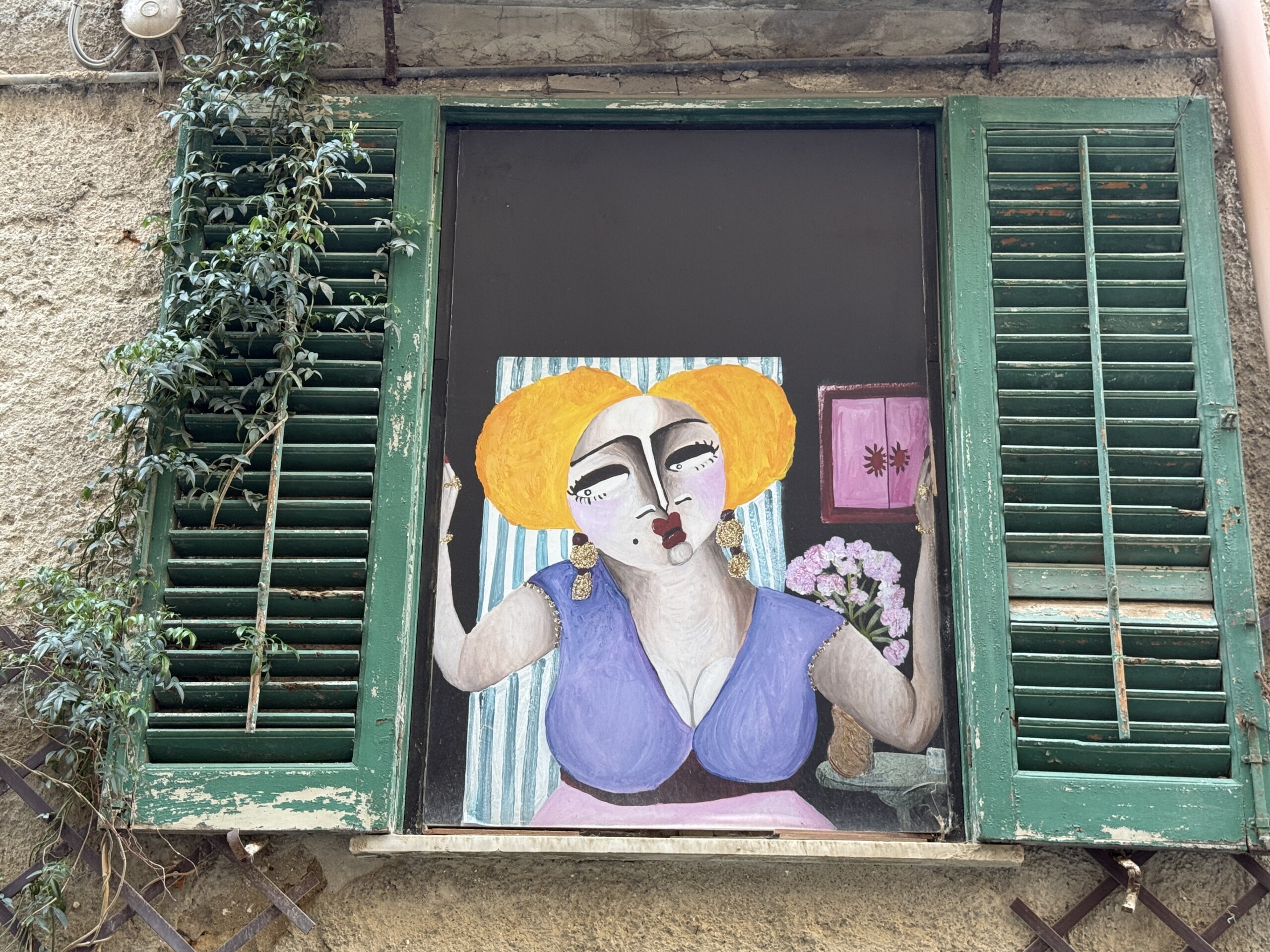
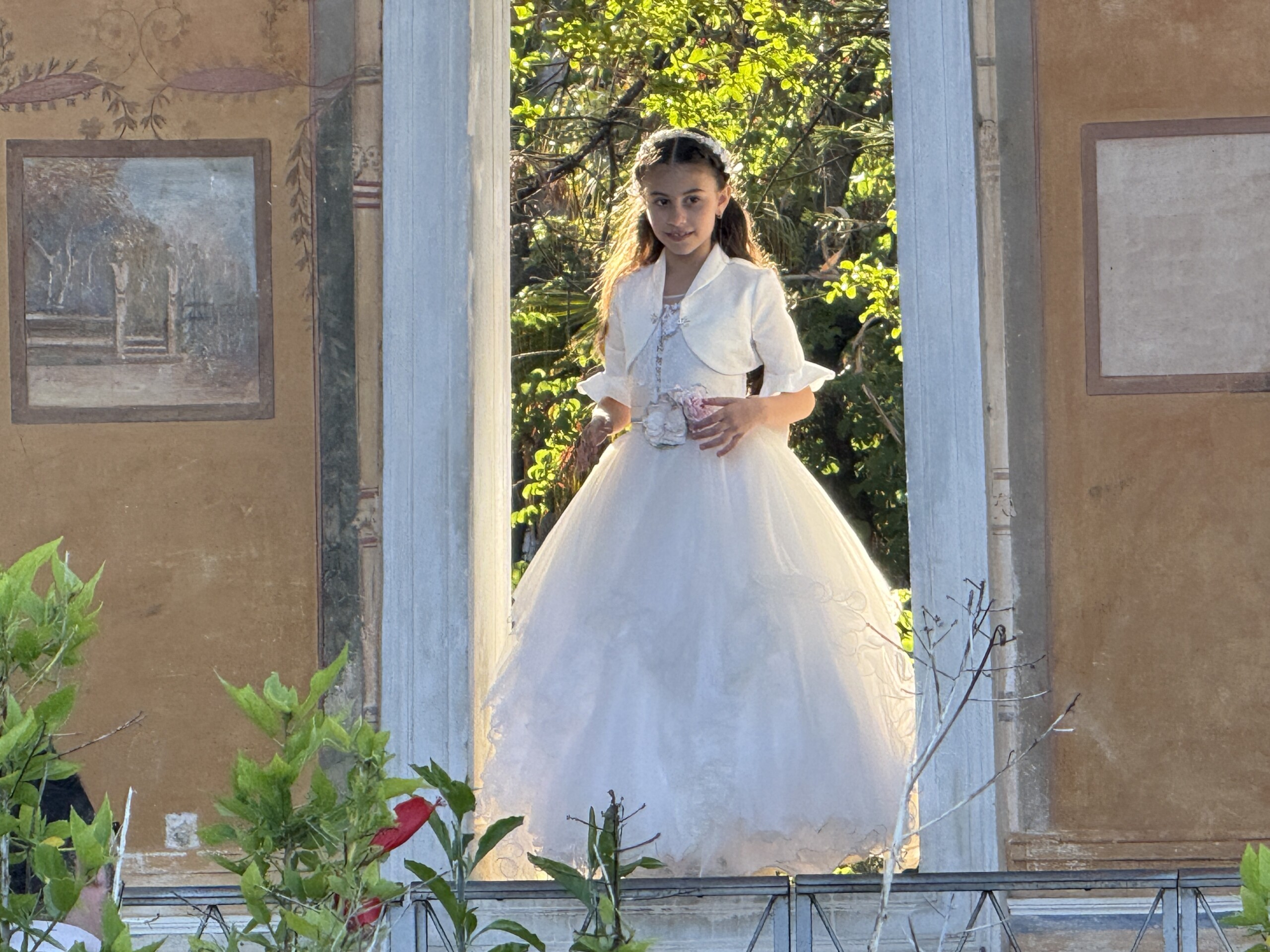
We took the long way around to get to Palermo’s Botanical Garden on another day. We came upon this shade artwork and a young girl having First Communion photos.
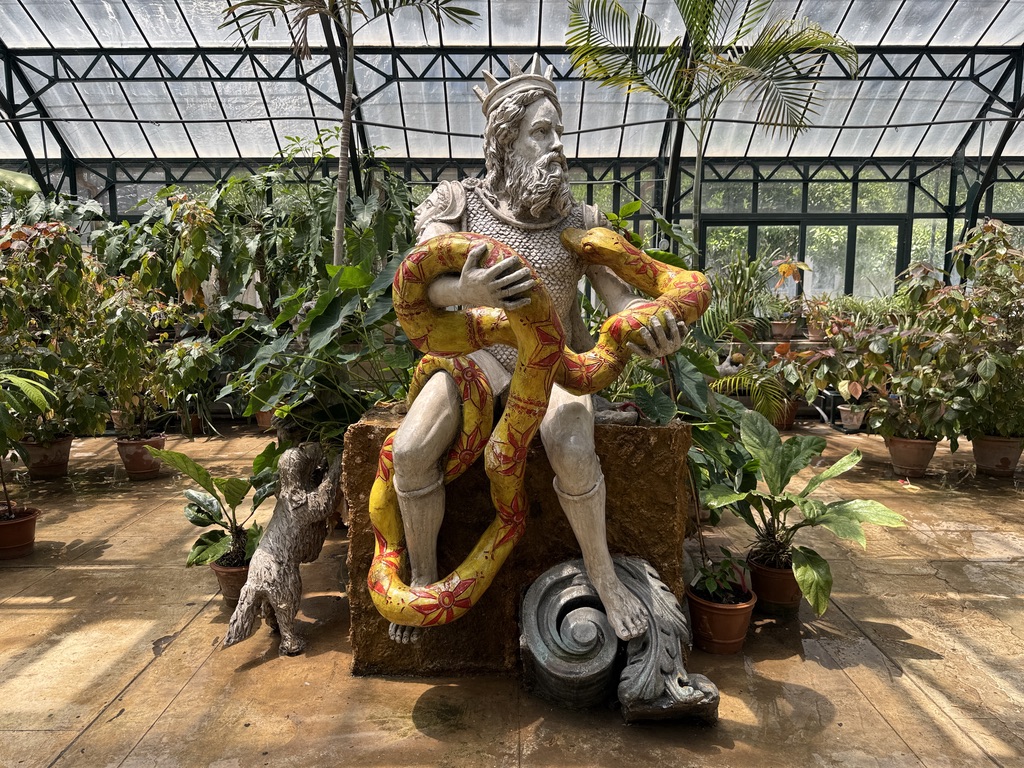
One of the largest botanical gardens in Europe originating in the late 18th century is found in Palermo. We found refuge here from the intense noise of the city. There were a number of unique statues.
In the middle of Palermo’s Botanical Garden is a beautiful pond.
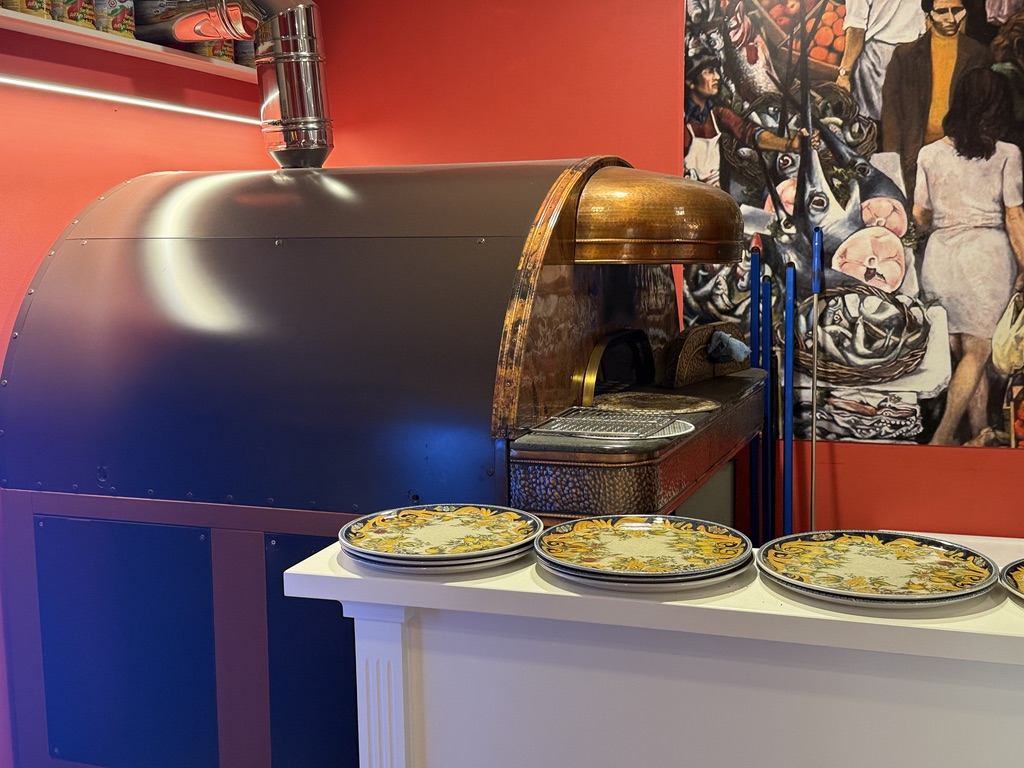
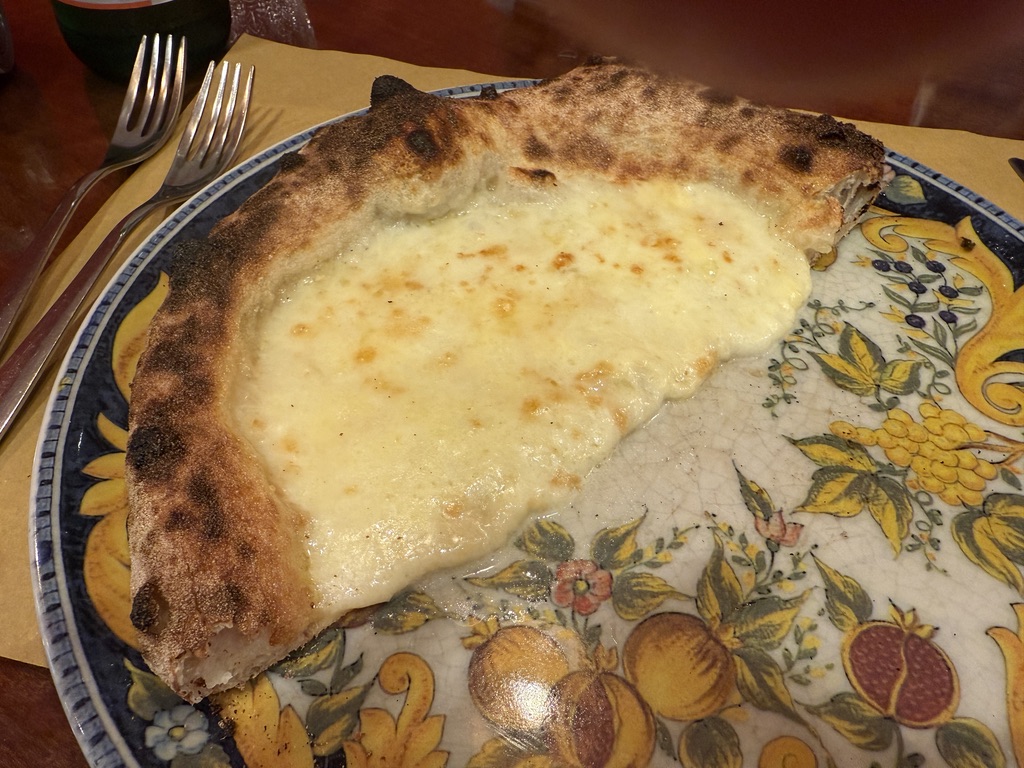
By our hotel there was a pizza restaurant, Rosso DiVino. They had the best “Quattro pizza” made with Blue Cheese. There secret was not only good dough, but the oven was especially shipped from Naples—the apparent origin of pizza pies. Ironically, one of our favorite Italian restaurants in our home town has the identical pizza oven.
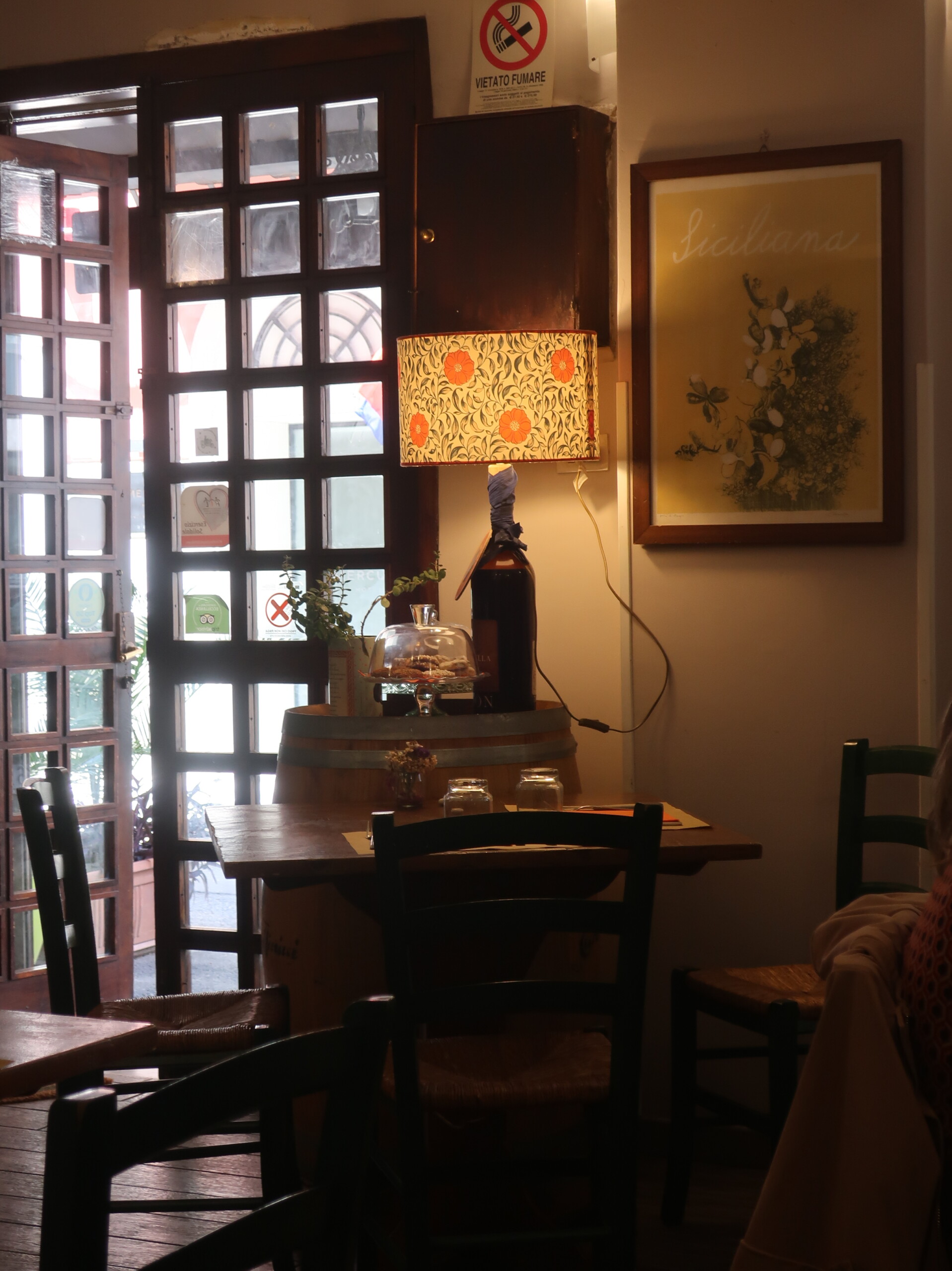
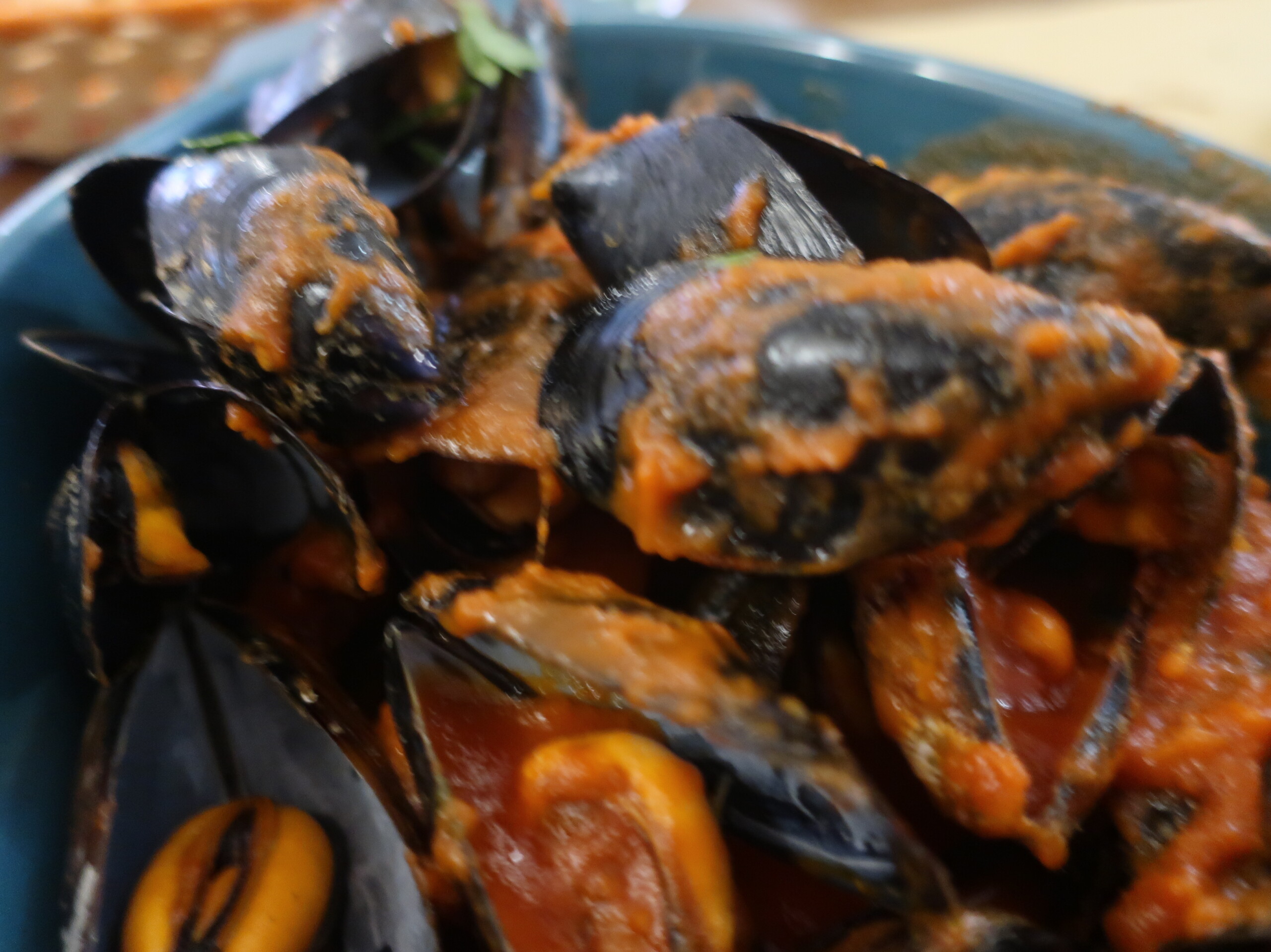
The most unique restaurant was the one we visited where no one spoke any English. There was not even an English menu. Kathie ordered “Zuppa di Cozze.” Kathie thought it would be “soup with tomato sauce.” What came out was “mussel soup.” A pile-high of mussel’s came out in a large bowl smothered in tomato sauce. It was indeed delicious.
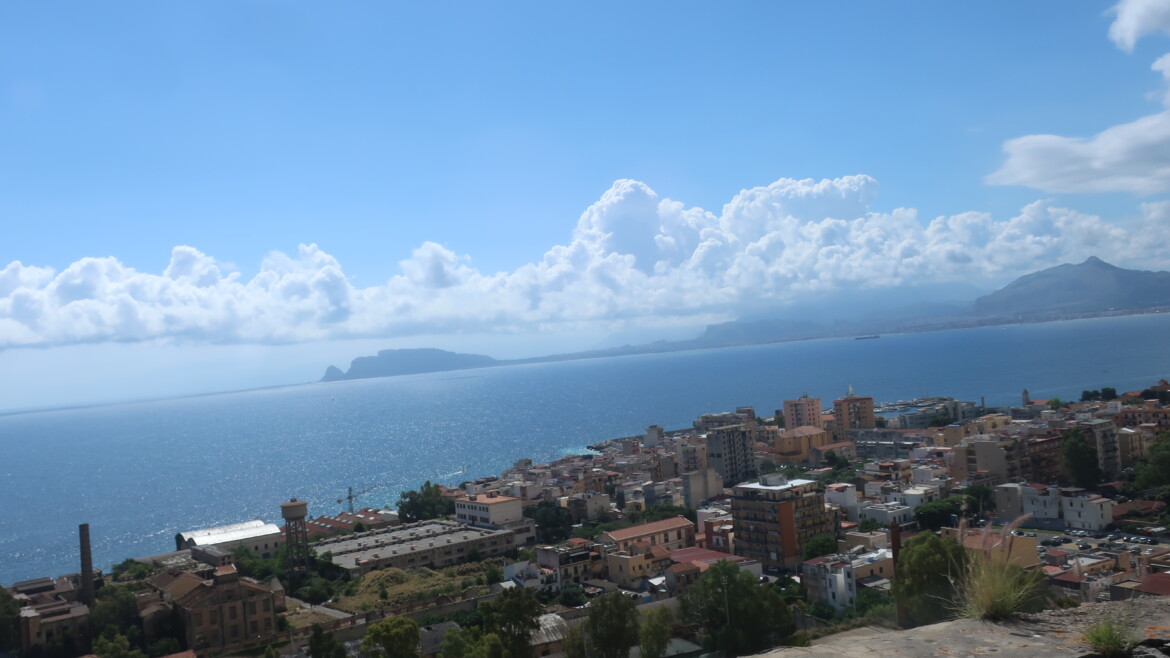
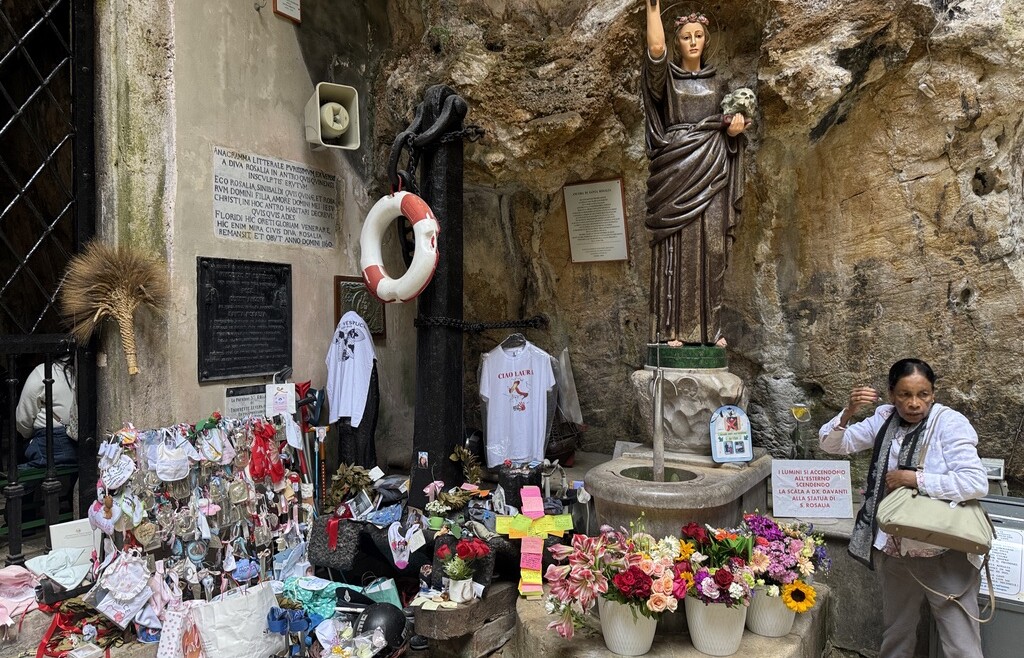
A moment in time we will never forget was taking a bus up Monte Pallegrino and seeing the Sanctuary of Santa Rosalia. The views are spectacular.
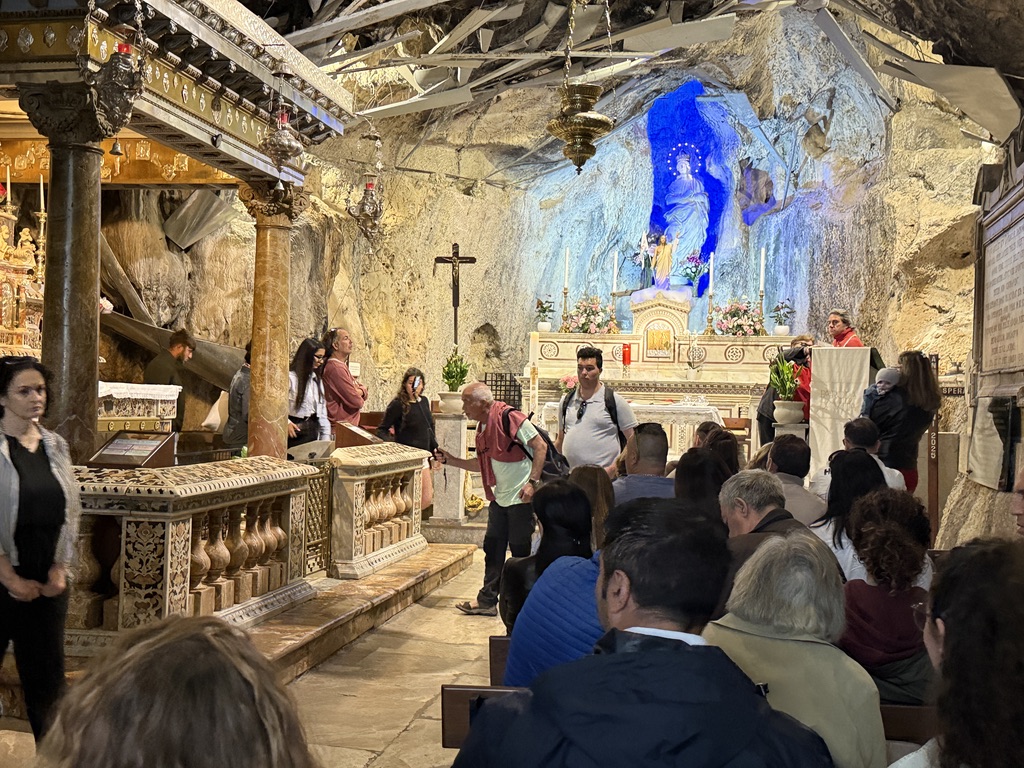
The bones from a 12th century future saint were found in this grotto during the 17th century. On July 10th every year Saint Rosalia is honored with a major parade. This grotto is a most loved pilgrimage site. Our visit was on a Sunday and we even saw a mass performed in the Grotto. The experience was quite moving.
By the Grotto doorway, people placed personal belongings to celebrate and bless this sacred area.
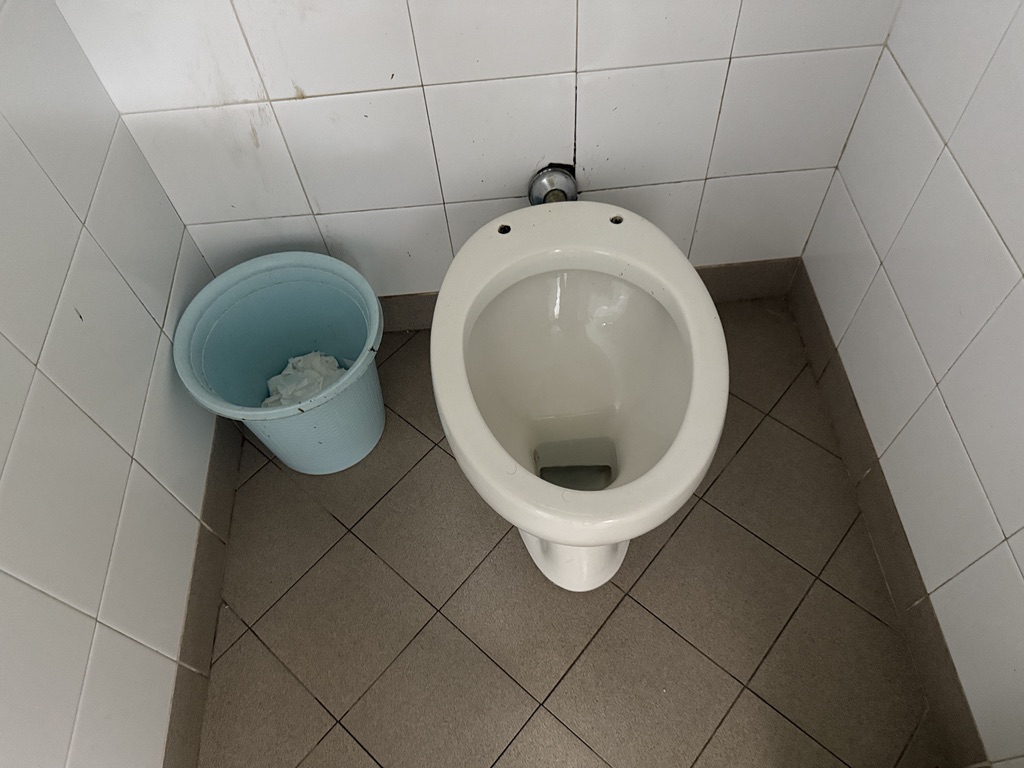
The bathroom was just down the hill. It was a bathroom where you had to pay for. And there was no toilet seat. The pleasures of travel.
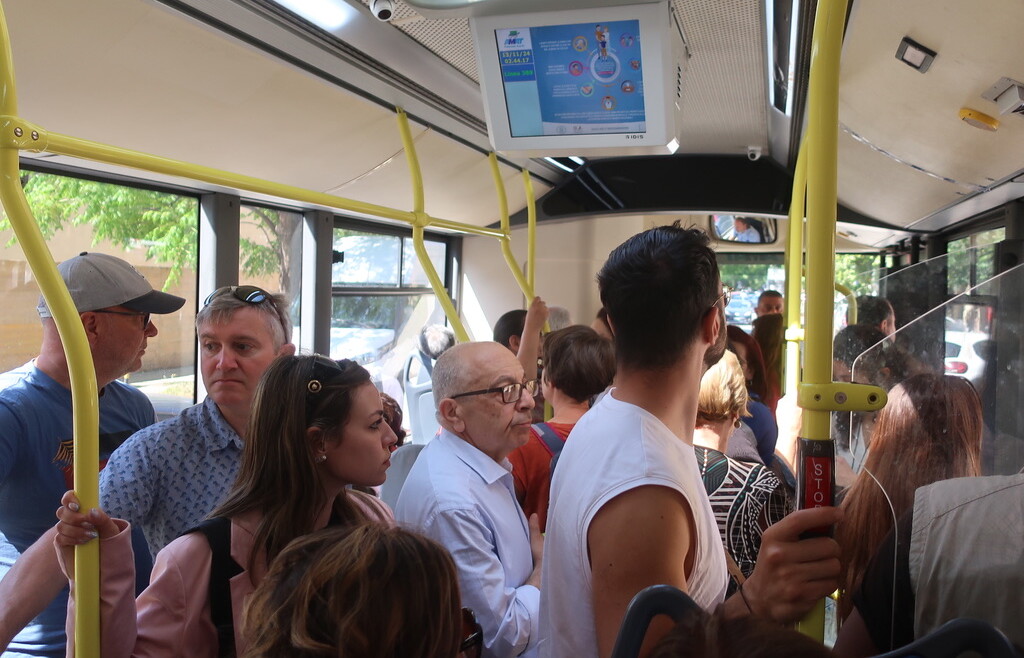
On another day we took a local bus 7 miles to the 1189 AD Cathedral known as “Monreale.” You may not get a seat as taking the bus is extremely popular and inexpensive.
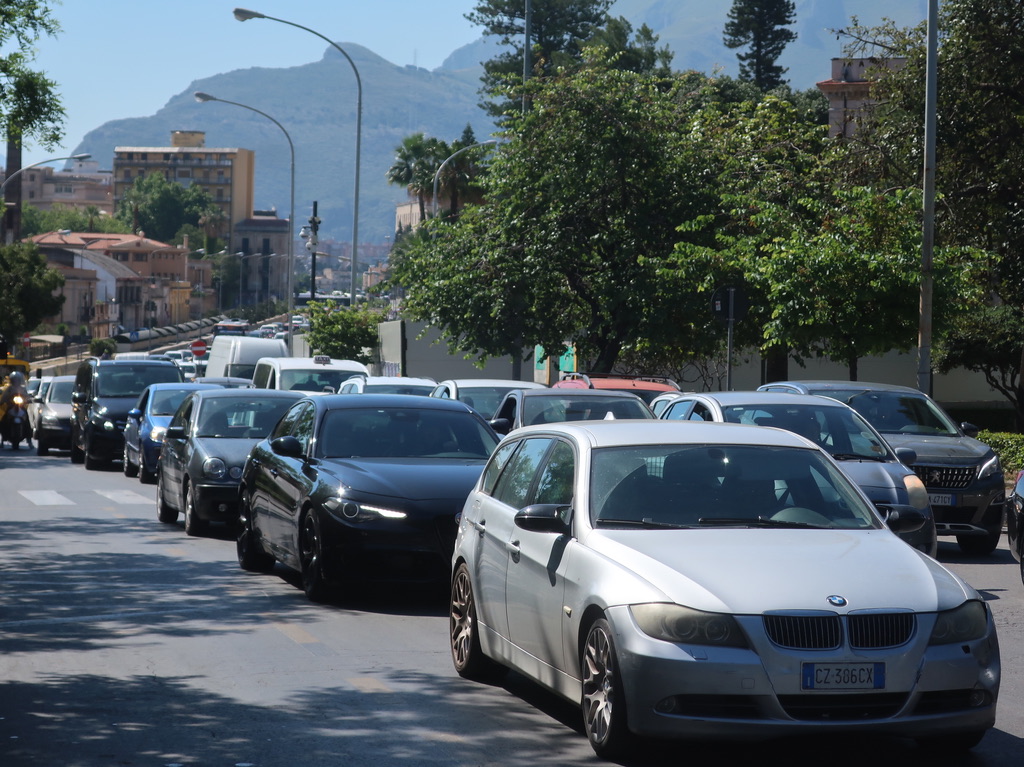
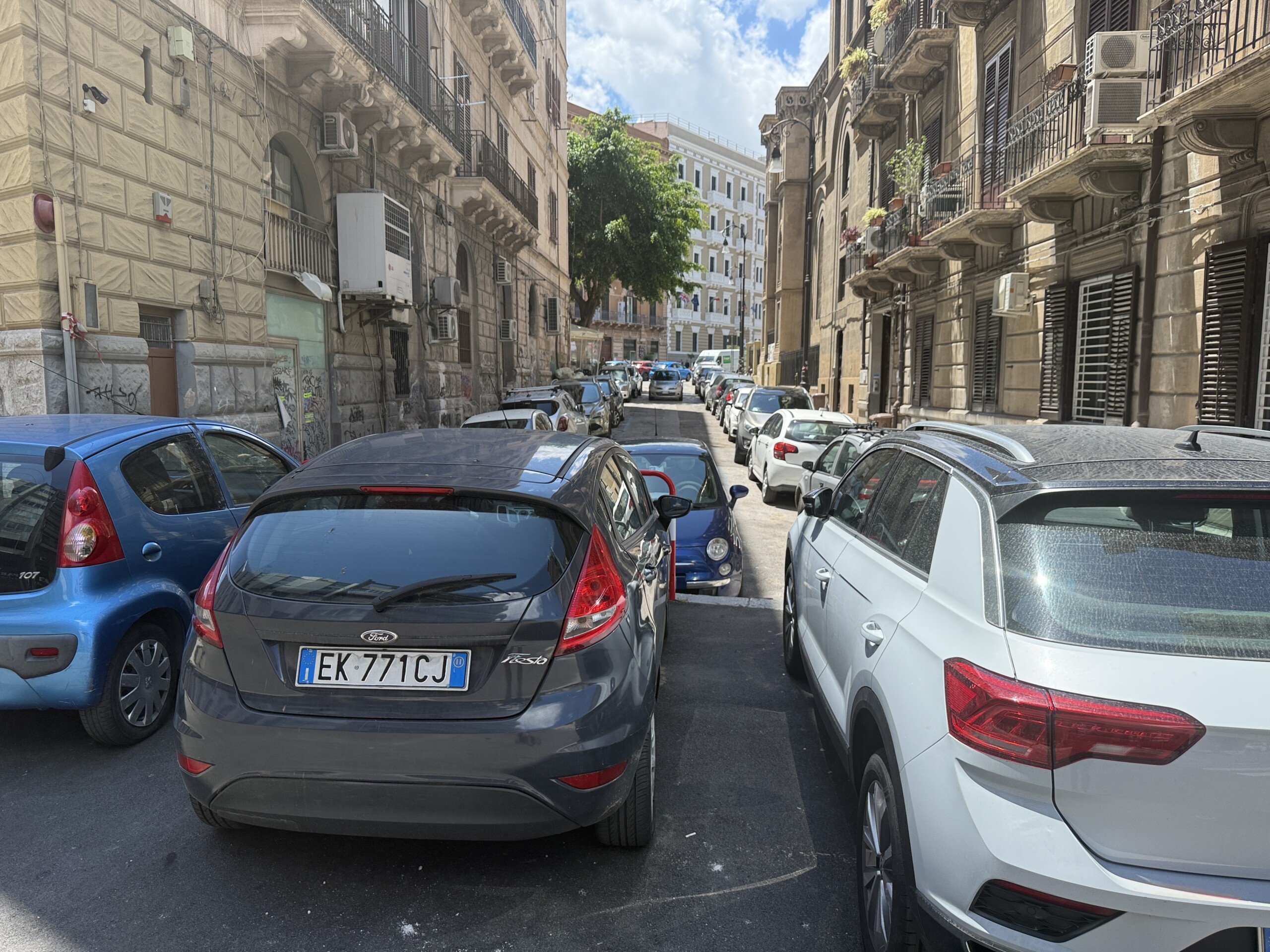
In reality, you really do not want to drive in Palermo. It is way too hectic, busy and there is absolutely no parking.
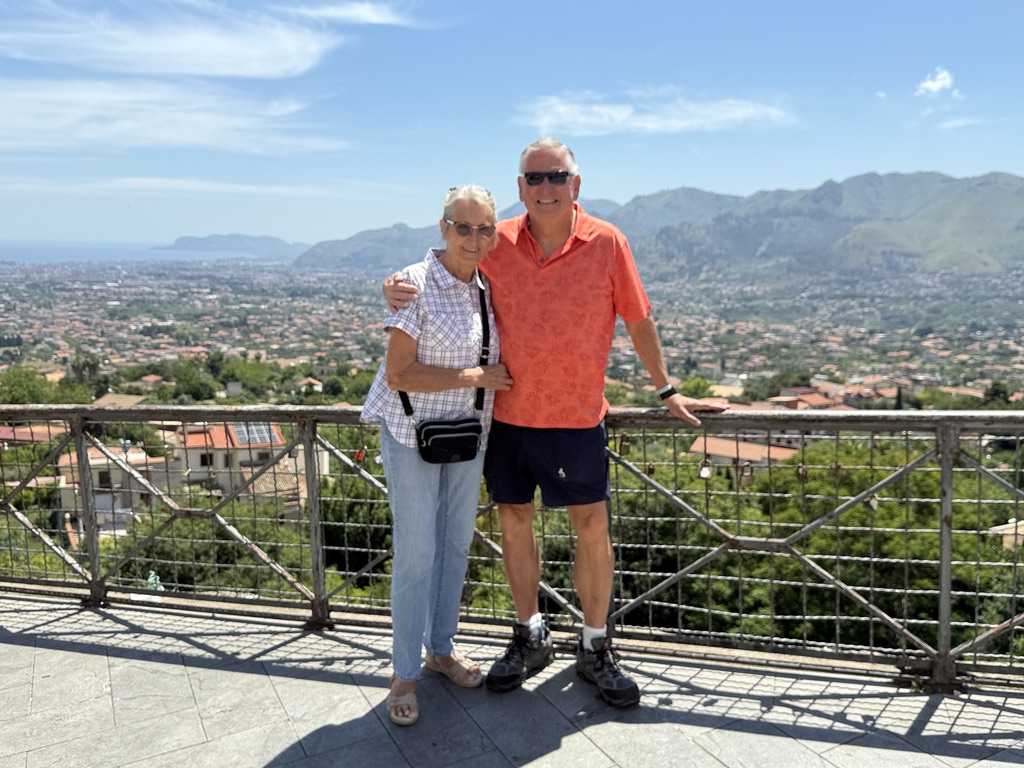
The vistas leading into this small village were indeed breath taking.
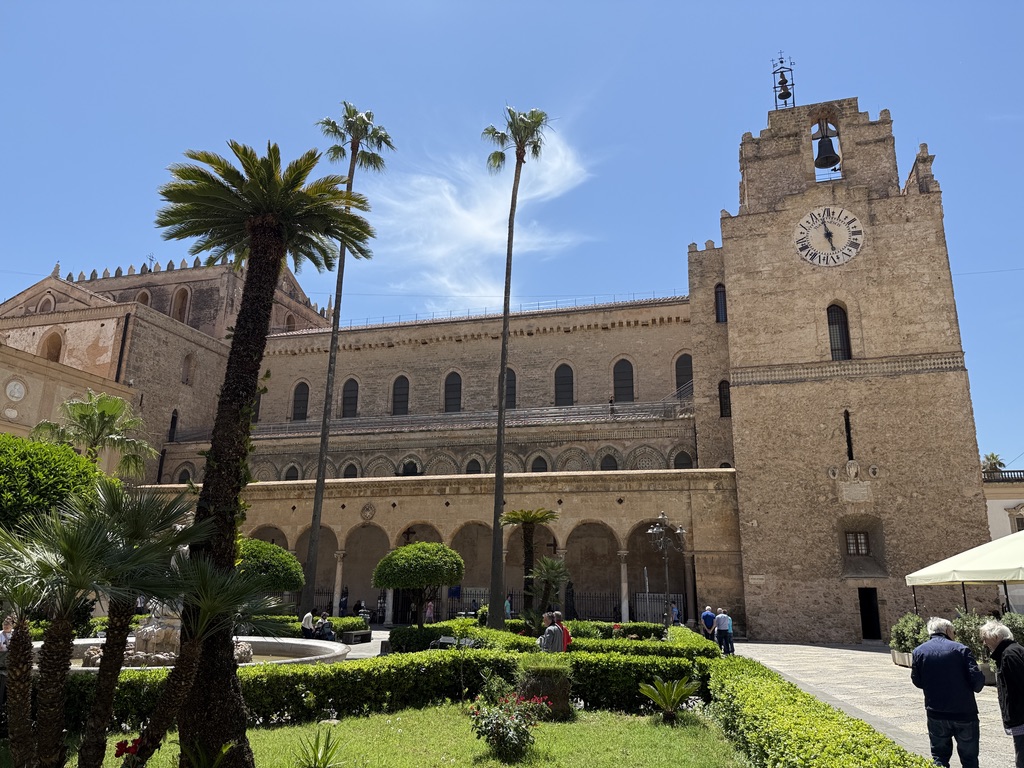
The Monreale church may not be as impressive on the outside as it is on the inside.
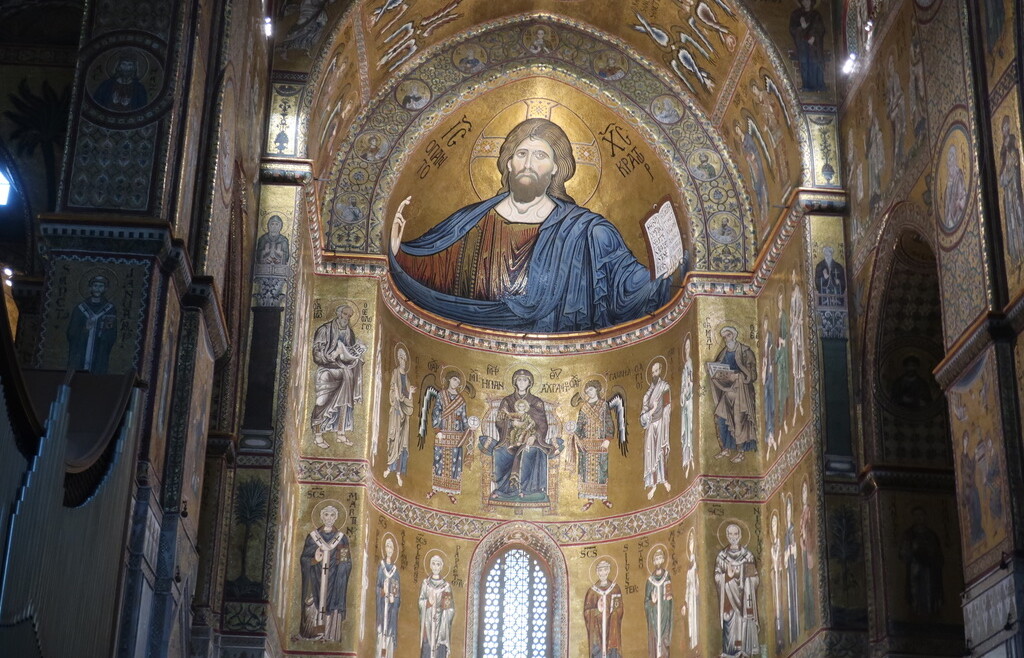
The large gold-leaf and mosaic creation of “Christ Pantocrator a.k.a “All Ruling” is absolutely stunning. There is two tons of gold used to make this impressive scene with Christ’s outstretched arms. The architecture is a combination of Byzantine, Arab and Norman craftsmanship. The entrance to this magnificent structure is free.
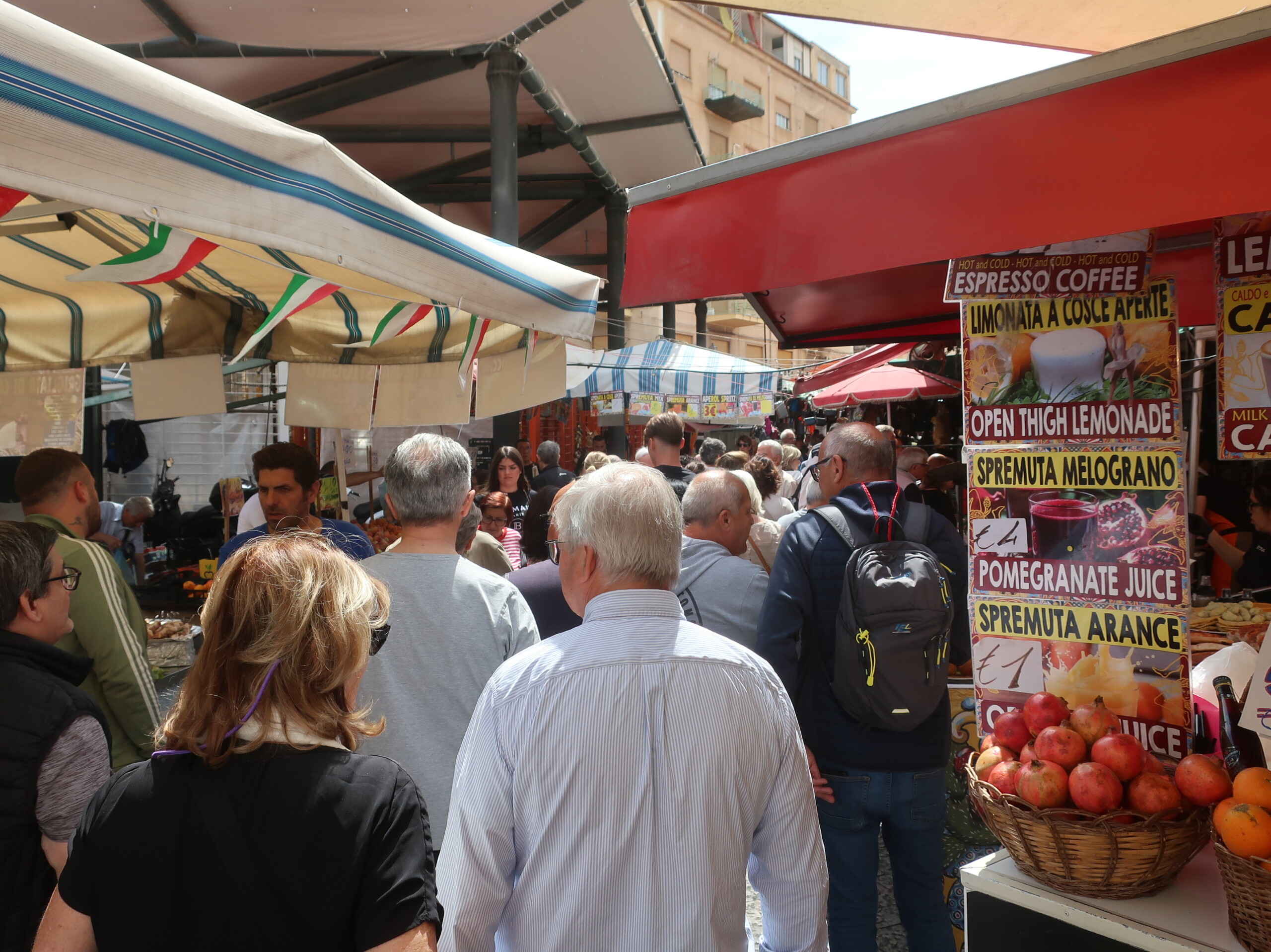
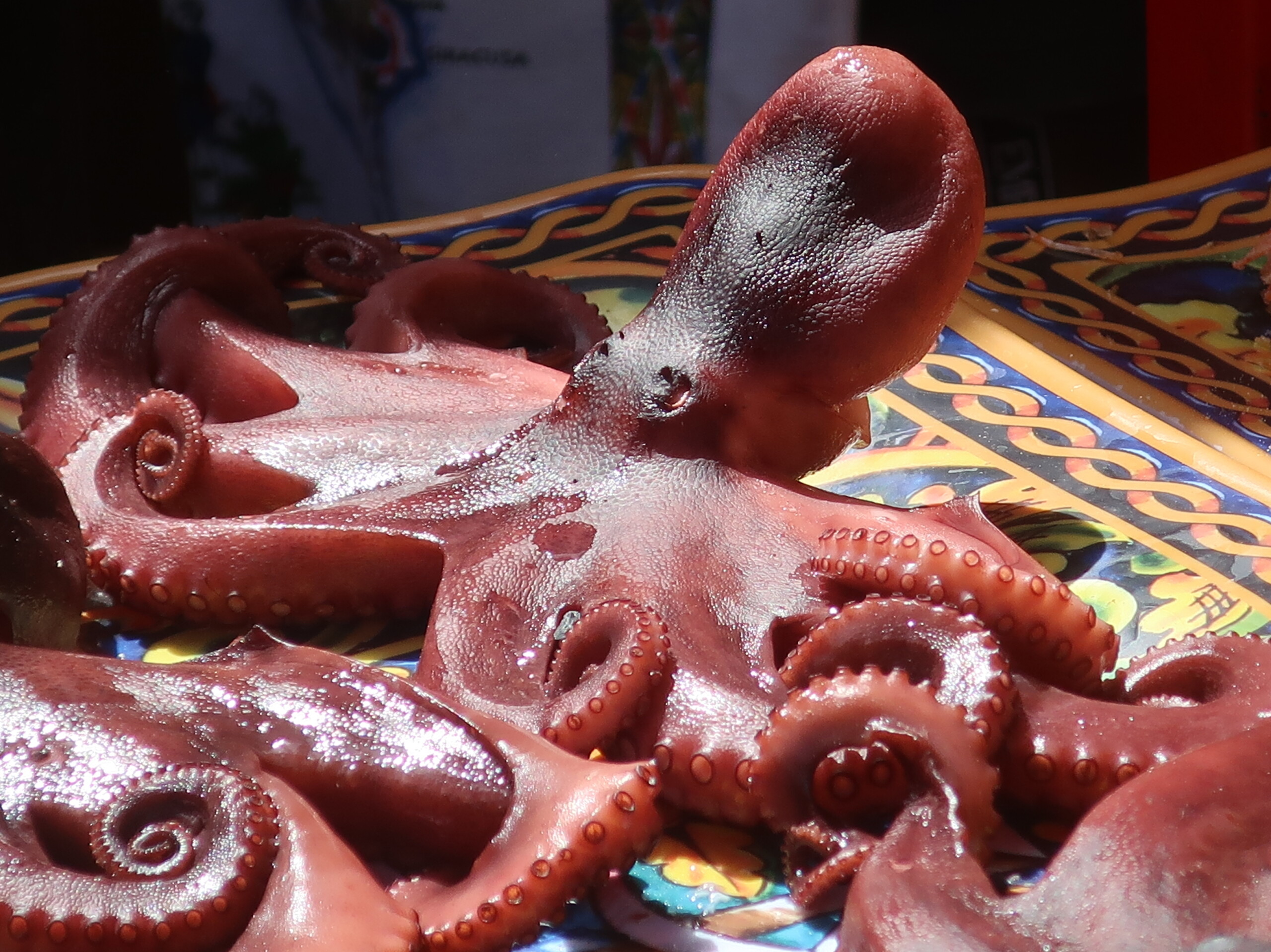
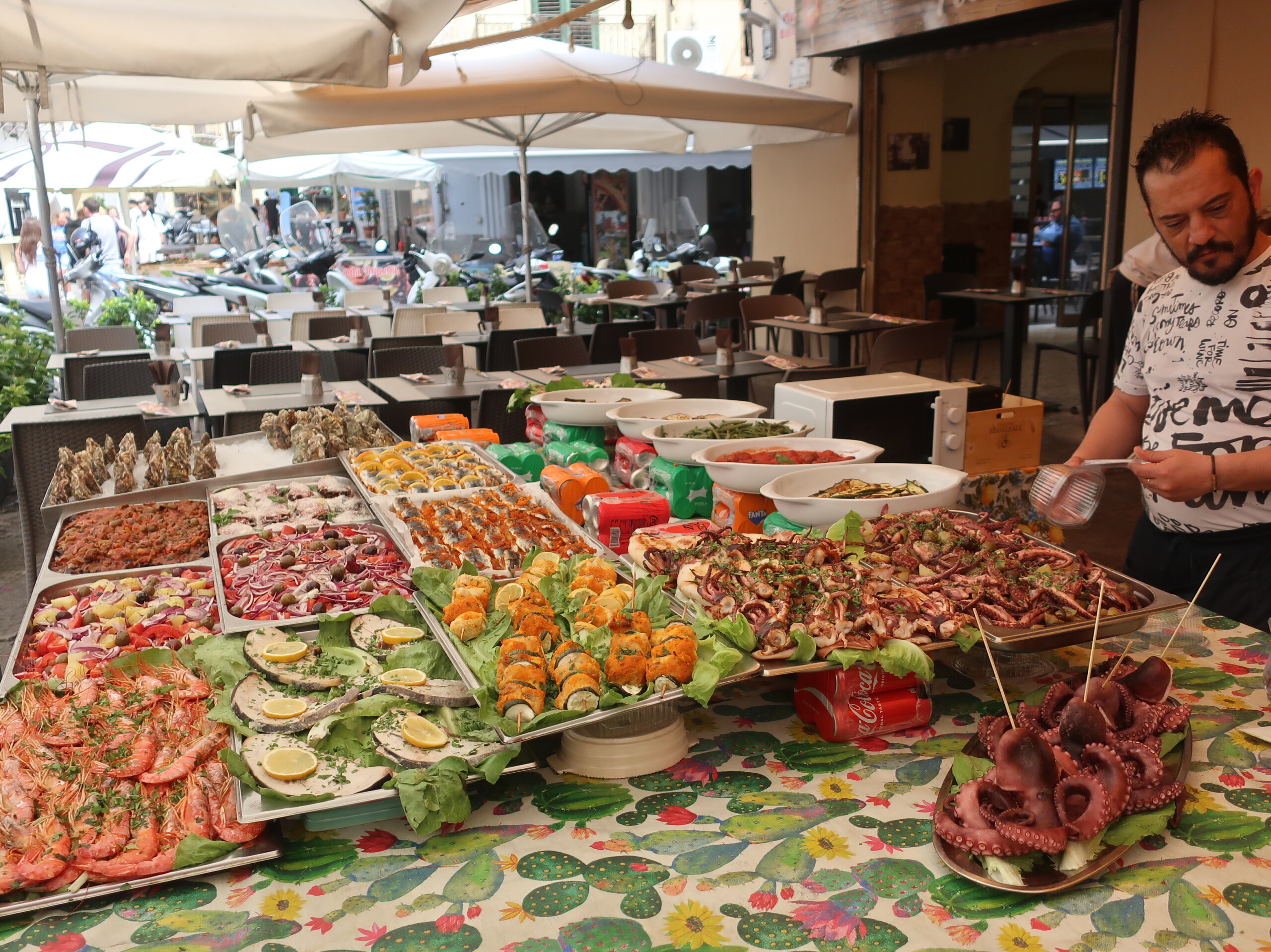
One of our major highlights of Palermo was walking through the Ballaro Market area. A combination of food stuffs like fish, meat, vegetables and touristry items were for sale. Some of the vendors would actually sing in a loud voice. It is quite crowded and intense.
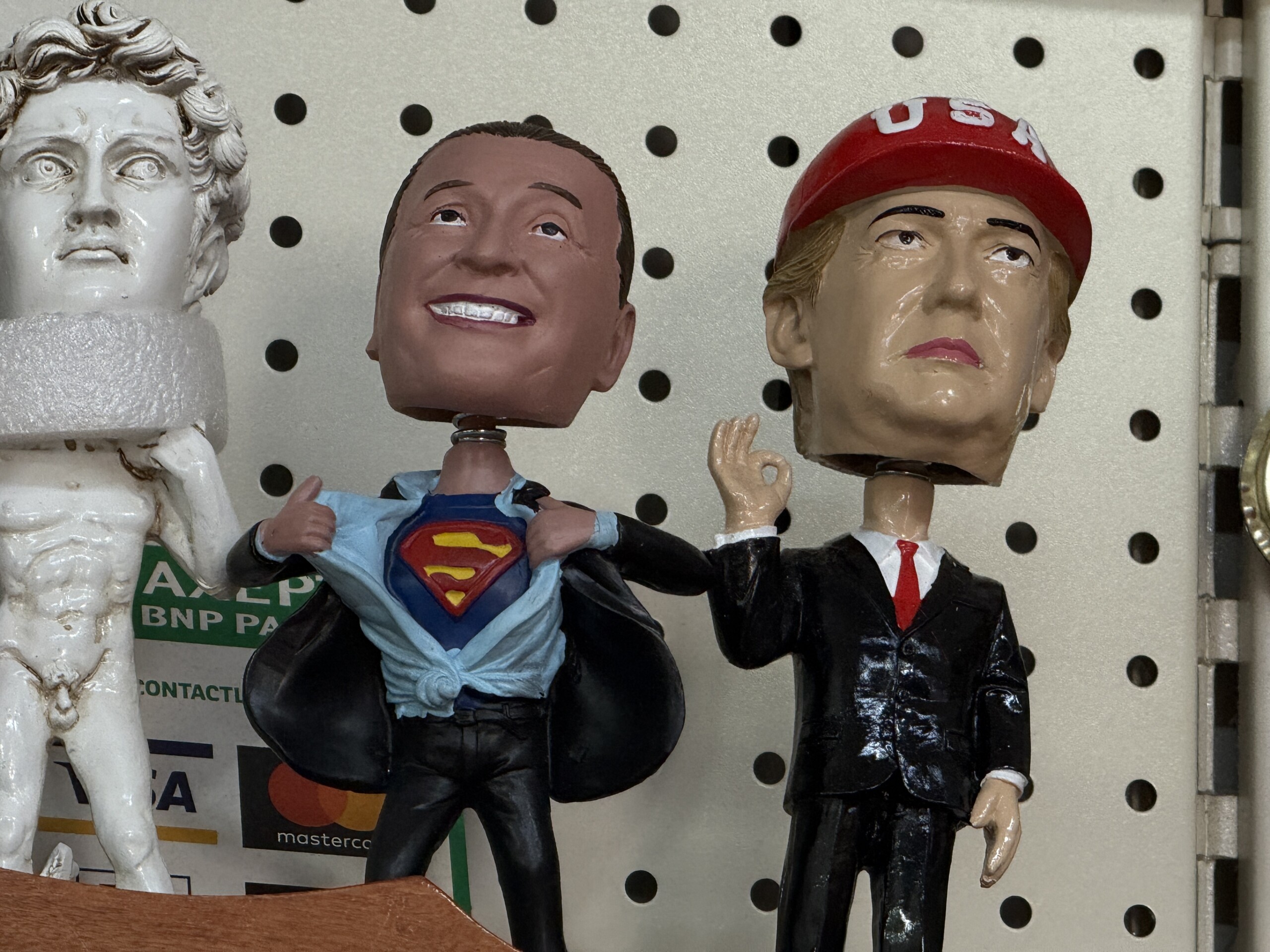
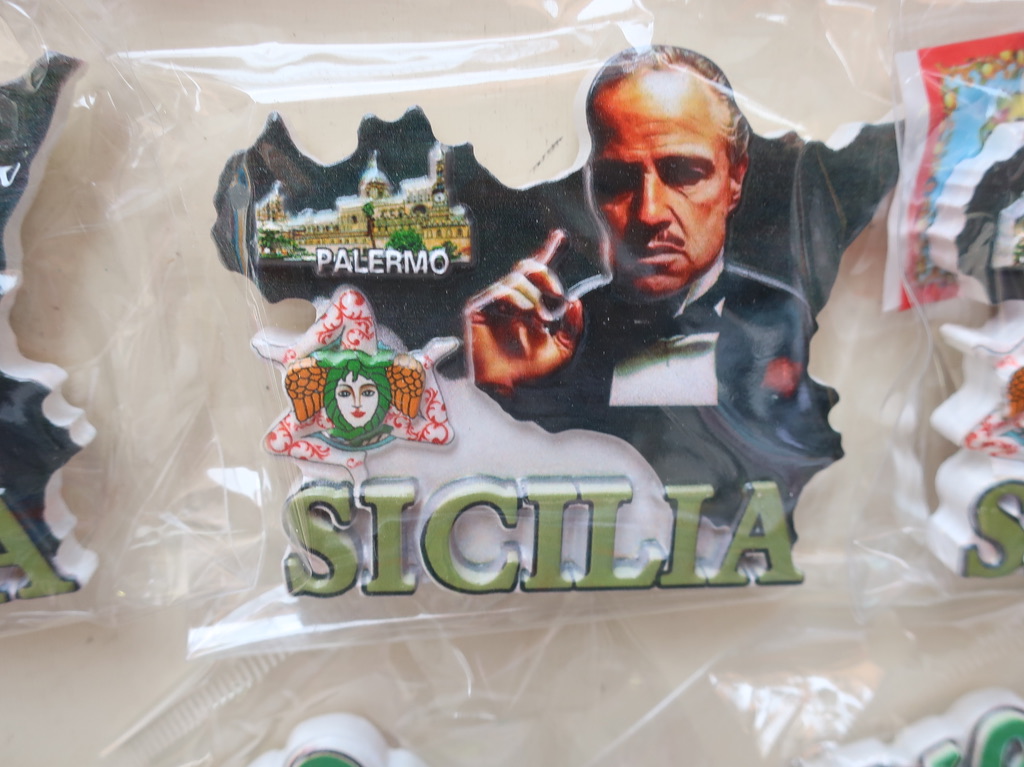
In the tourist shops there were statue of President Trump, Obama and Godfather magnets. The Mafia still exists, but not as influential as it was.
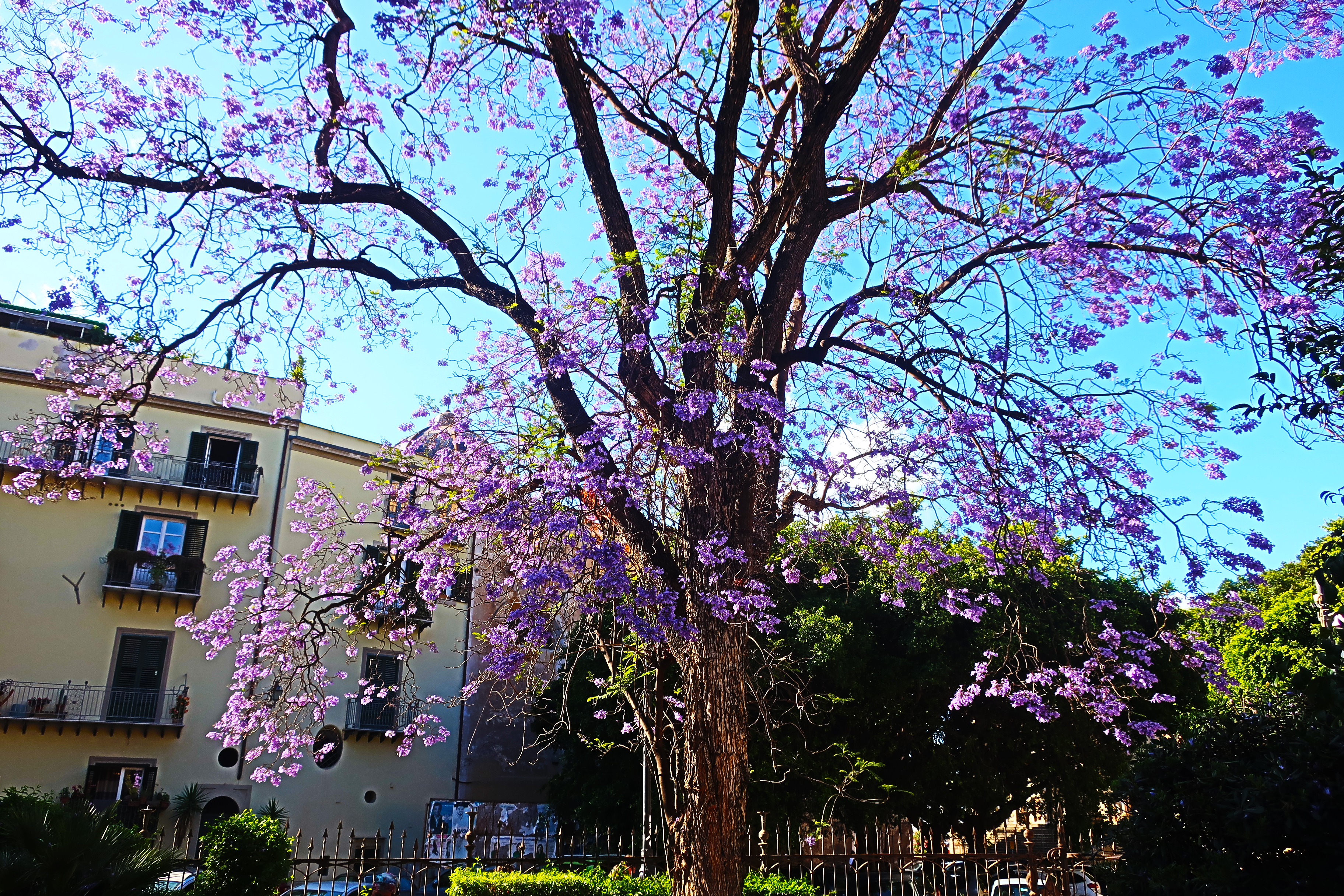
At the end of May, the Brazilian Jacaranda trees were still in blume. We first saw Jacaranda trees in our 2015 sojourn to Maui. We love purple and lavender.
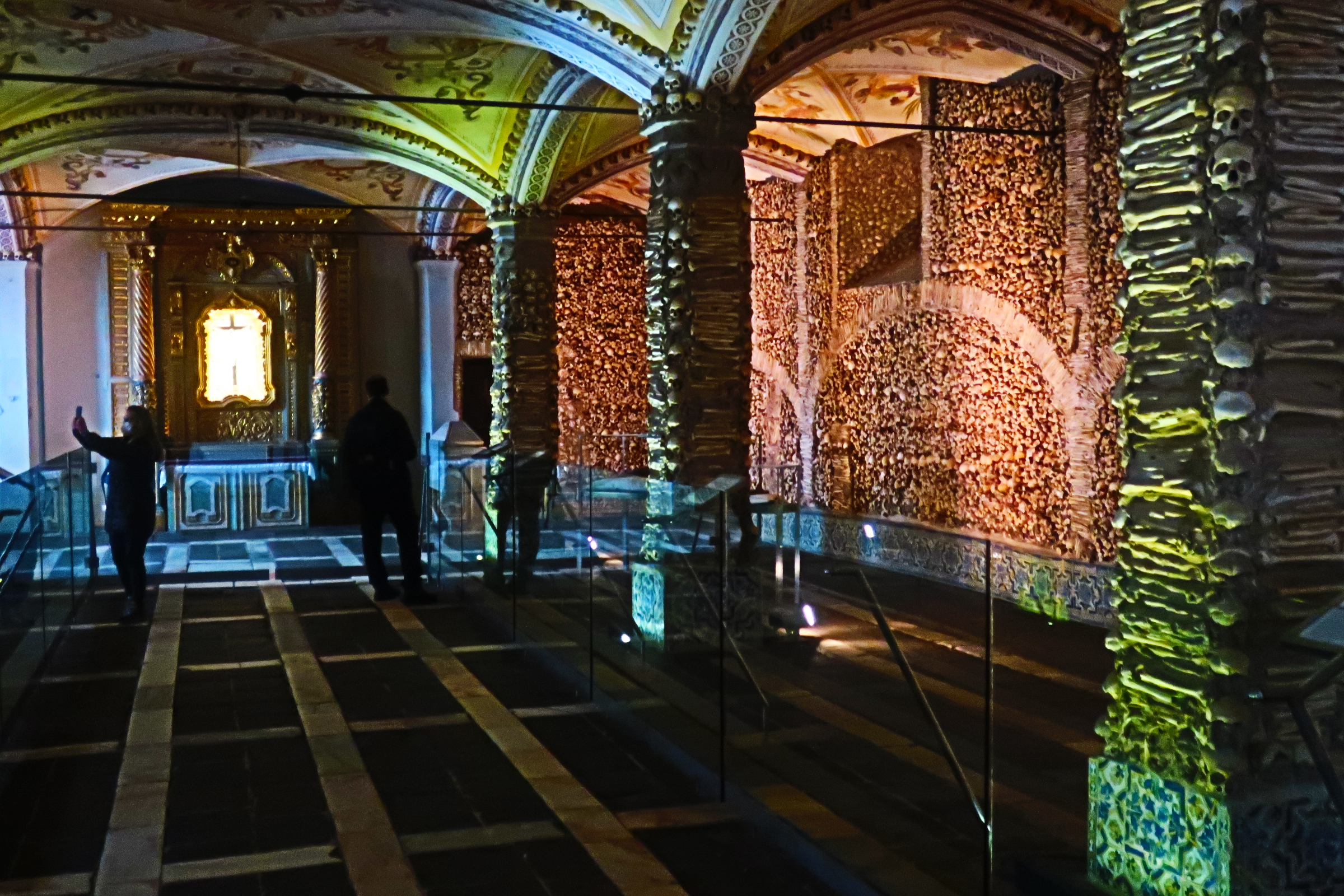
There are catacomb’s that can be visited with skeletons etc. After our crypt visit in Evora, Portugal in 2023, Kathie was not interested.
Most organized tours do Palermo in a day, maybe two. By arranging our own schedule, we had the pleasure of staying for four full days. We didn’t see everything, but came out with an appreciation for a city that has been for thousands of years.
Chapter 3, Agrigento, “Valley of The Temples.”
We decided to take trains from point to point. Our 19 days Sicilian trip cost us about $150 in train fair by purchasing our tickets early. Only once for 30 minutes did we have to stand. It is by all means the most economical way to travel, particularly in Sicily.
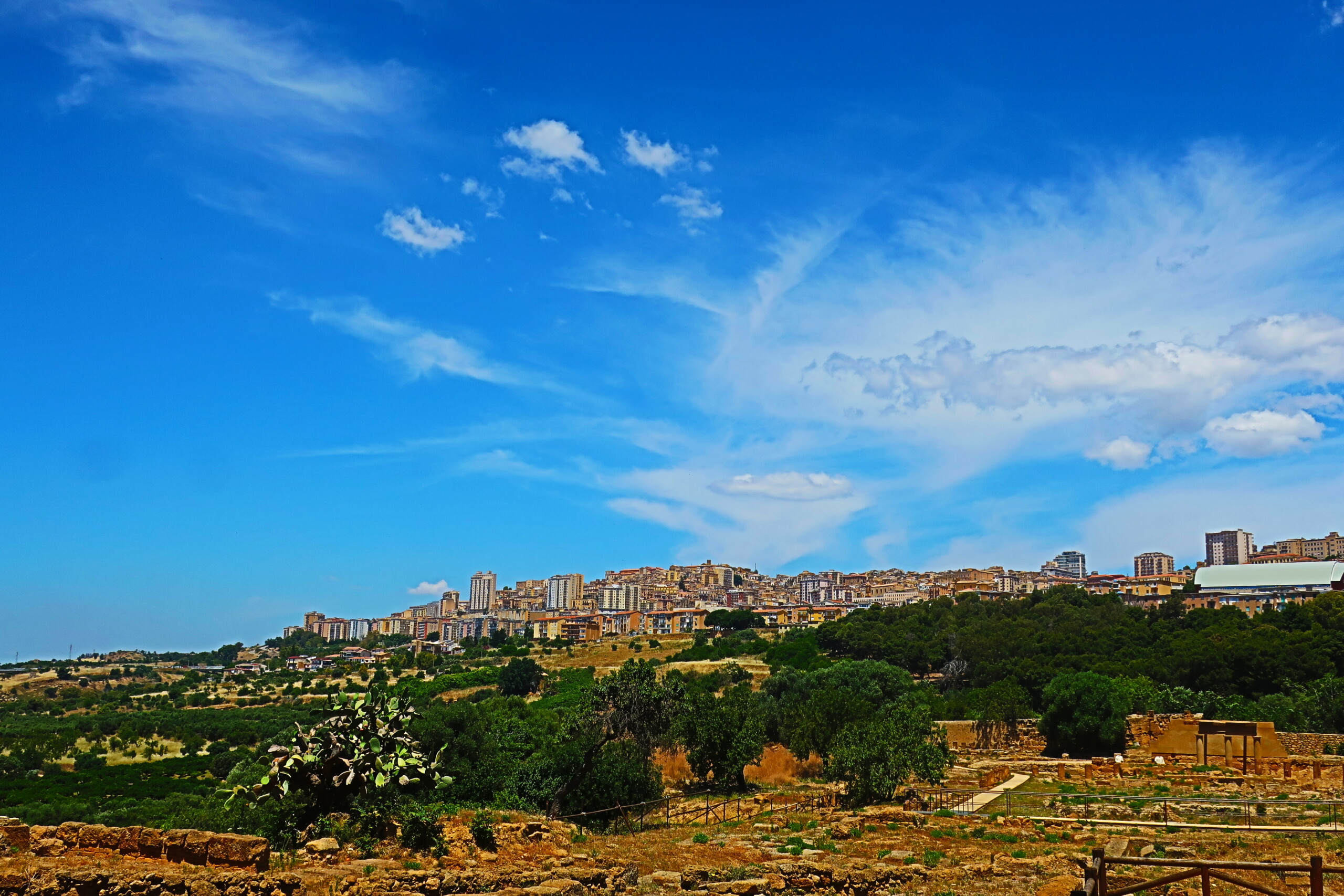
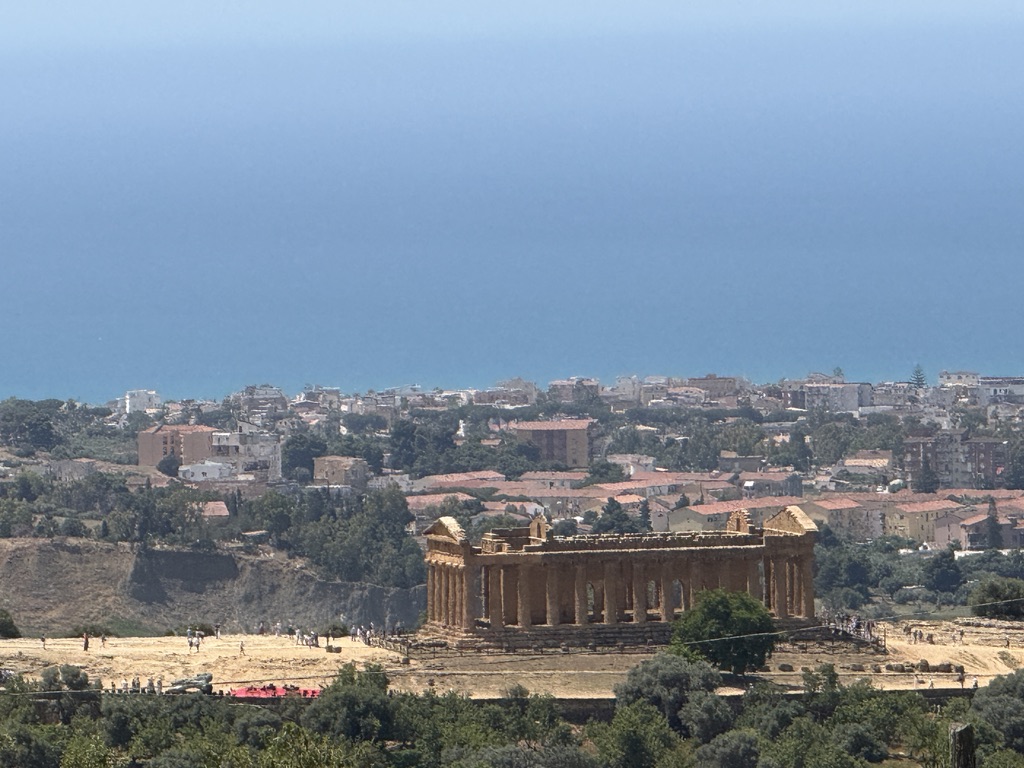
A two-hour train ride through valleys and around large hills we arrived in a decent size city of 60,000 thousand people named Agrigento, famous for having 15 Greek Temples. The city is actually on a ridge looking down on another ridge where the temples are located. Nearly a million people visit Agrigento yearly.
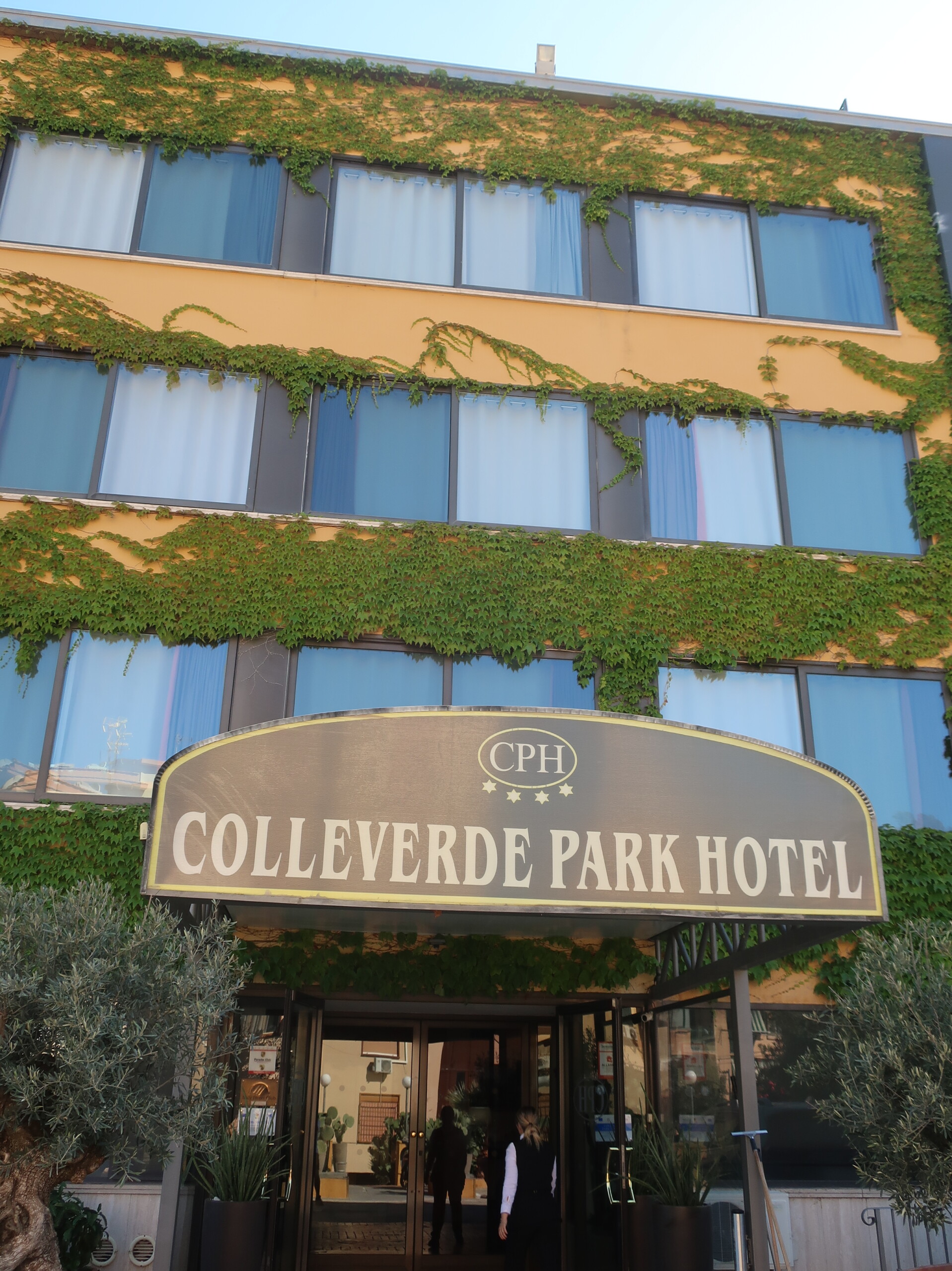
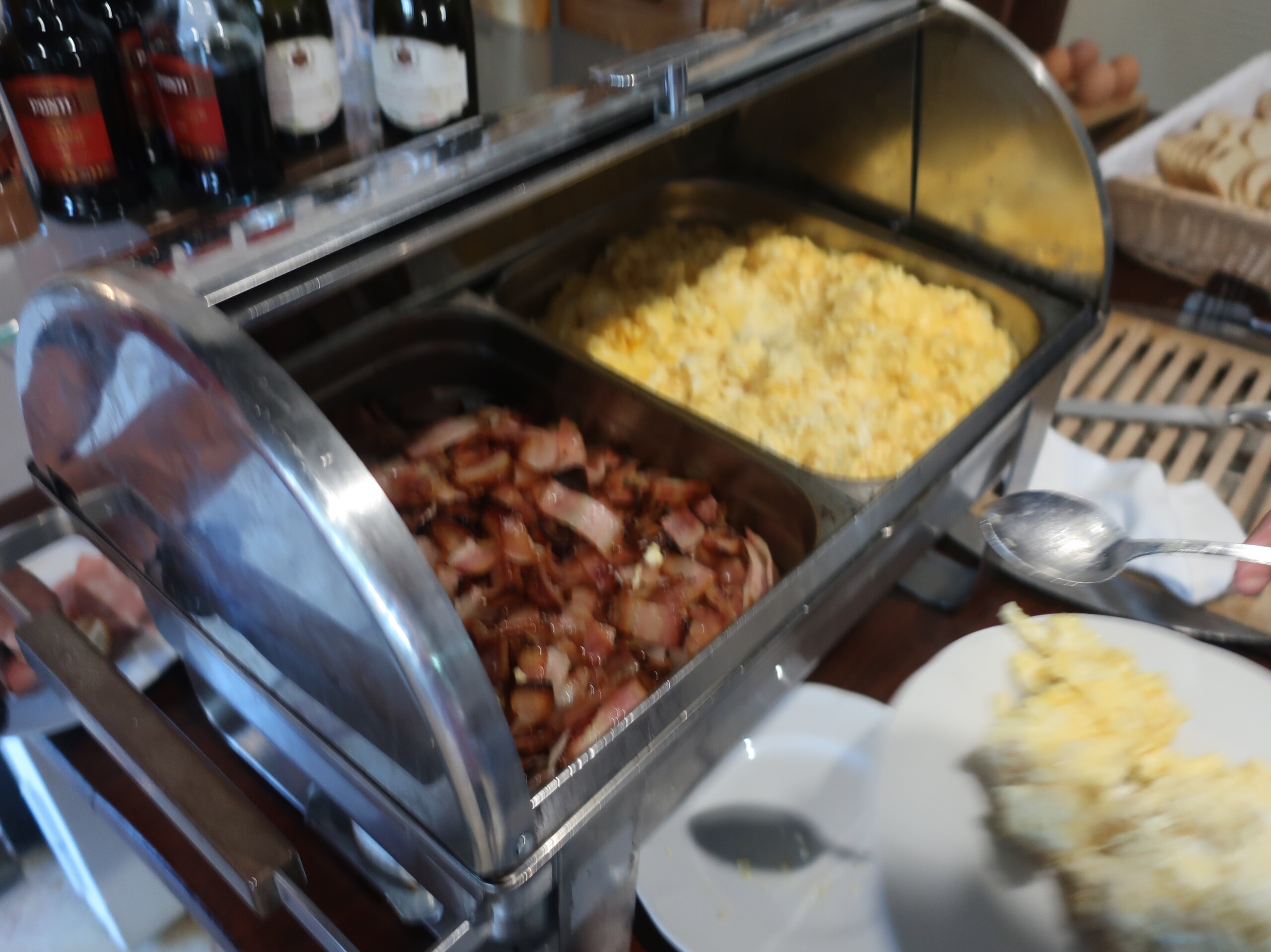
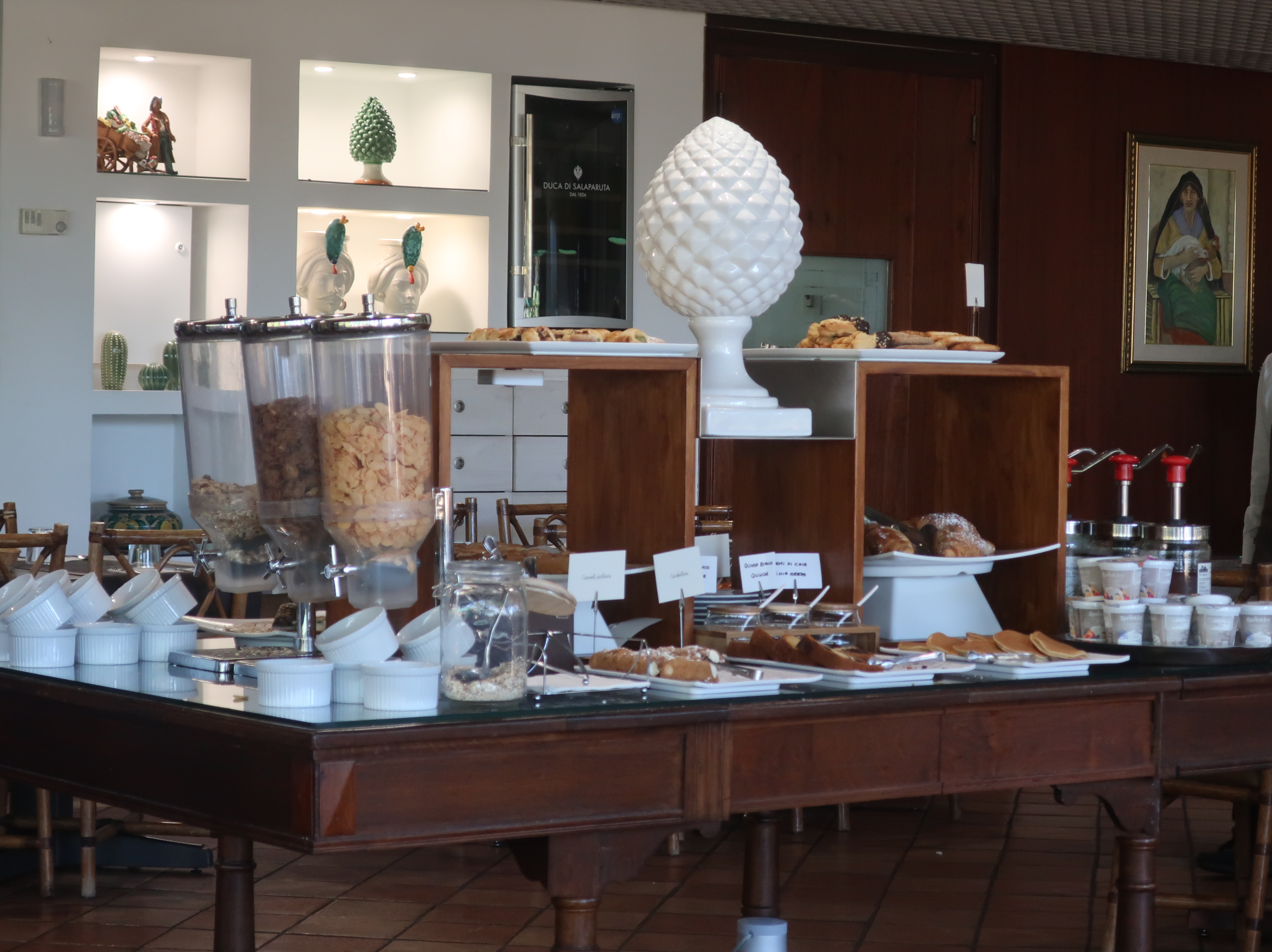
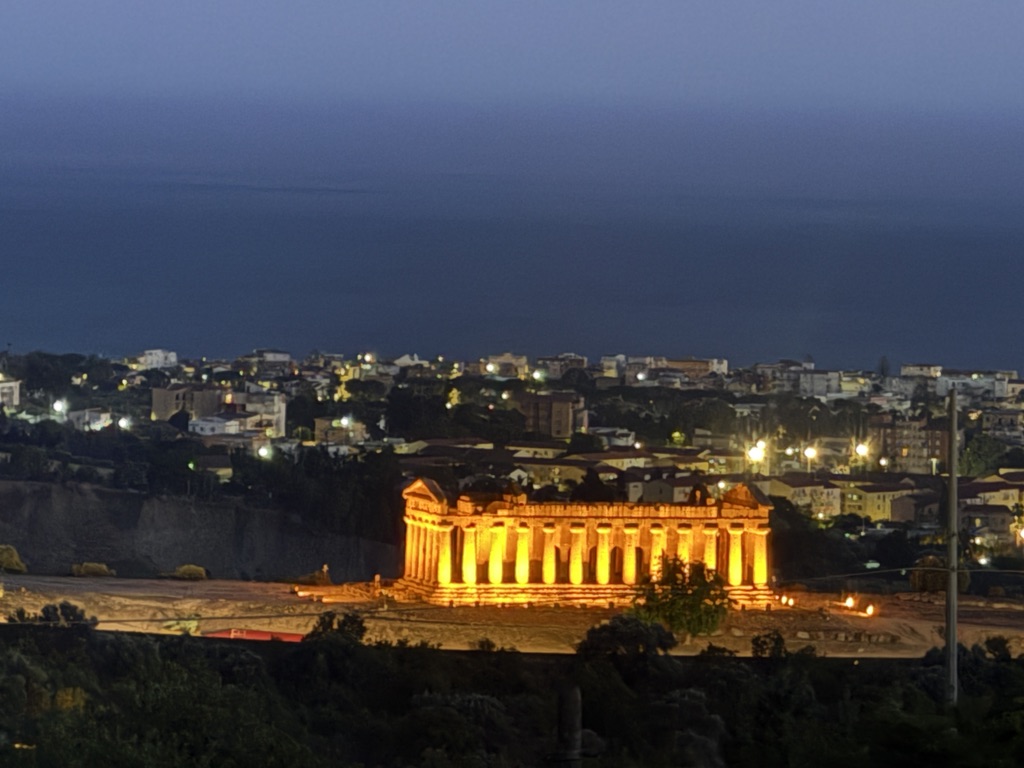
We selected a comfortable hotel called “Colleverde.” There is a beautiful garden in the back overlooking the Valley of the Temples. The rooms are of a decent size and fully air-conditioned. Tour groups like to stay here. There is a good size restaurant that puts out a delicious breakfast in the morning.
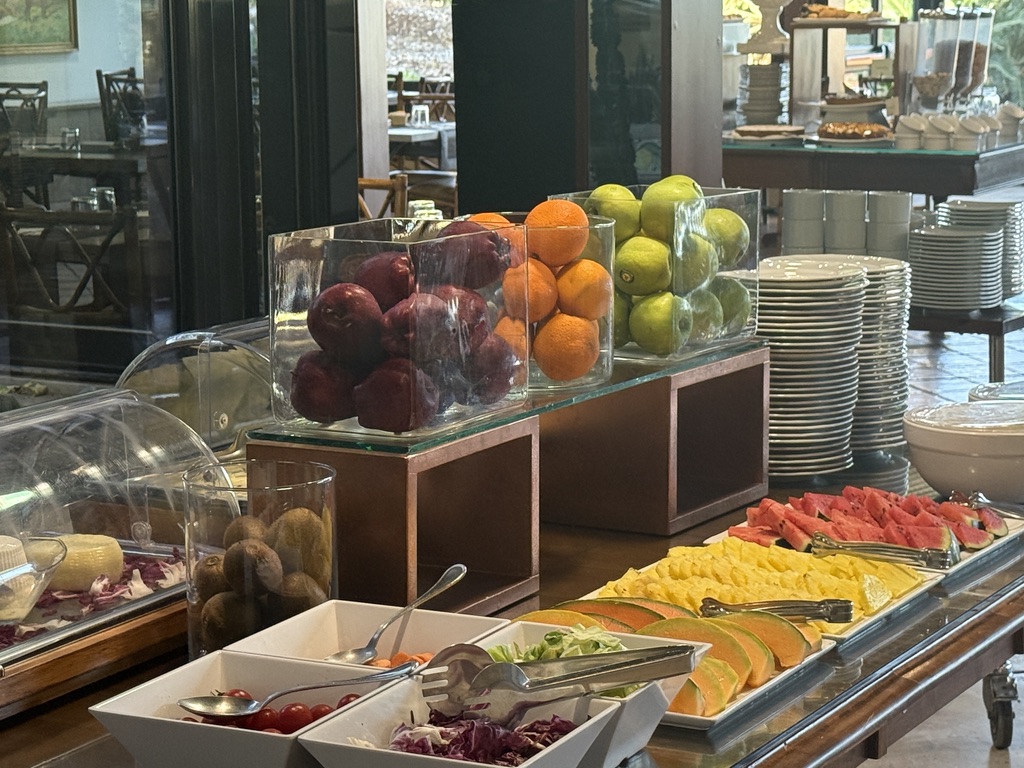
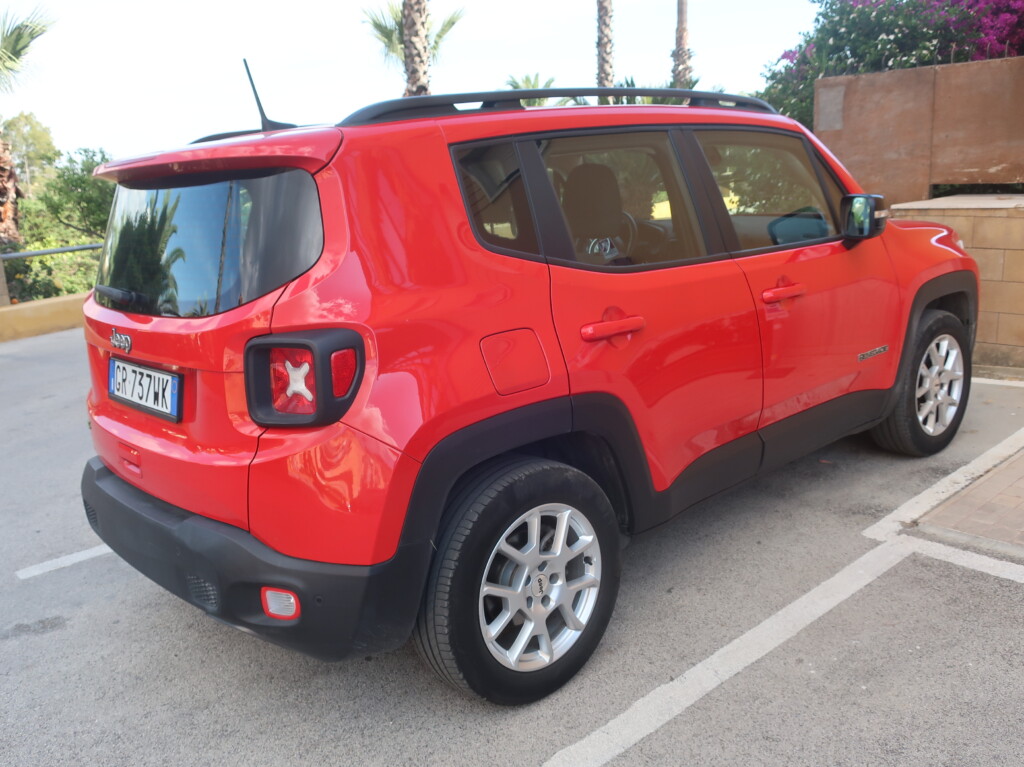
We rented an automatic jeep for two days to explore the area.
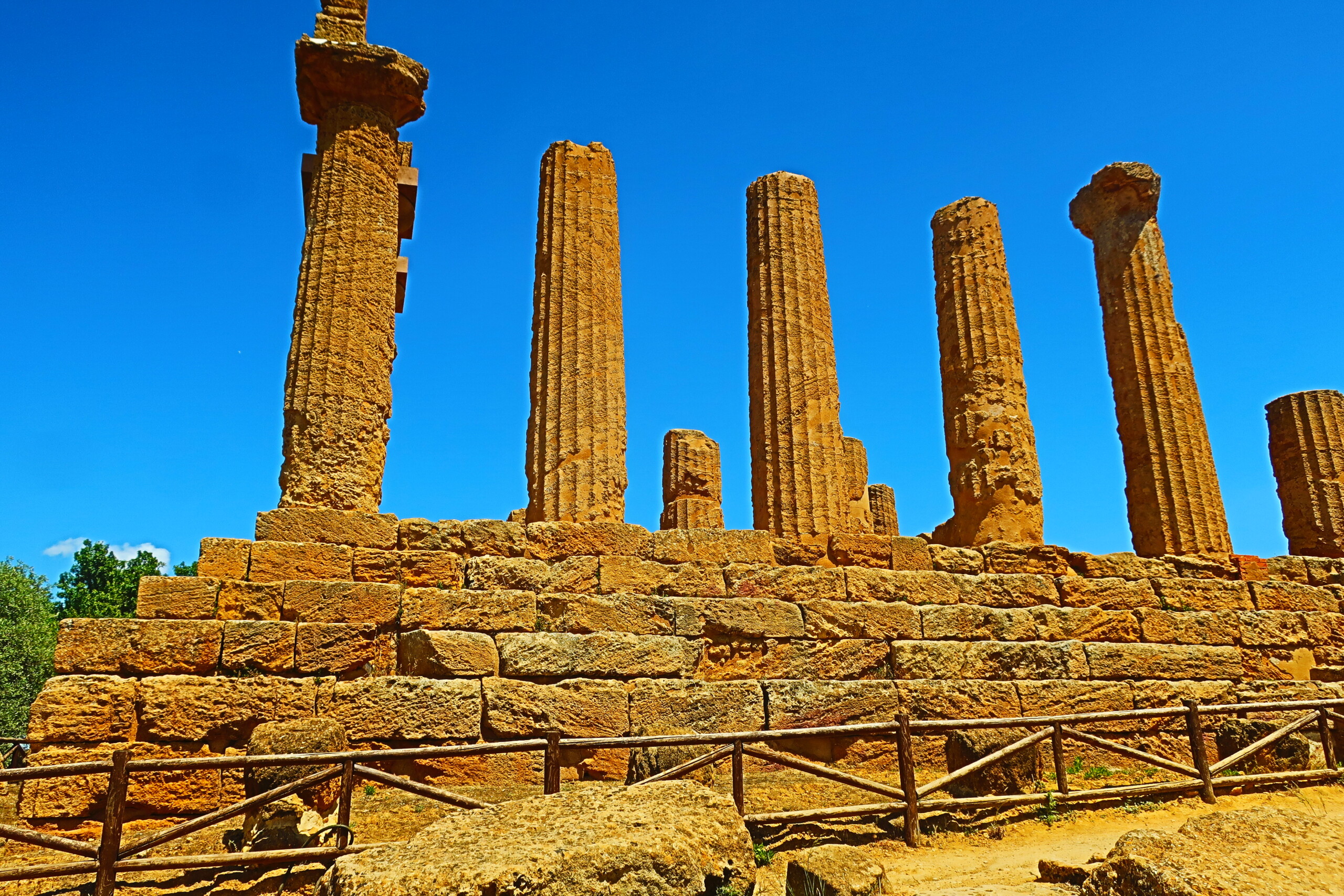
We recommend seeing these famous Greek Temples, a UNESCO World Heritage site since 1997, either early in the morning or late at night, particularly in the summer.
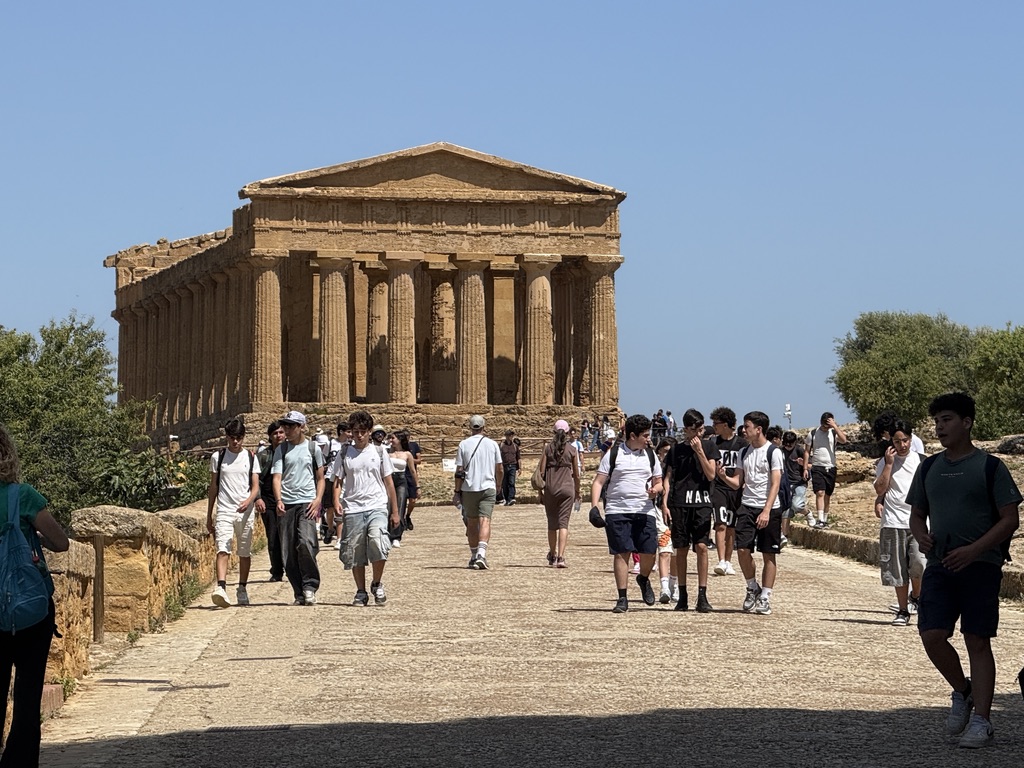
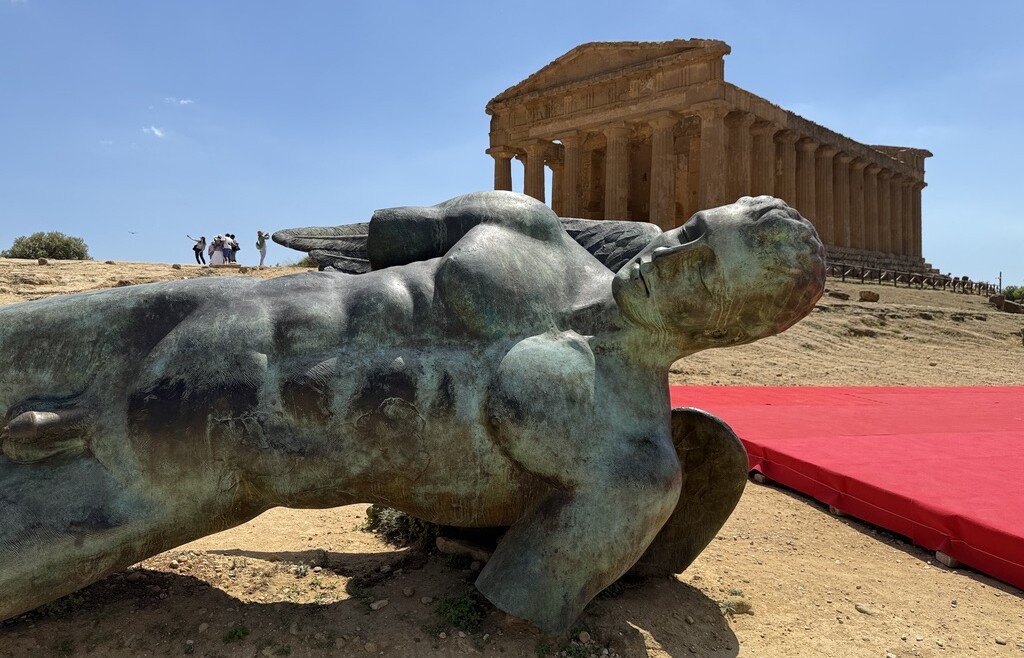
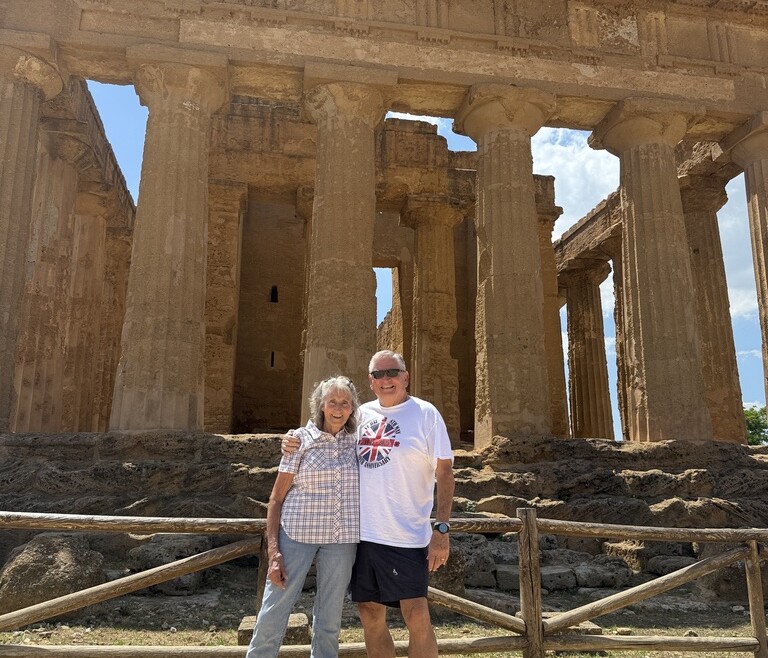
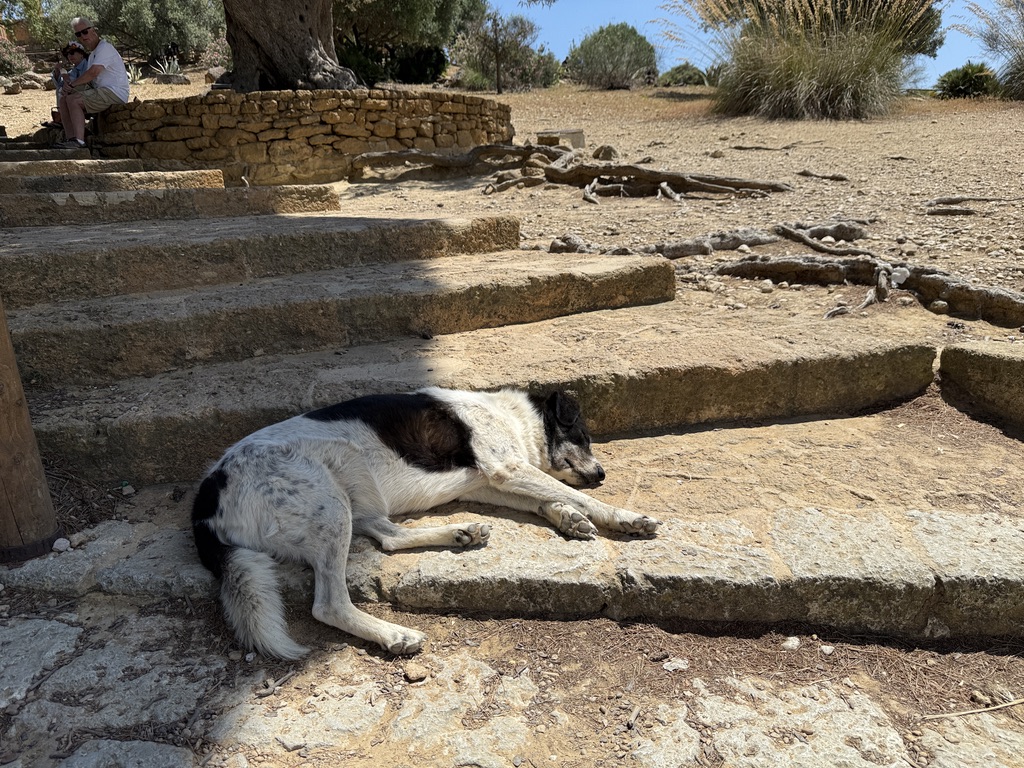
It will get hot, no question. Even dogs know to take a nap mid-day.
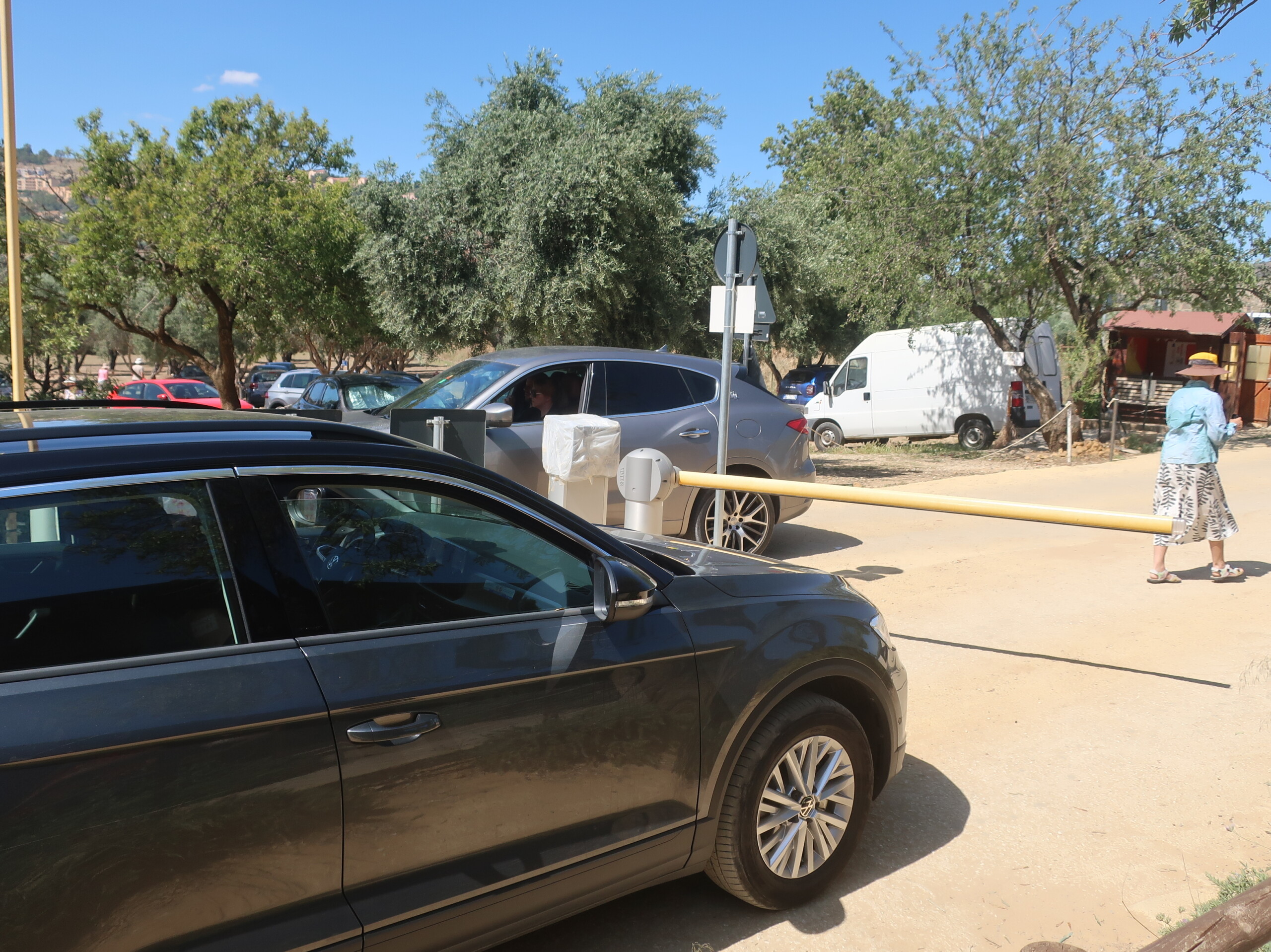
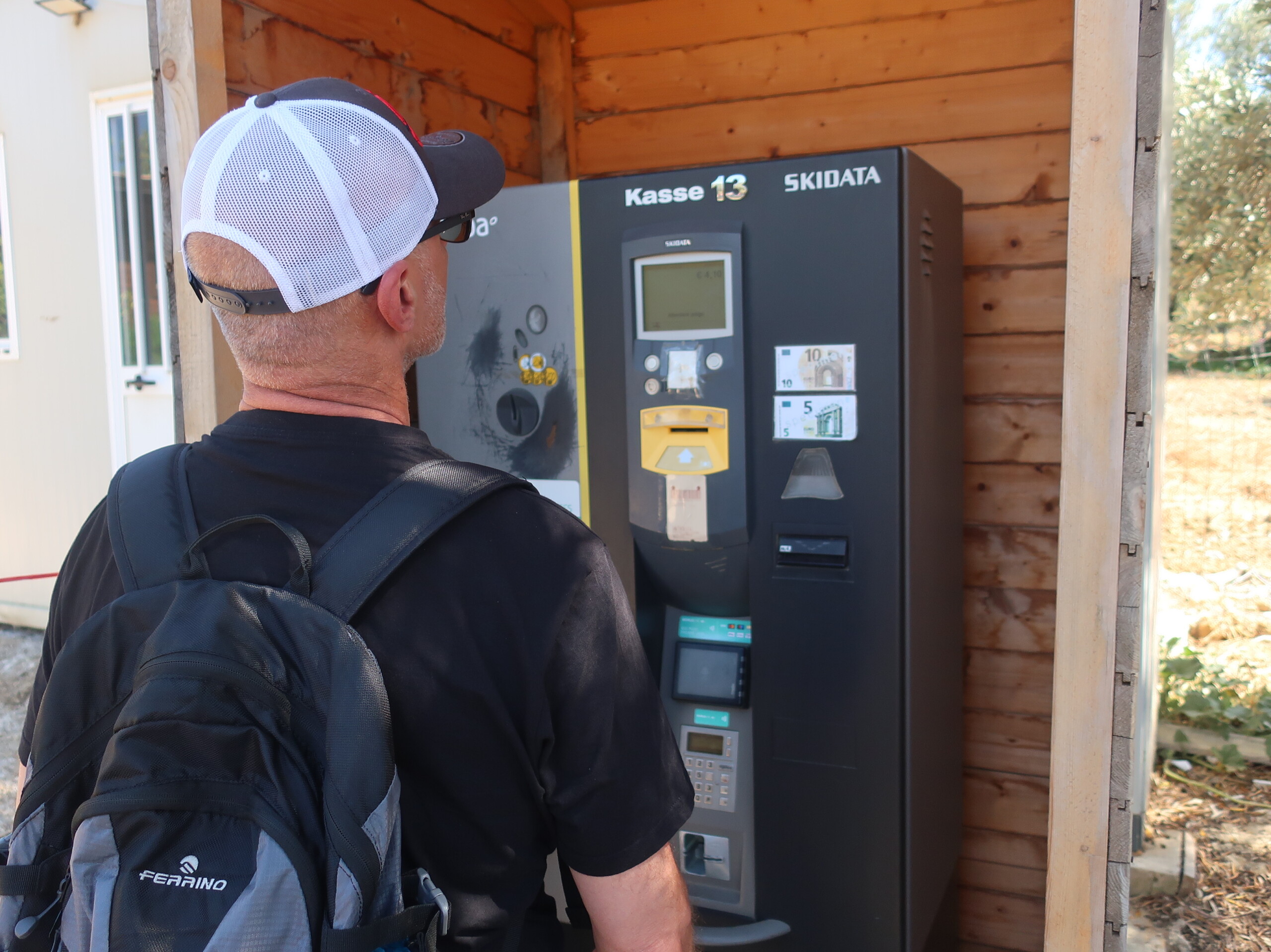
We did take the recommendation of the travel writer, Rick Steves, and visited the Archaeological Museum mid-day. A collection of well-placed artifacts will greet you. The only problem we had was finding a parking space that was not well marked. A dirt road on the side of the museum will lead you to a paid-parking area. There was no problem using our credit card at the kiosk.
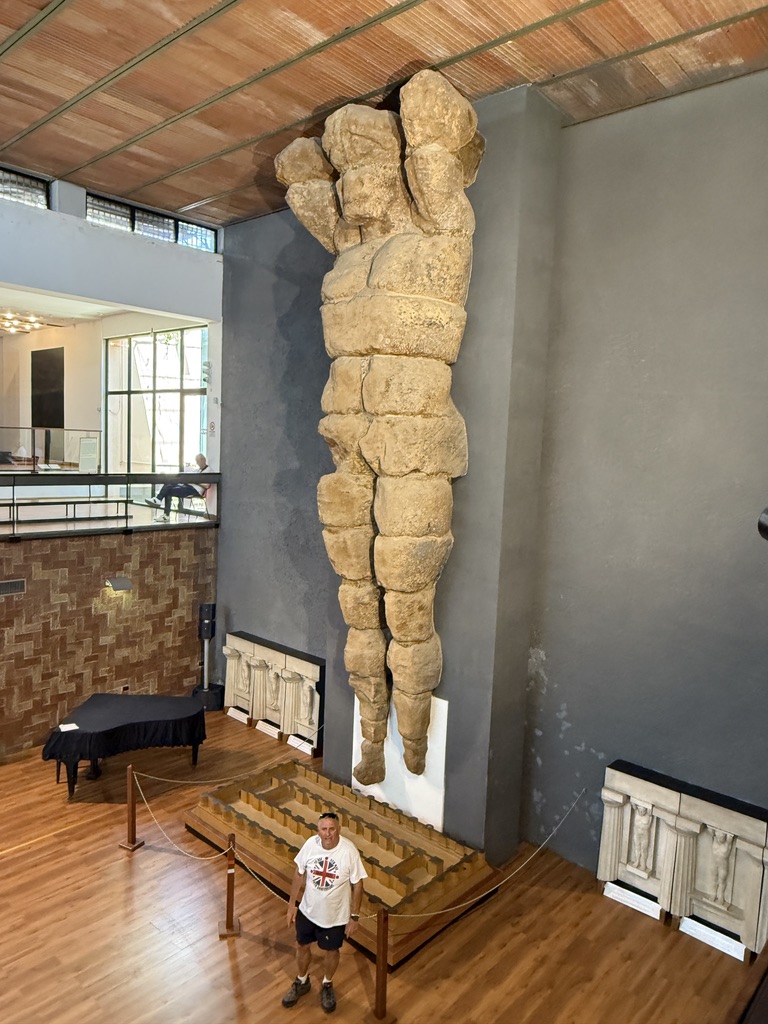
My favorite part of the museum was seeing the 40-foot high “Telamon.” 38 of these stone giants decorated the Temple of Olympian Zeus. This temple was 370 feet in length.
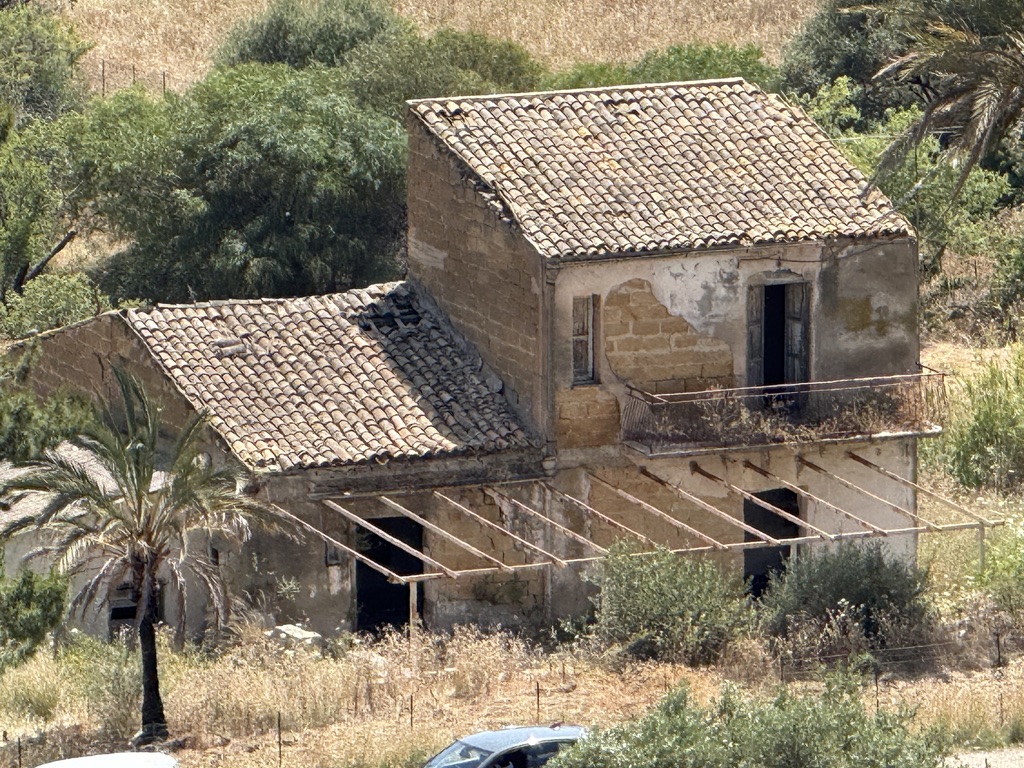
Looking down from the ridge where the Valley of the Temples are located, one could see an abandoned home. Every so often, particularly in the country-side, there were these vacant homes. Economics forced many Italians to move to America.
Kathie did enjoy our next day’s sojourn to Villa Romana Del Casale. We drove about 2 hours on an Interstate and then through villages and valleys. The roads were remarkable good.
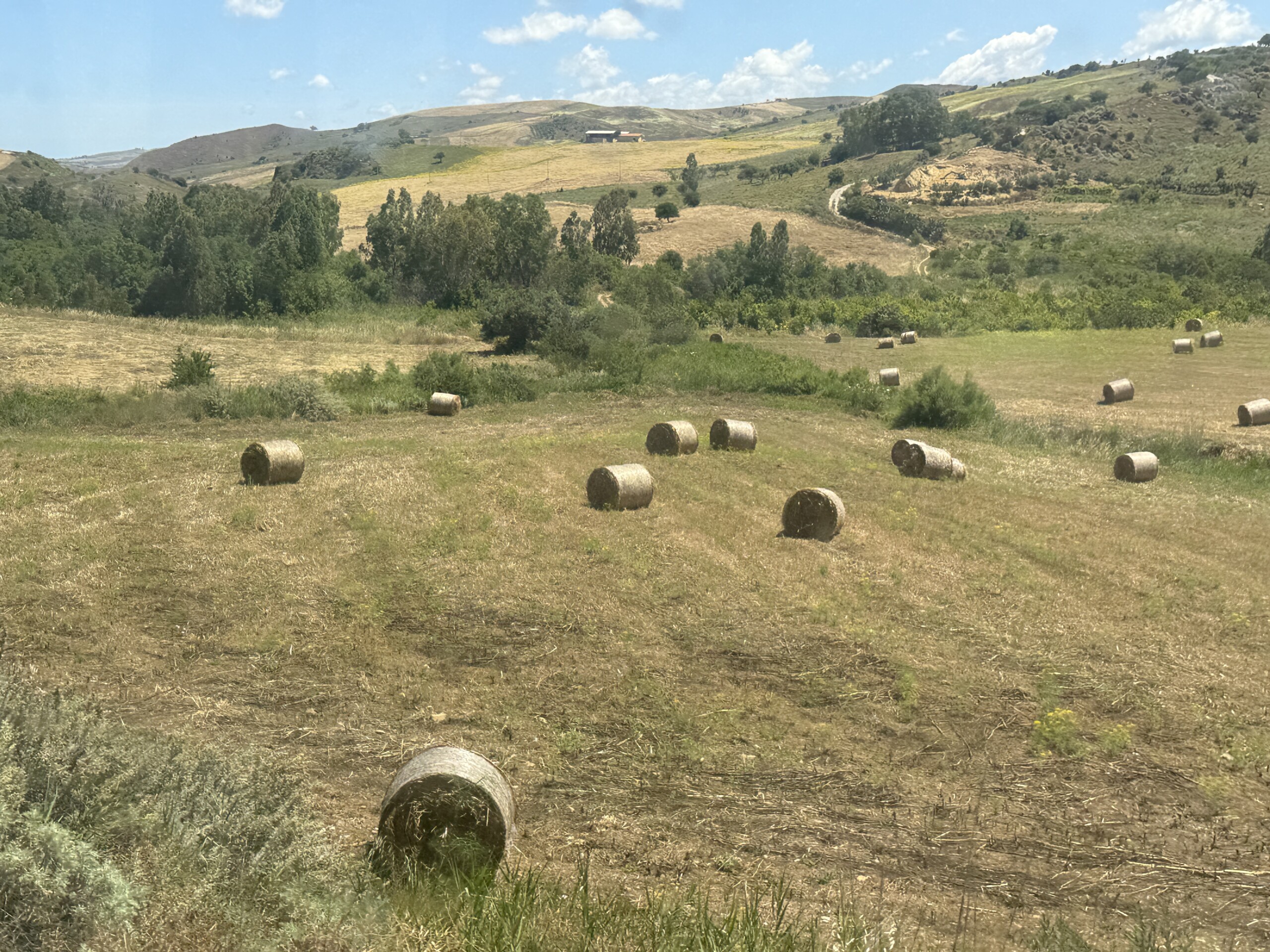
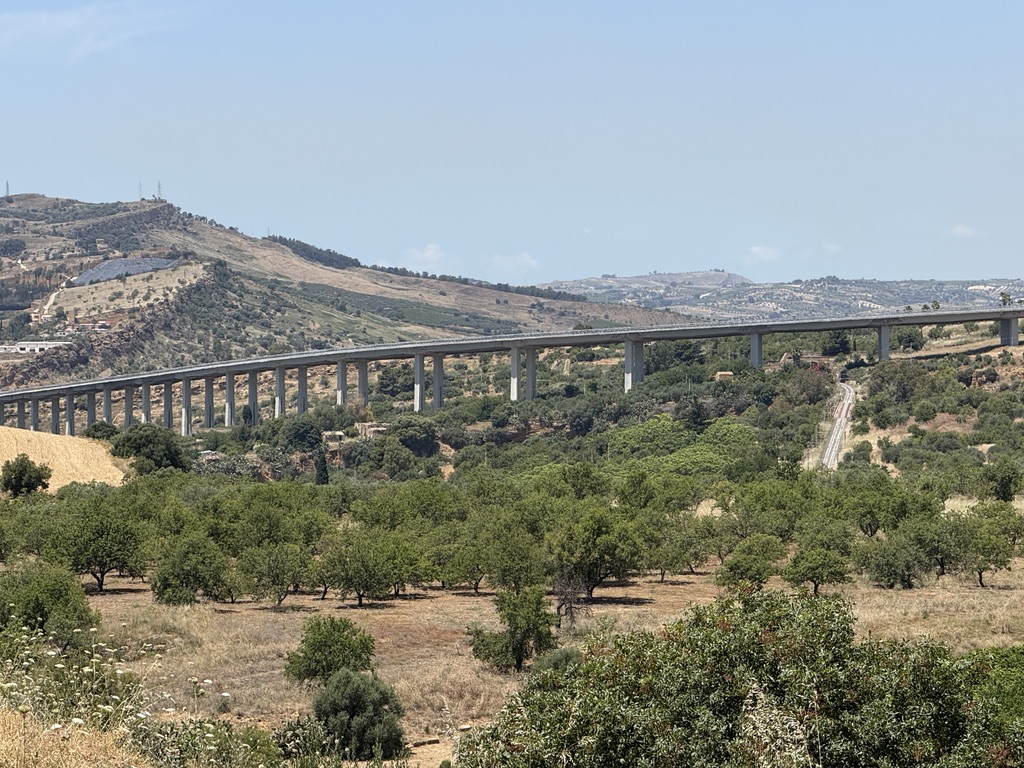
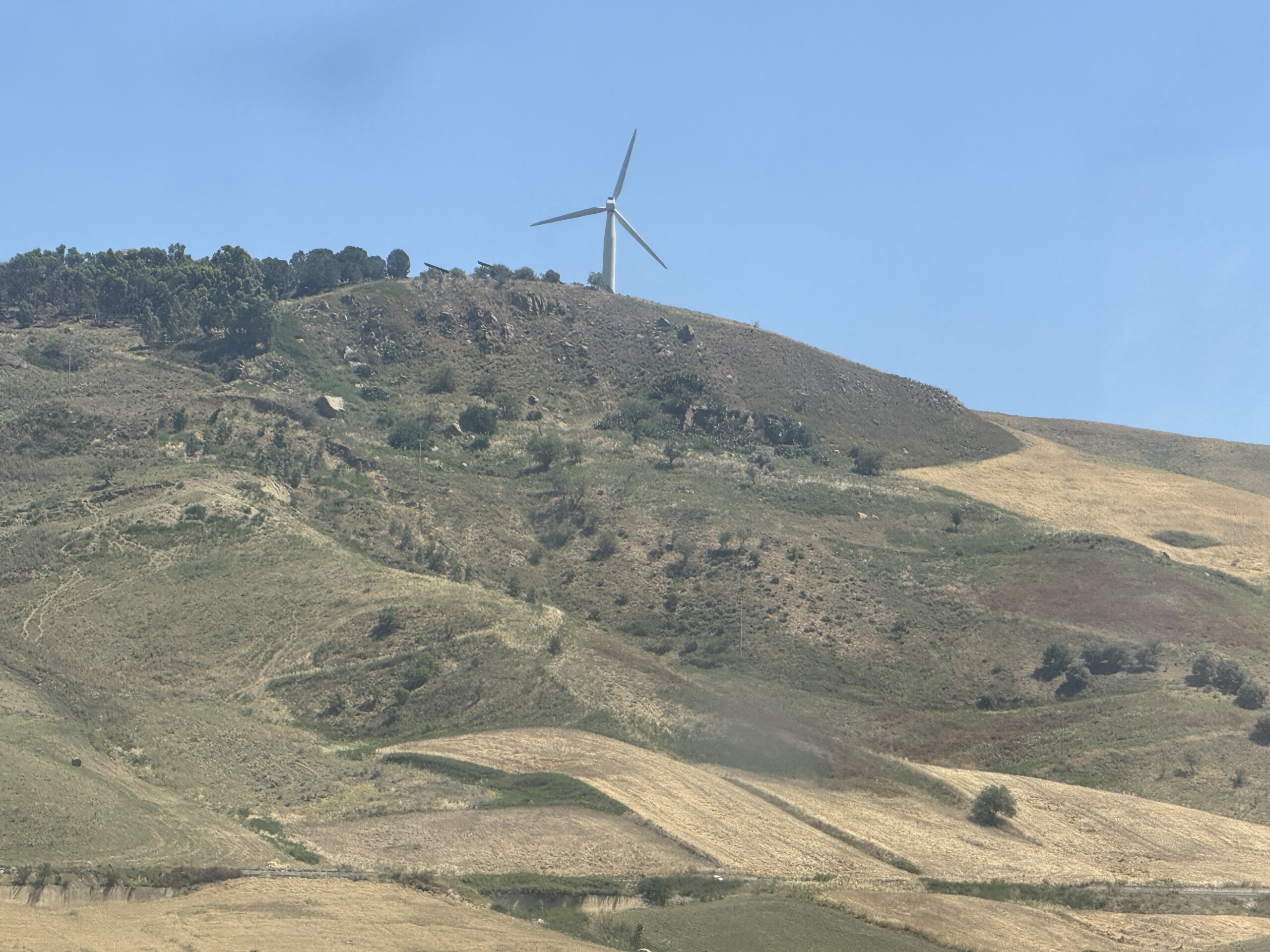
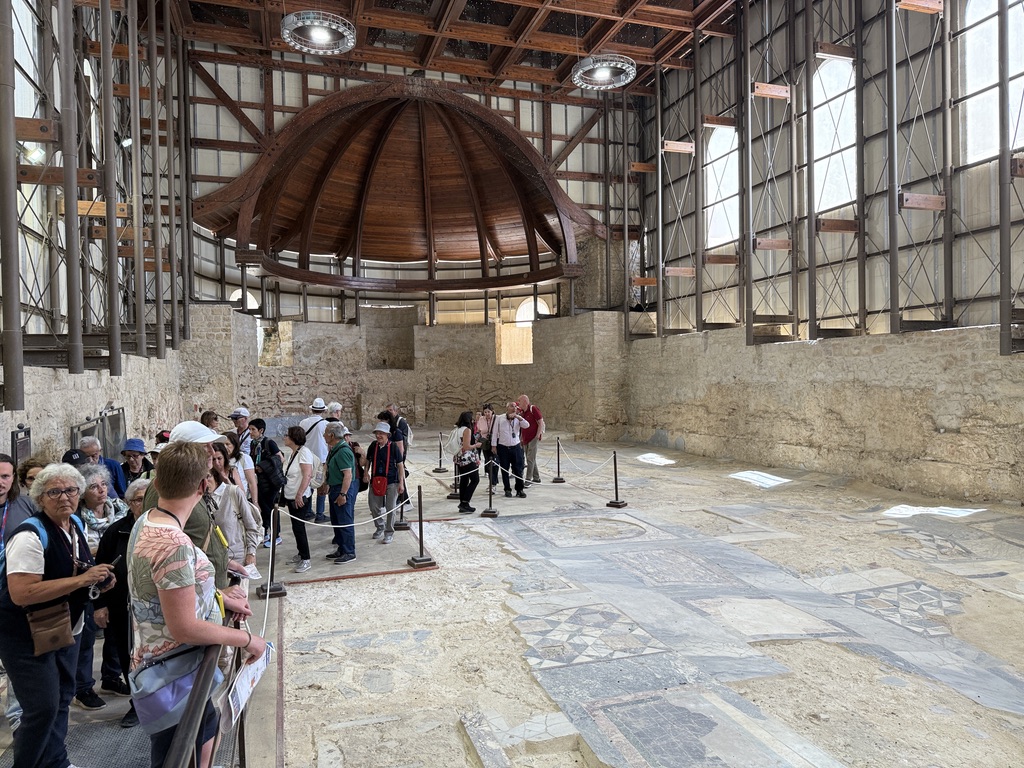
We came upon this remote location where a Roman senator had a villa that was 37,000 feet. The mosaics that were found has made this villa famous. The mosaics depicted someone who was involved with exporting animals.
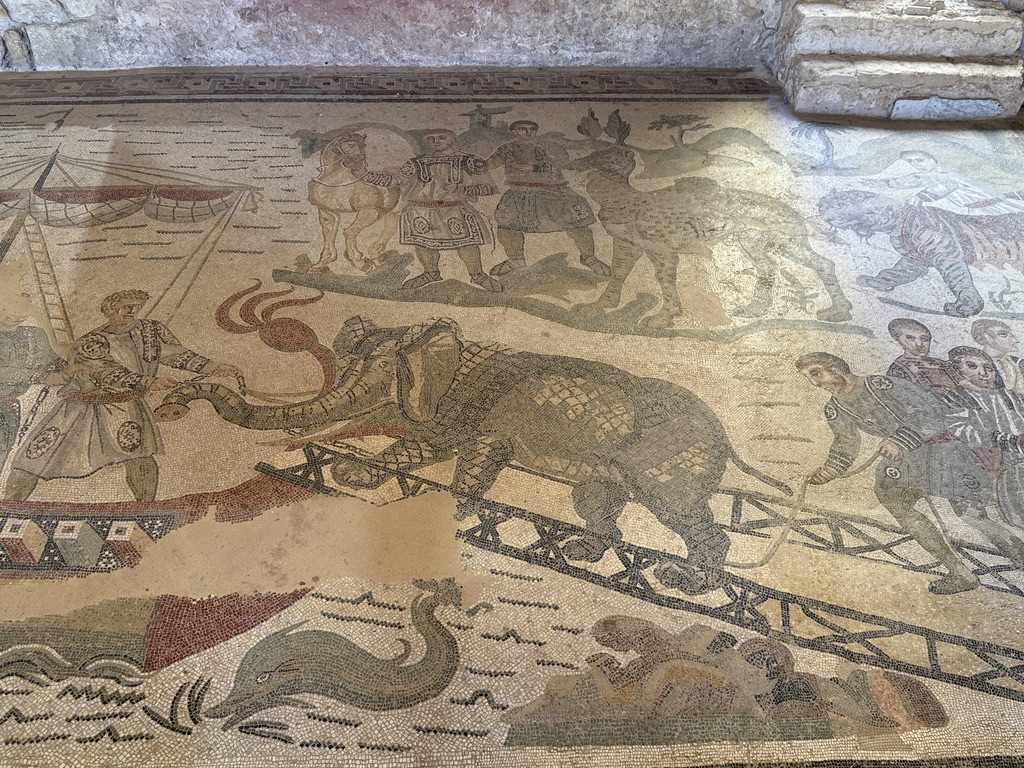
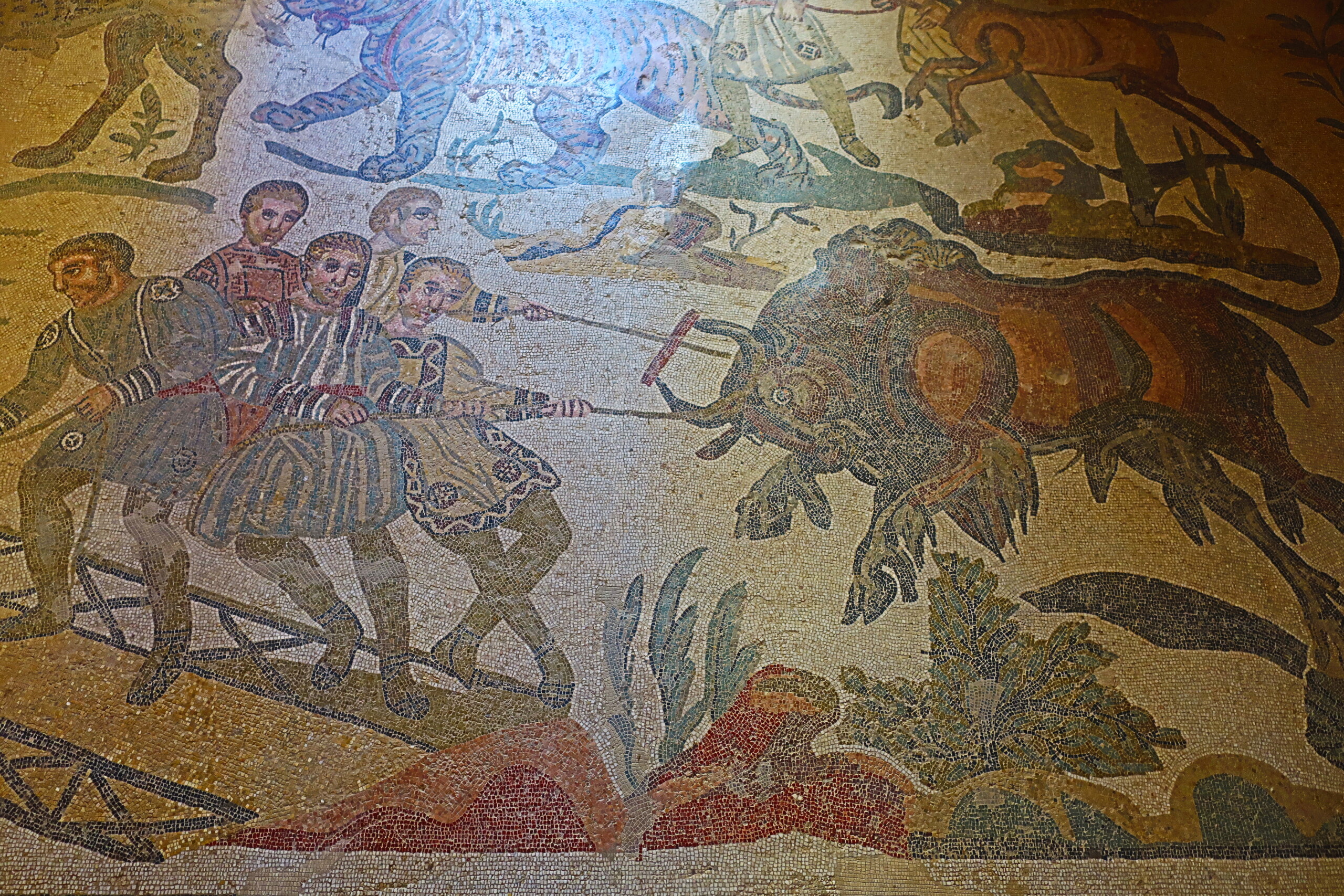
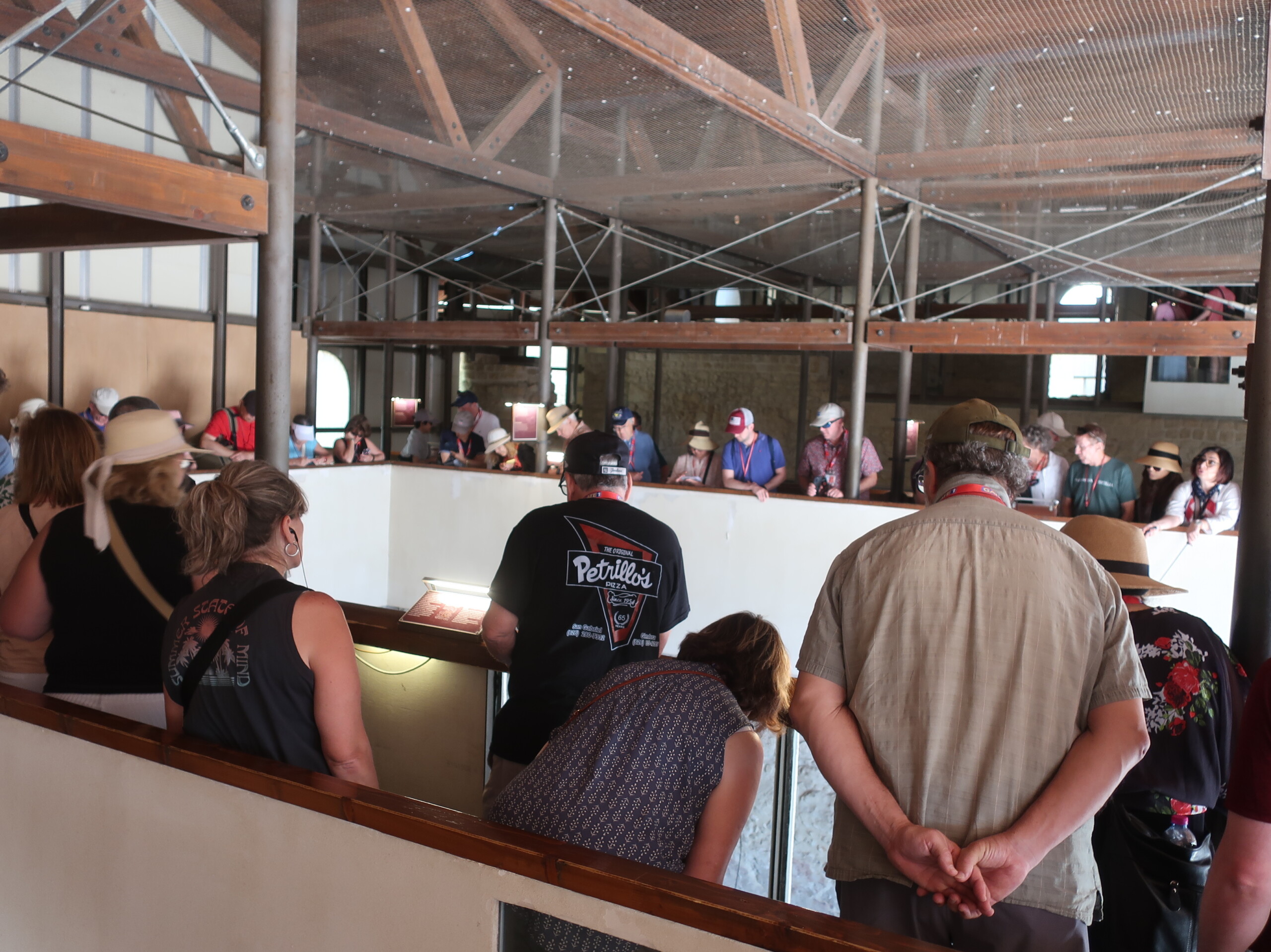
No one knows who this person was. In the 1300’s AD, the villa was sealed off by a landslide for the next 600 years. Today, Villa Romana Del Casale is part of the UNESCO WORLD HERITAGE collection.The idea of using mosaics came from the Greeks. Due to its durability, particularly with colors, we have a historical record that is well preserved. Touring the villa only takes about an hour as visitors are walking along 3-foot-wide catwalks above the mosaics.
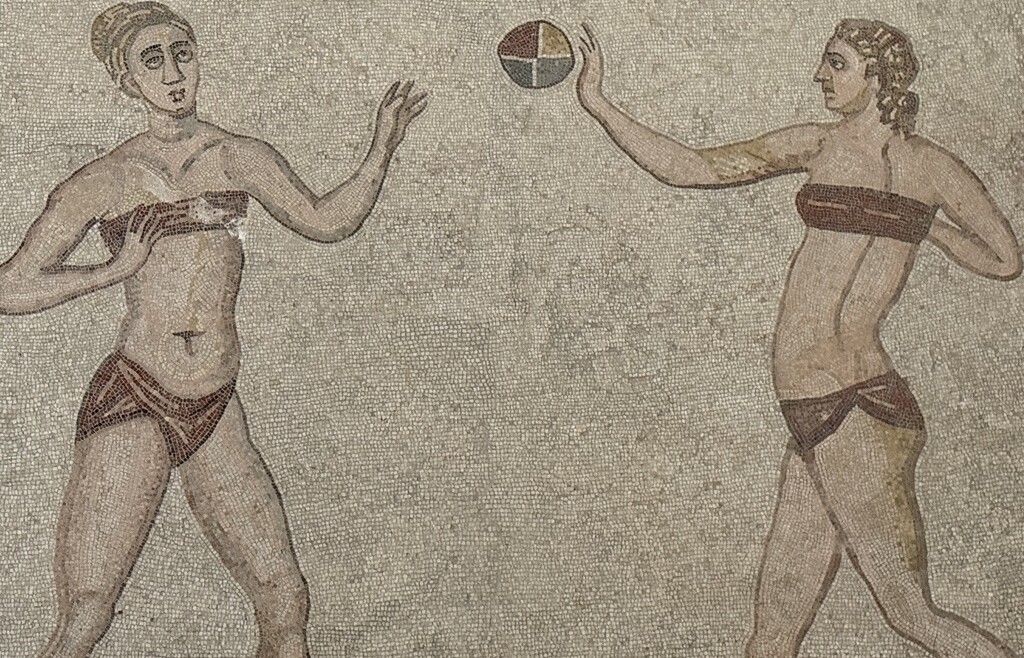
My favorite mosaics are “the bikini girls.” Women are depicted running, lifting weights and even playing what appears to be beach volleyball.
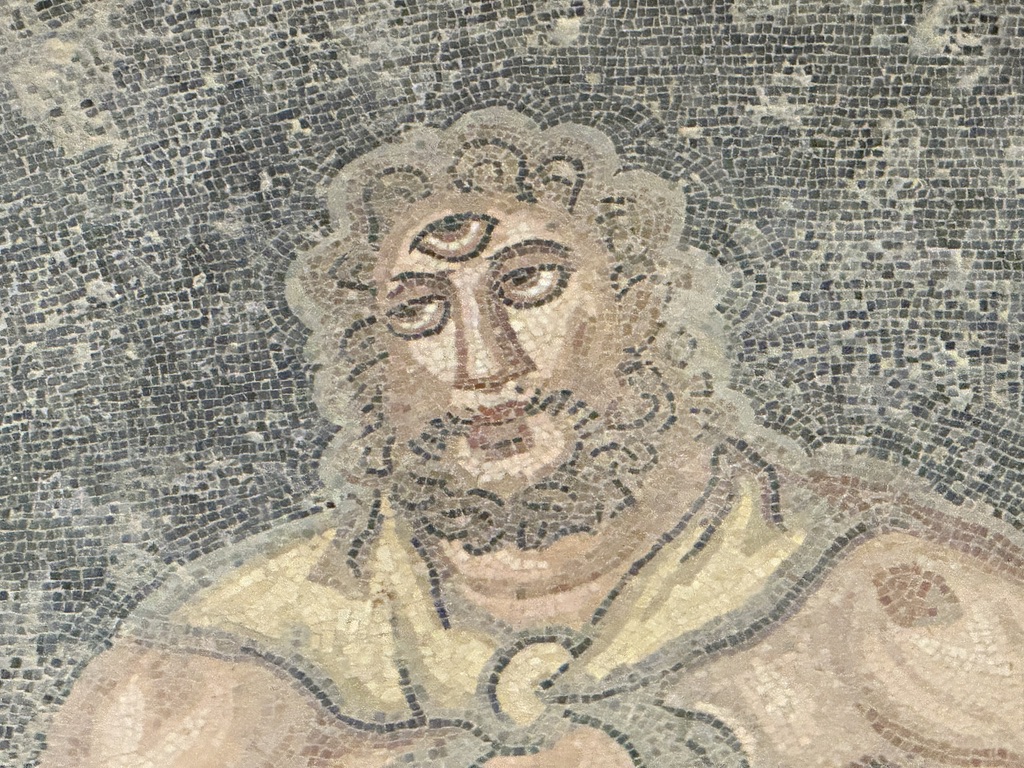
A 200-foot-long hunting scene is enclosed in the grand hall with camels, rhinoceroses, lions, ostriches to name a few of the many animals depicted in mosaics. We thought the 3 eyed cyclopes was fairly interesting too.
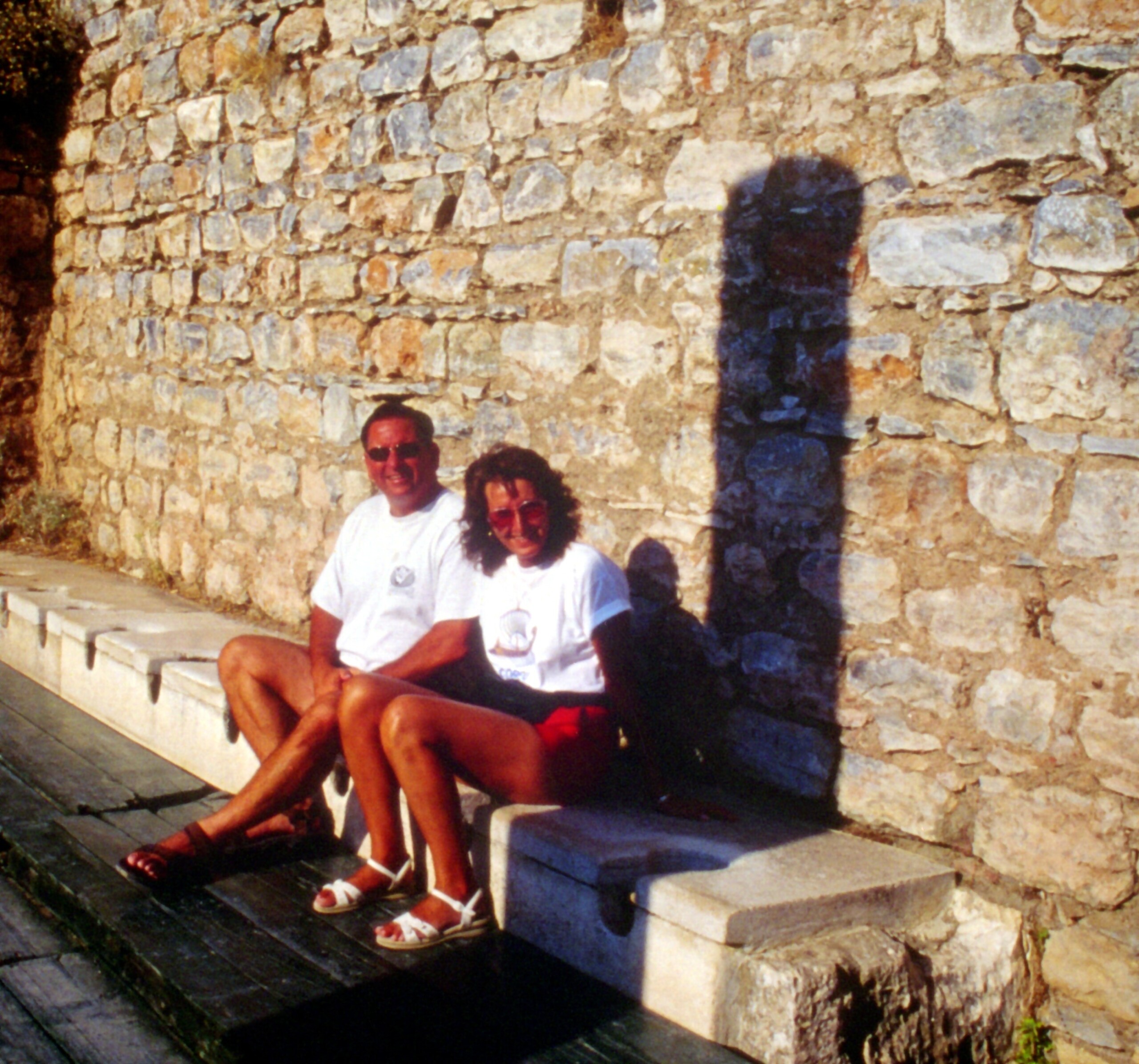
There is even a room with several toilets next to to each other. We first came upon similar toilets in Turkey while vising Ephesus in 2001. Ironically, there is no such word in Ancient Greek for “privacy.” Then, too, they did not use toilet paper. What was used instead was a stick with a brush at one end. Usually there was always running water under the toilets.
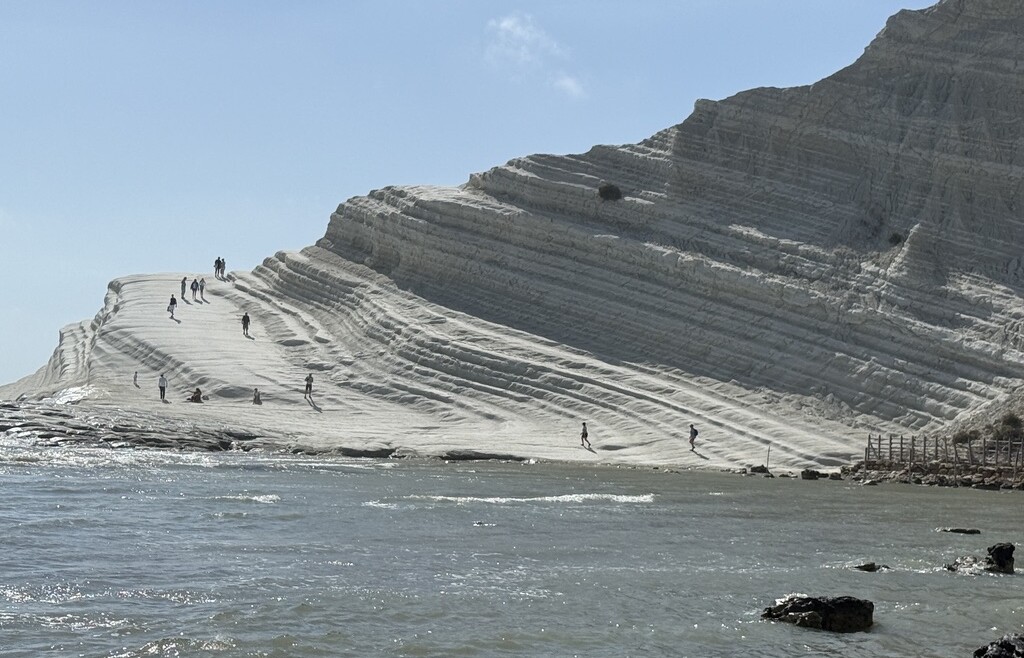
There was enough time in the day to drive to the coast and we viewed the limestone formation known as “Stair of the Turks.” The white staircases are said to be 5 million years old.
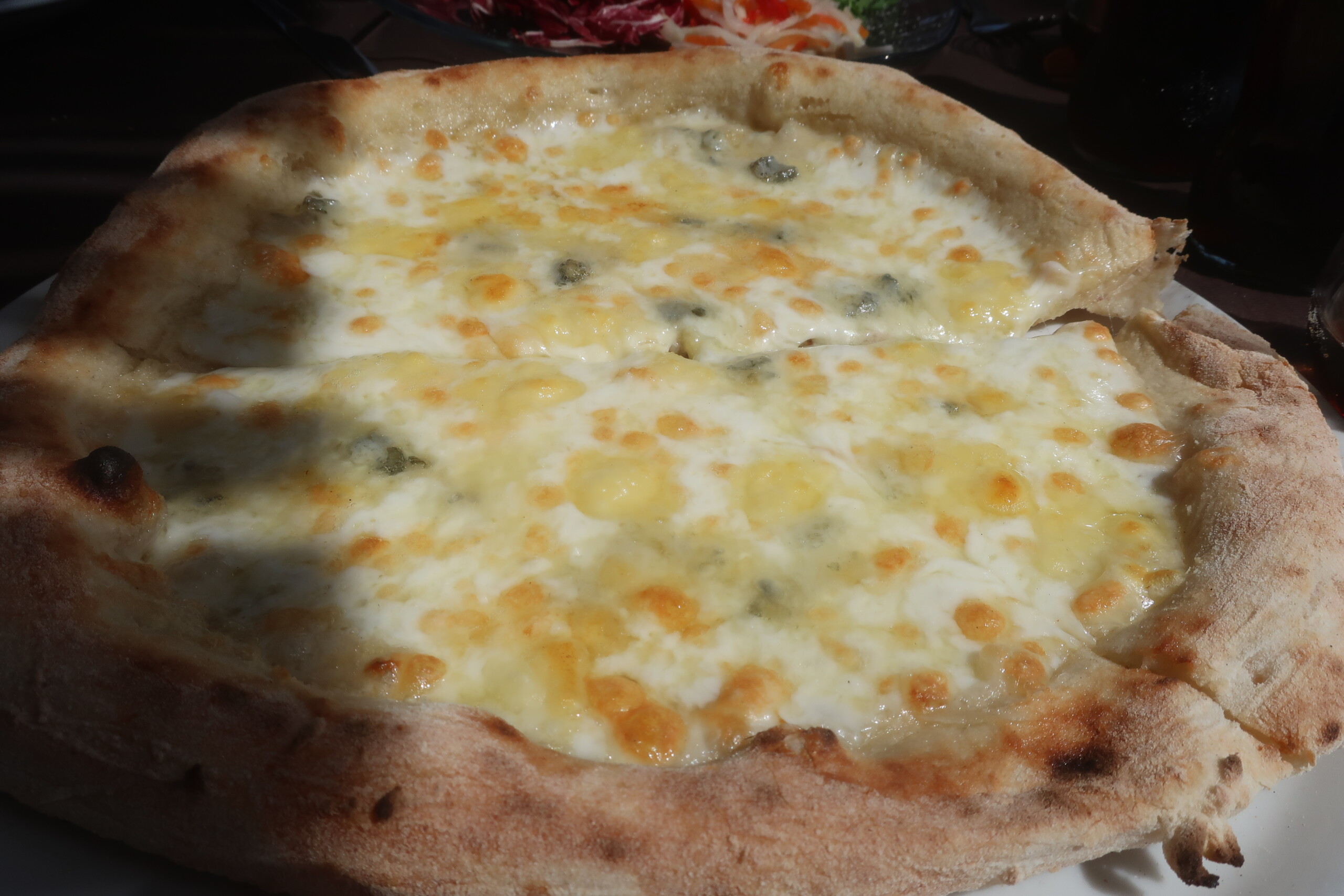
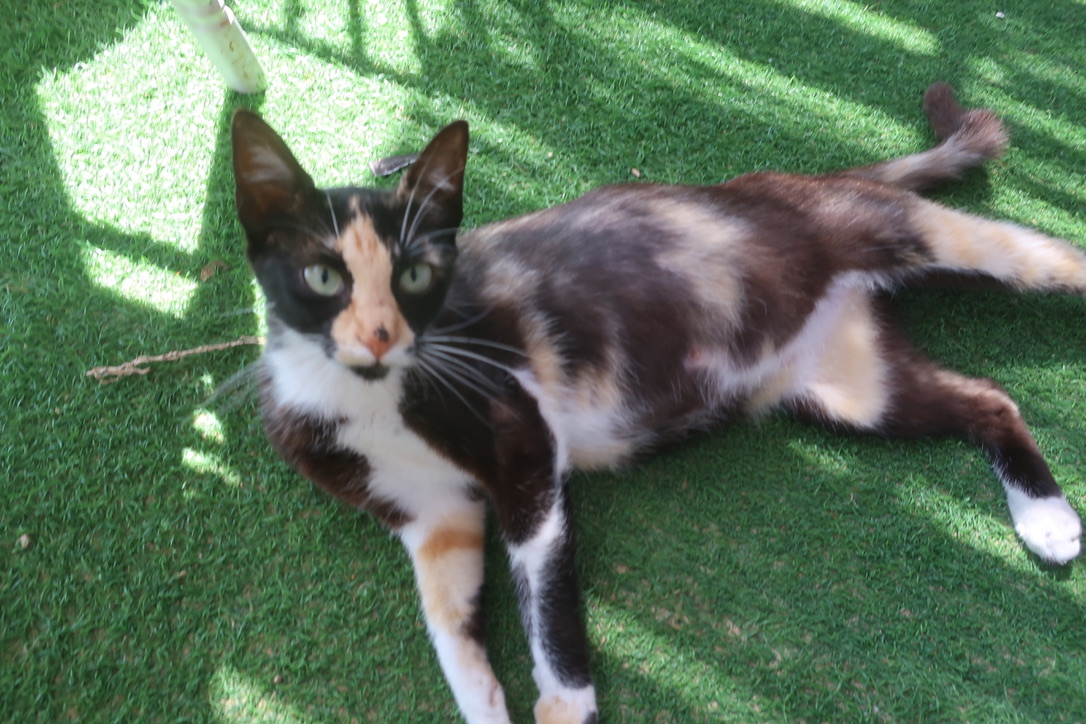
We did have salad and a quattro formaggi pizza for a late lunch overlooking the Mediterranean Sea. Just 125 miles southeast of us was the island of Malta. We had a friendly visitor as we enjoyed the remaining sunlight.
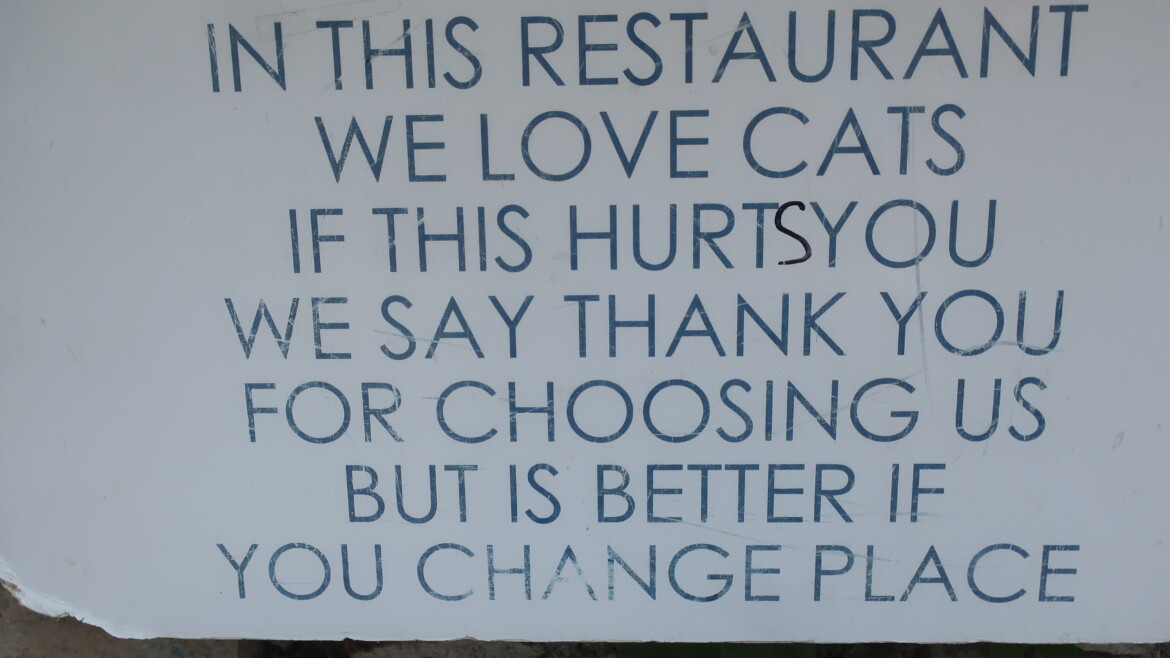
Cats are indeed important in Sicily. I found this sign by one restaurant warning about their cats:
Chapter 4, Cefalu (cheh-fah-LOO) “Where the sun meets the sand”
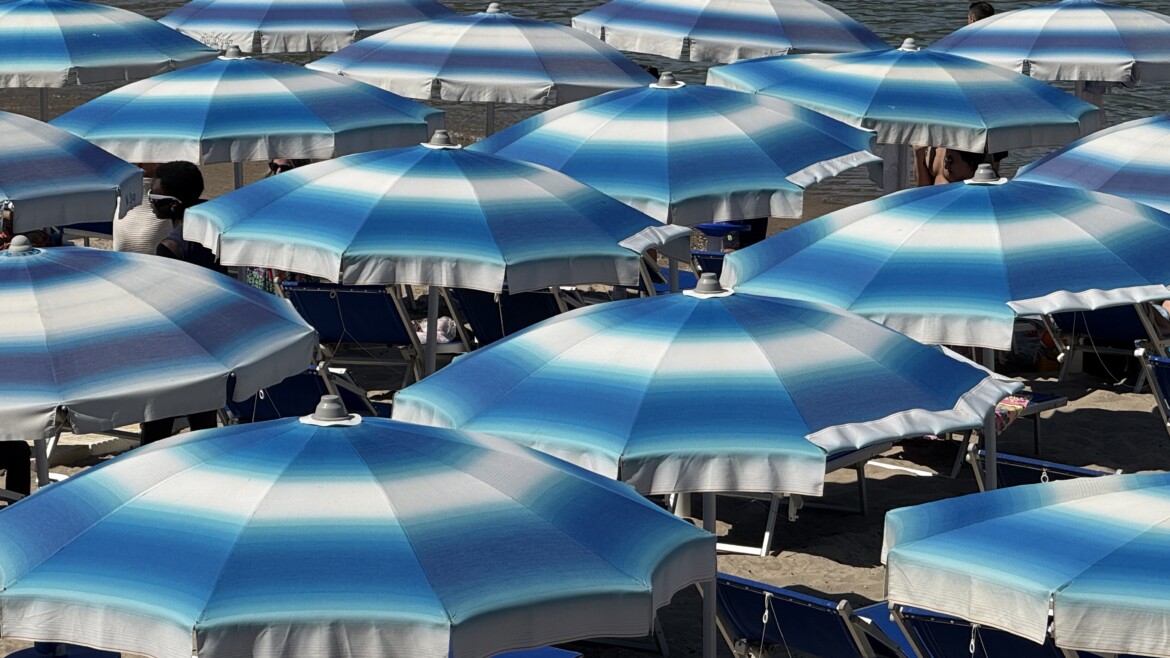
A 2-hour train ride will take you to the beach community of Cefalu. Most beaches on the north coast of Sicily are rocky. Cefalu is the exception. We were there in late May and the place was crowded with beach goers and visitors.
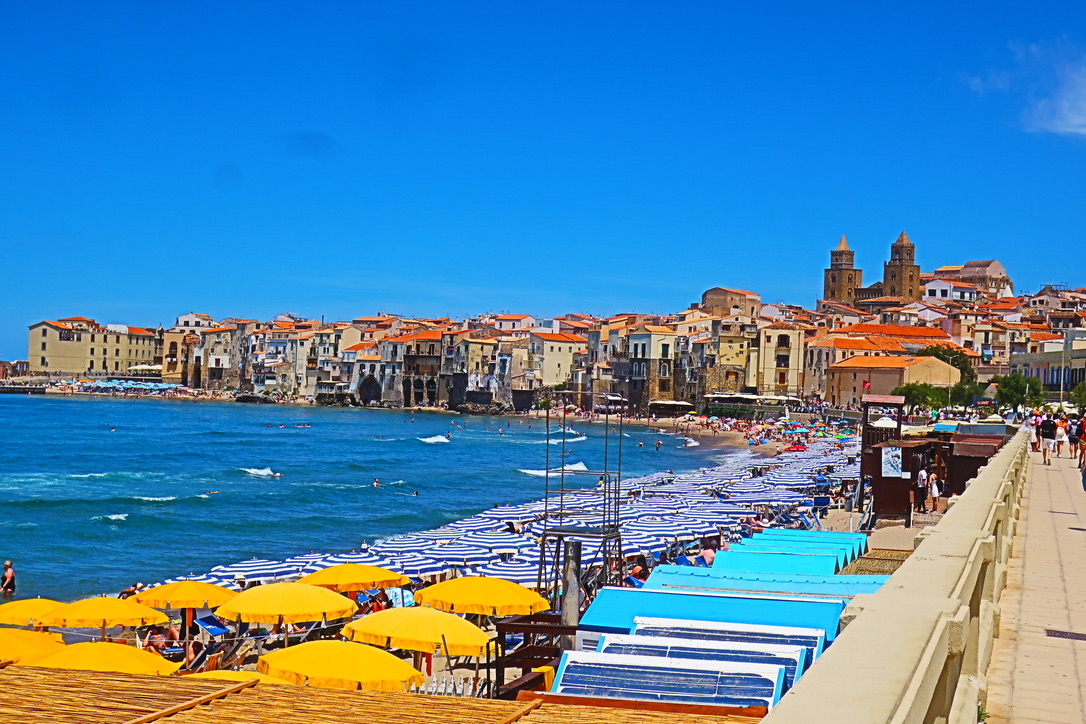
We stayed in a Rick Steves recommended hotel, Villa Gaia. It was supposed to have an elevator; it did not. In Steves second edition, the idea of an elevator was omitted.
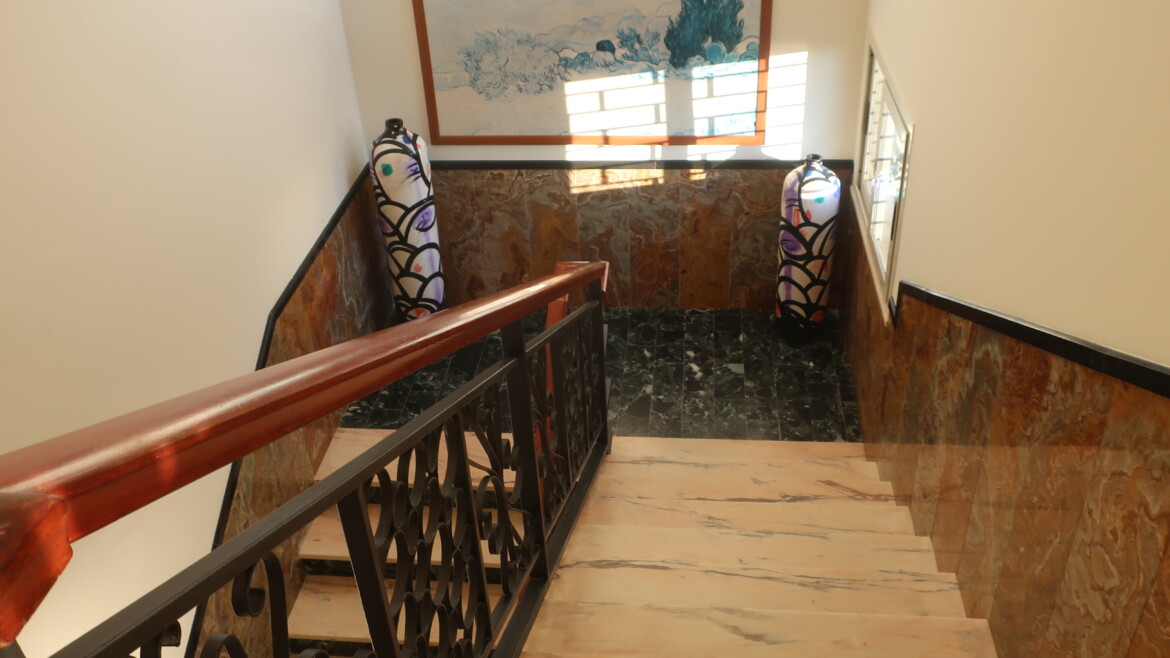
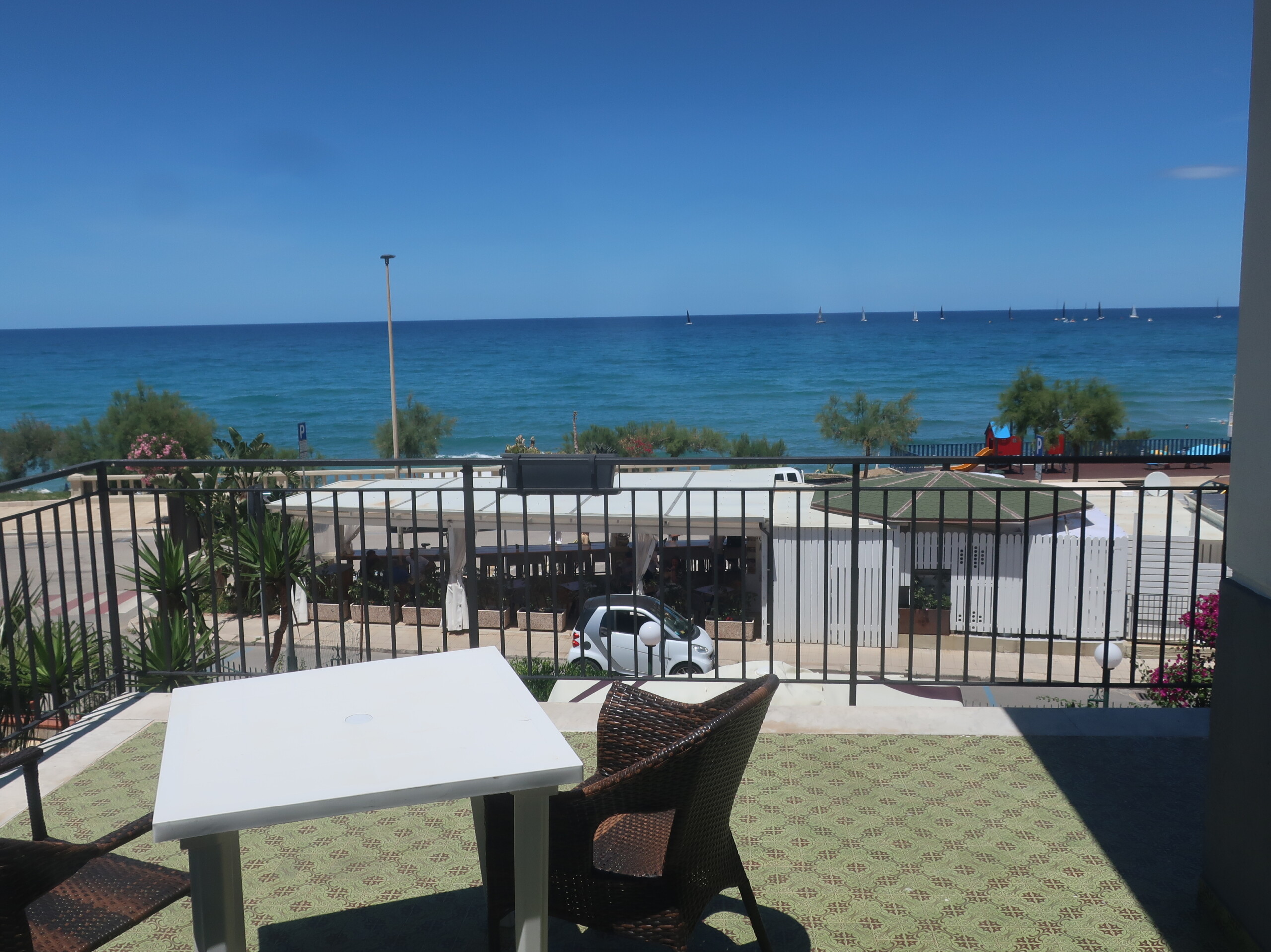
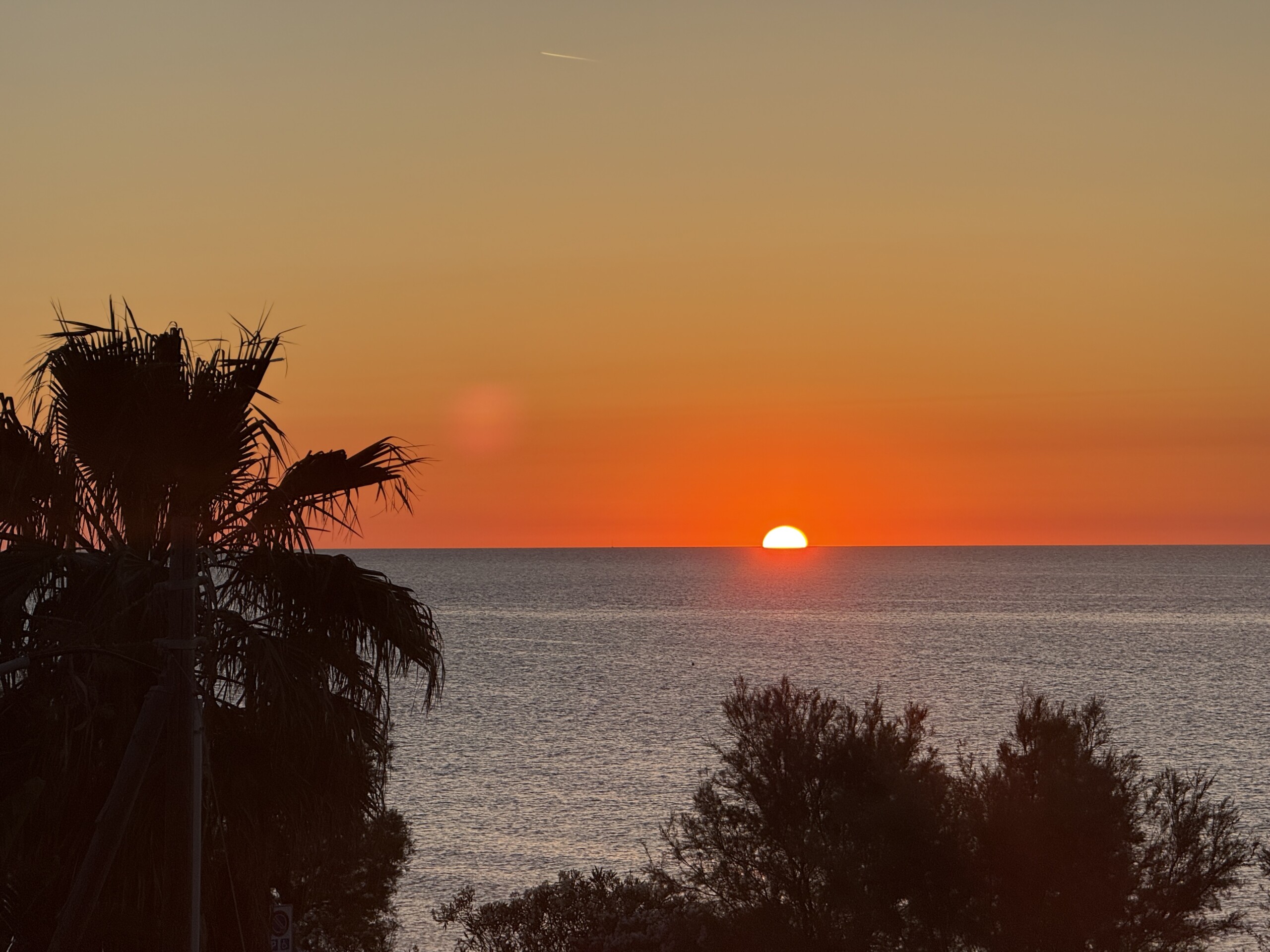
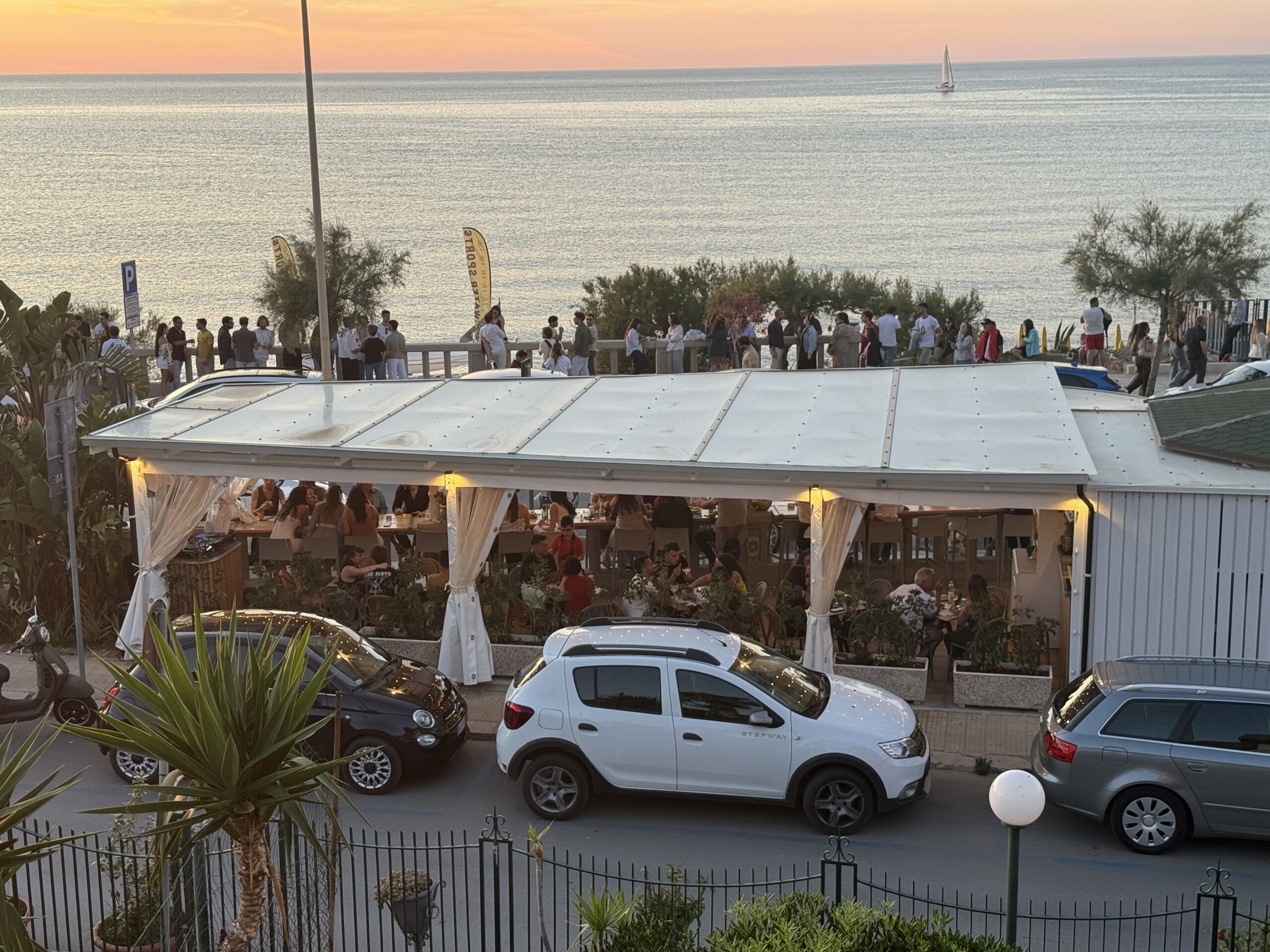
A Google picture showed a pool; there was none. It did have friendly staff though. The hotel had its quirks. We also managed to book months ahead to get one of their two direct ocean front rooms. There was this huge patio area. We saw several awesome sunsets setting in the Tyrrhenian Sea in our 3-night stay.
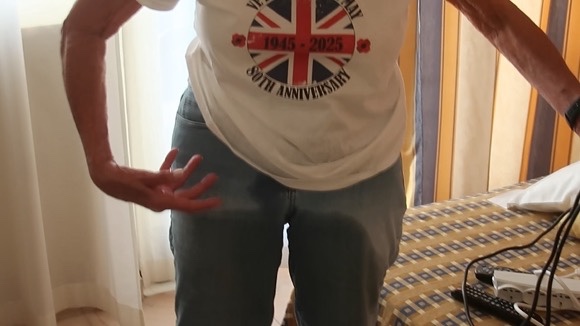
Our room did have a very large bathroom, not typical of many European rooms. Unfortunately, it has the smallest walk-in shower we have ever experienced. My elbows were hitting the sides. The night attendant came up to show us how to use the shower nozzle. He accidentally sprayed himself and Kathie. We still laugh about that incident.
Our room did face the street and an adjacent hotel with a bar area. On Saturday night their very loud music played until 3:00AM. We don’t laugh about that experience. Cefalu is definitely a spirited place in the summer.
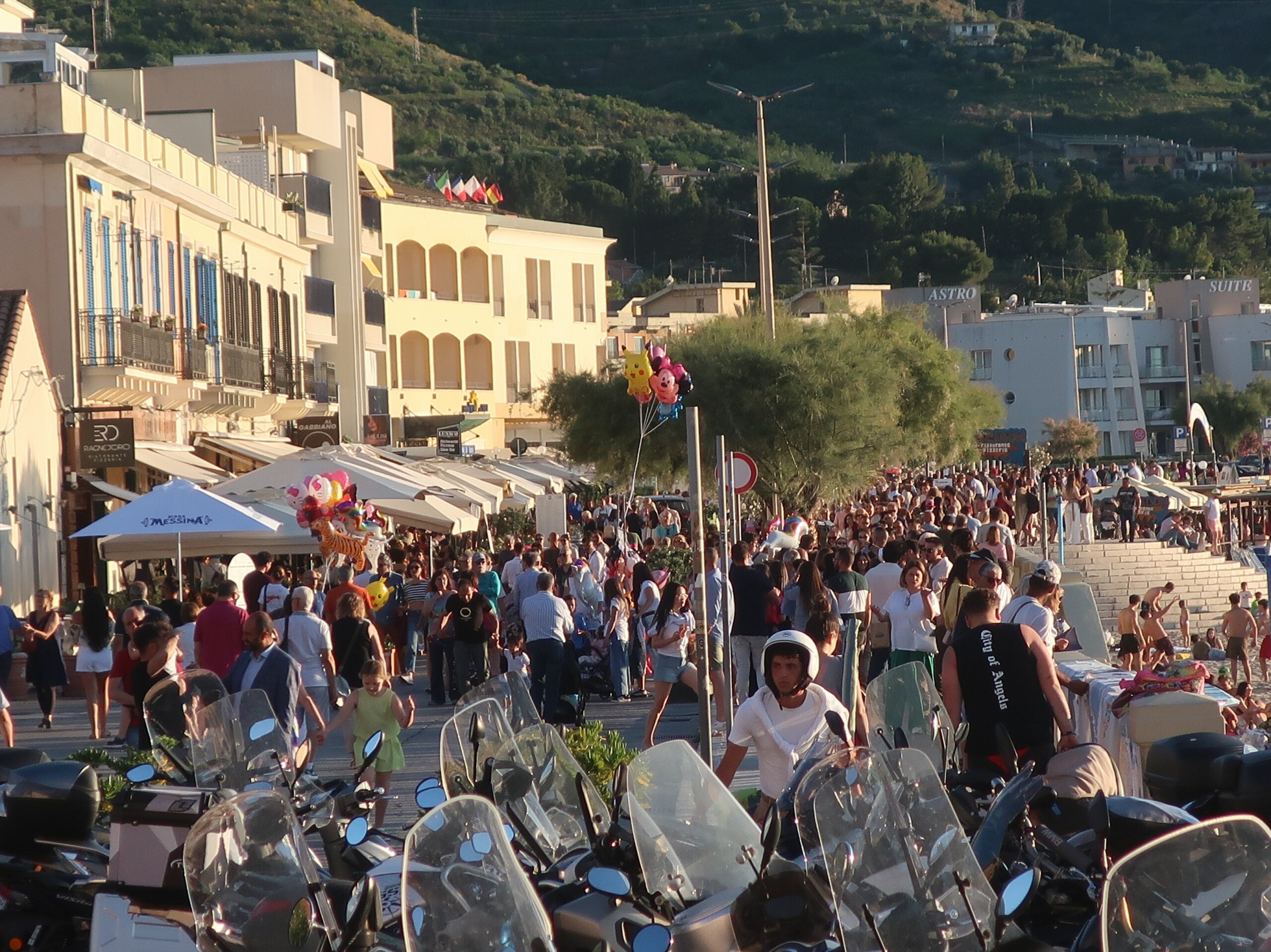
At the restaurant in front of our hotel, we met two super guys. One was a lawyer and one was a dentist from Spain. They paid for our round of drinks.
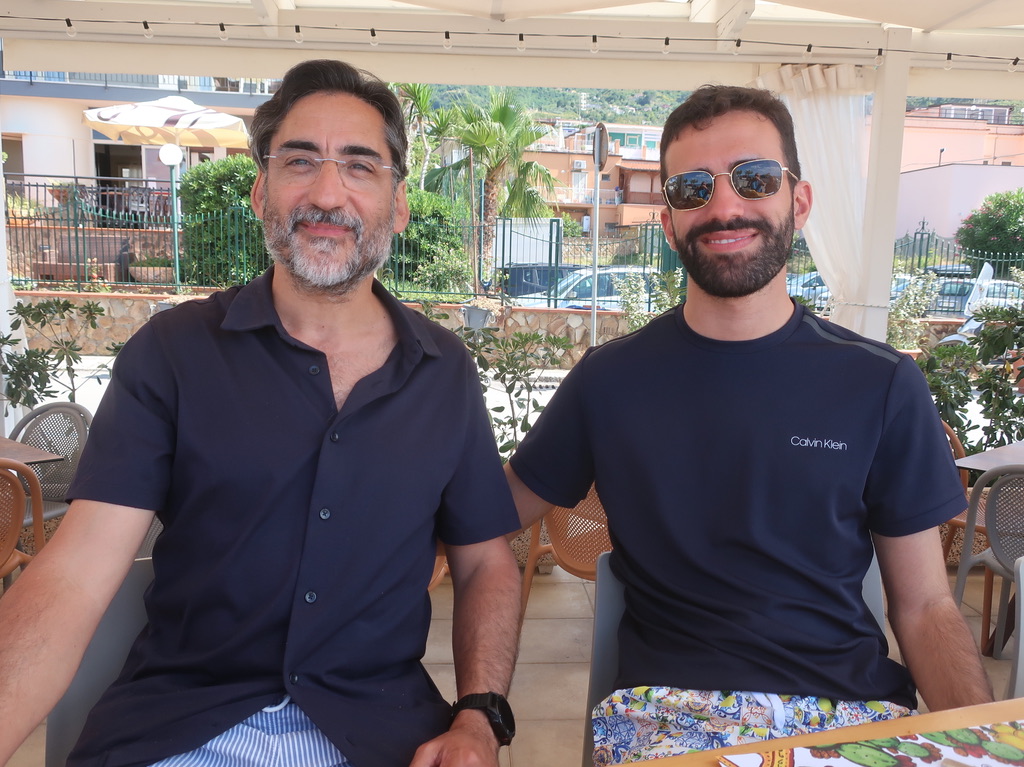
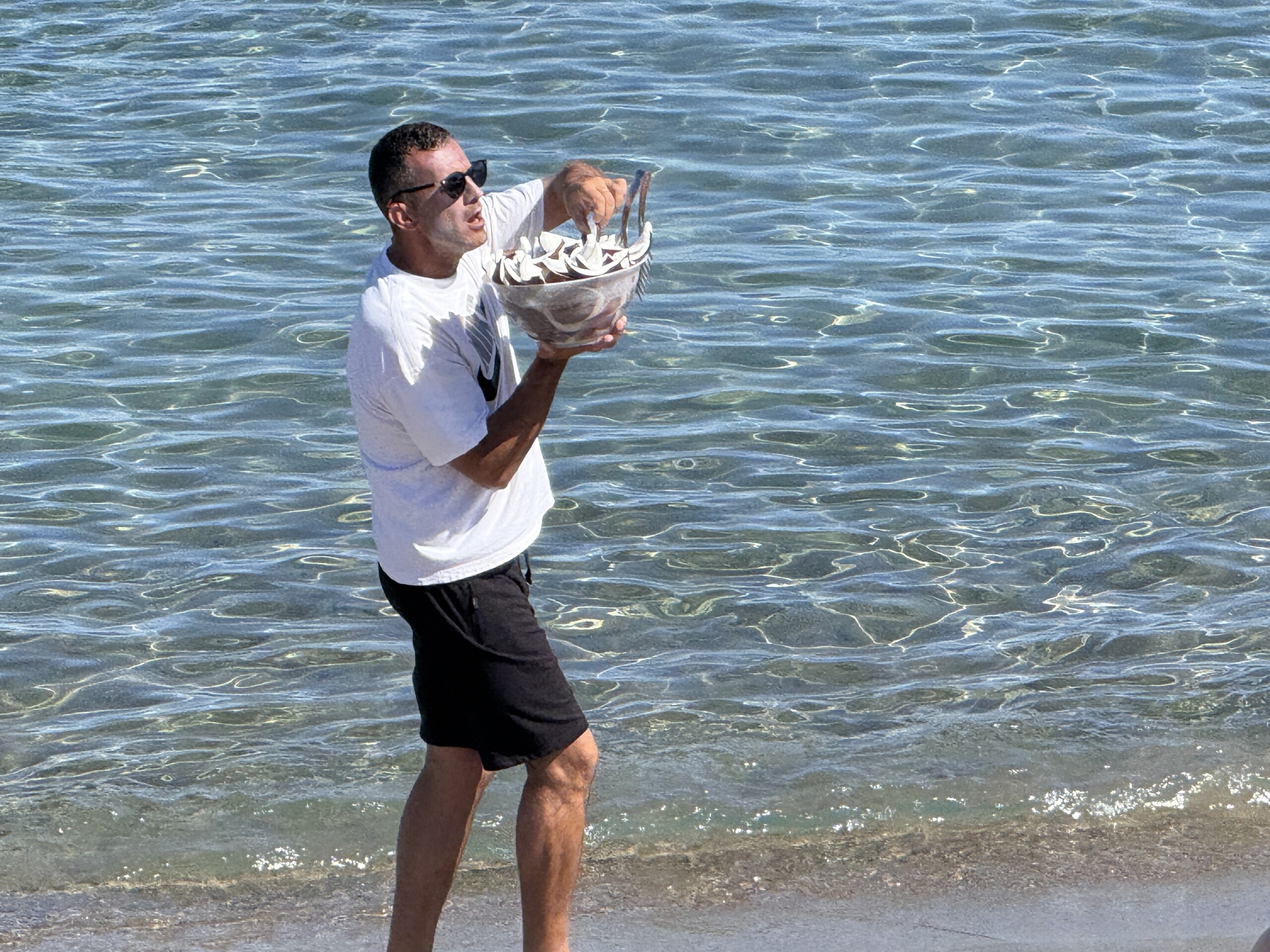
It took about 15 minutes walking along the beach area to arrive in the heart of the historic areas of Cefalu. Along the way we saw what typical Sicilian beaching was all about. One guy would walk-up and down the beach calling out for someone to buy “coconuts.”
On a far-off corner, I did spot a woman who was topless (picture not shown). Most people kept their clothes on.
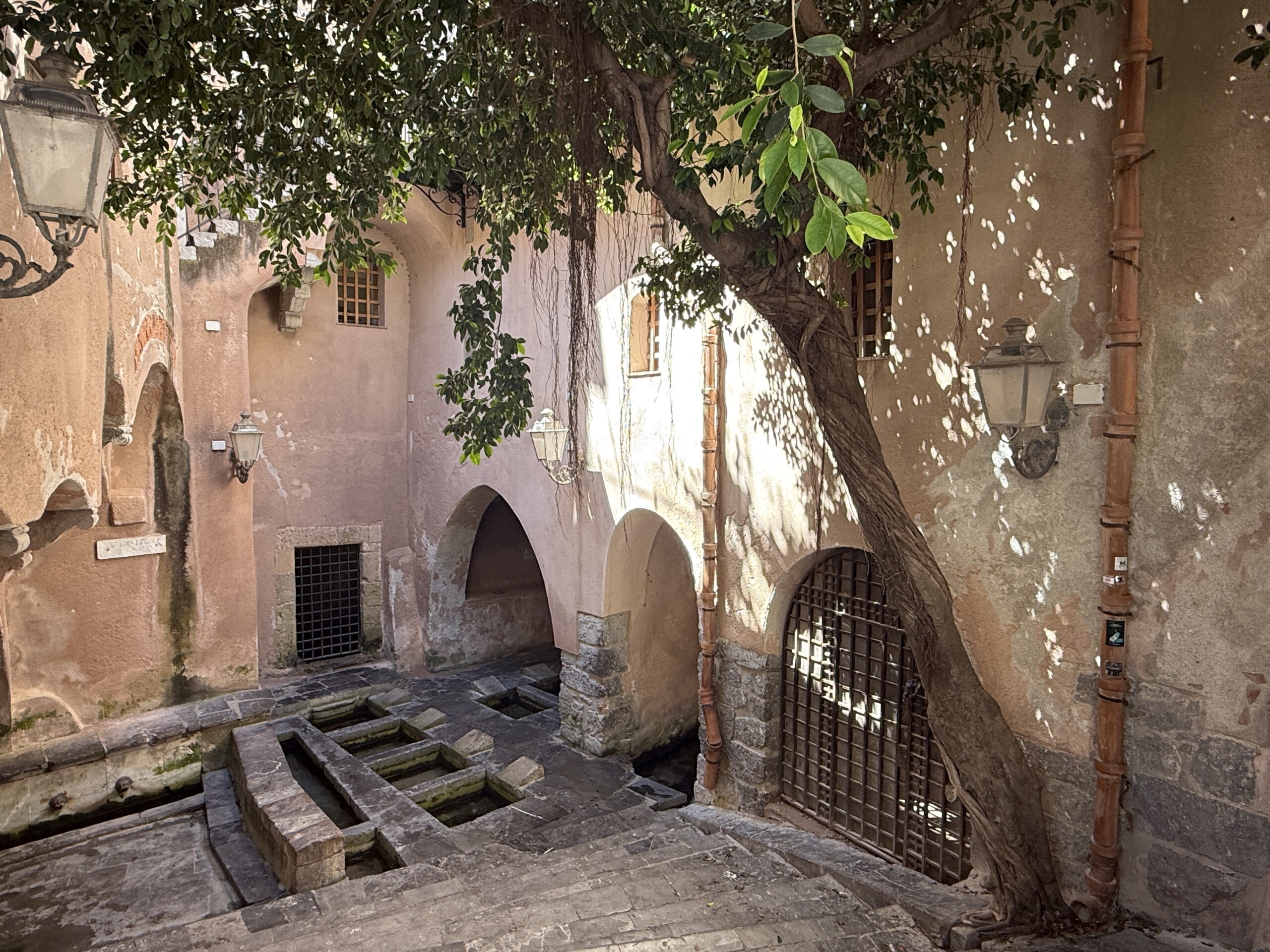
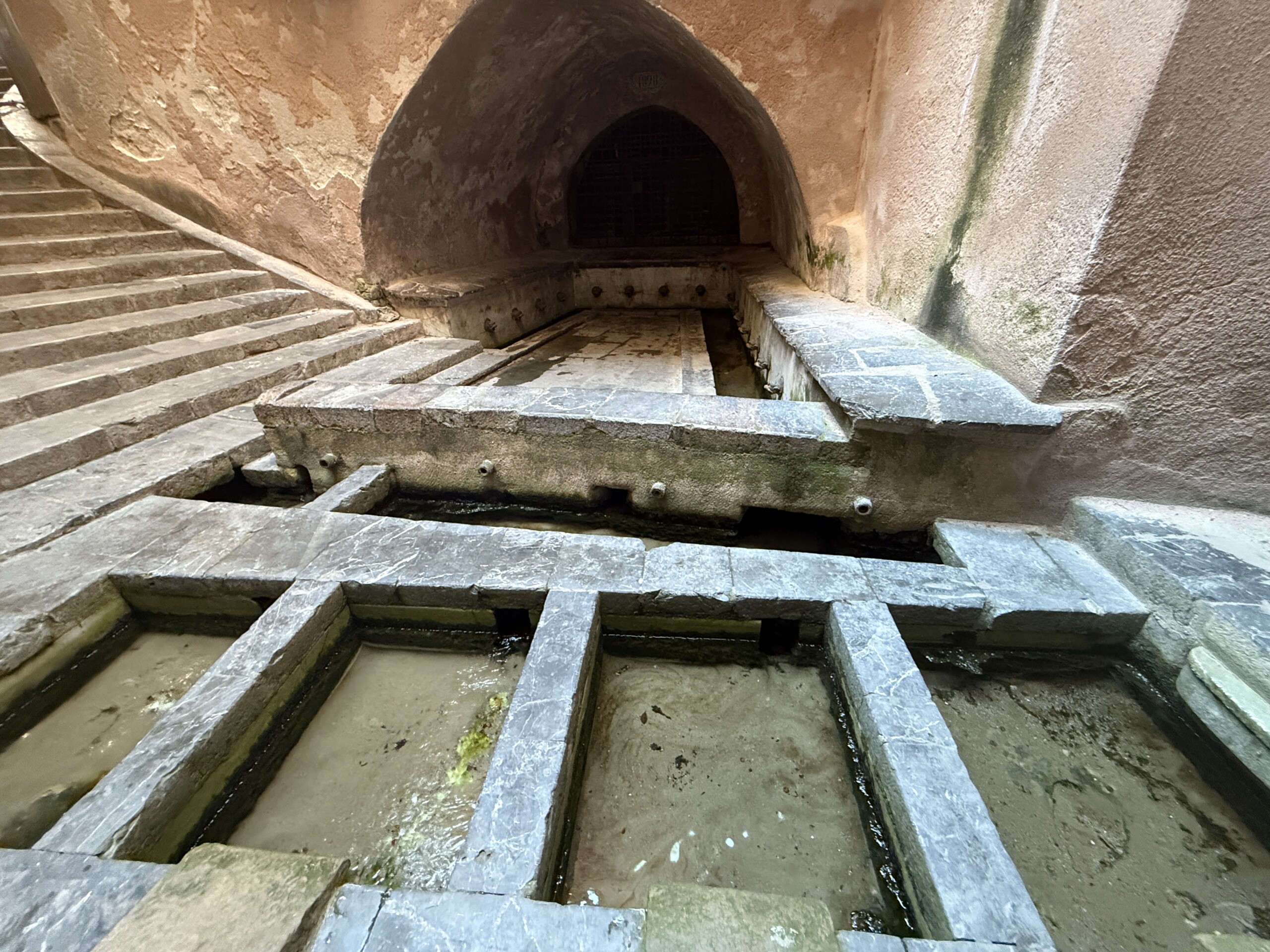
It was fun walking through the alley ways. The original medieval wash basin can still be seen. A fresh water stream would circulate down below before it went into the ocean. The wedge-shaped stones served as washboards. It was something you don’t see every day.
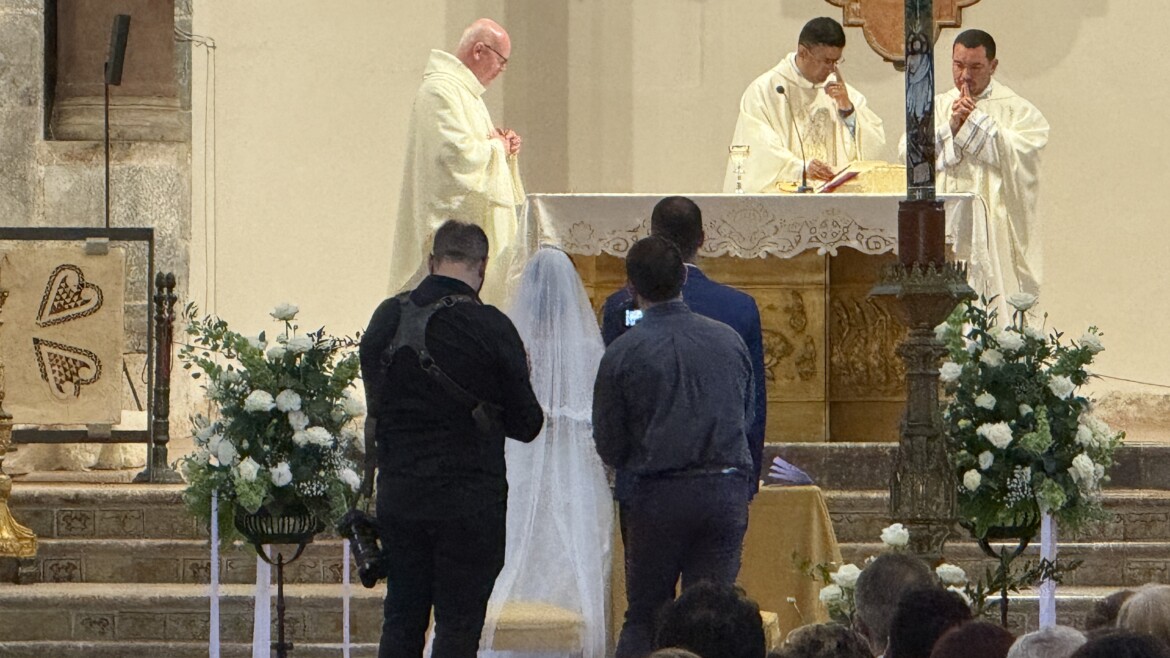
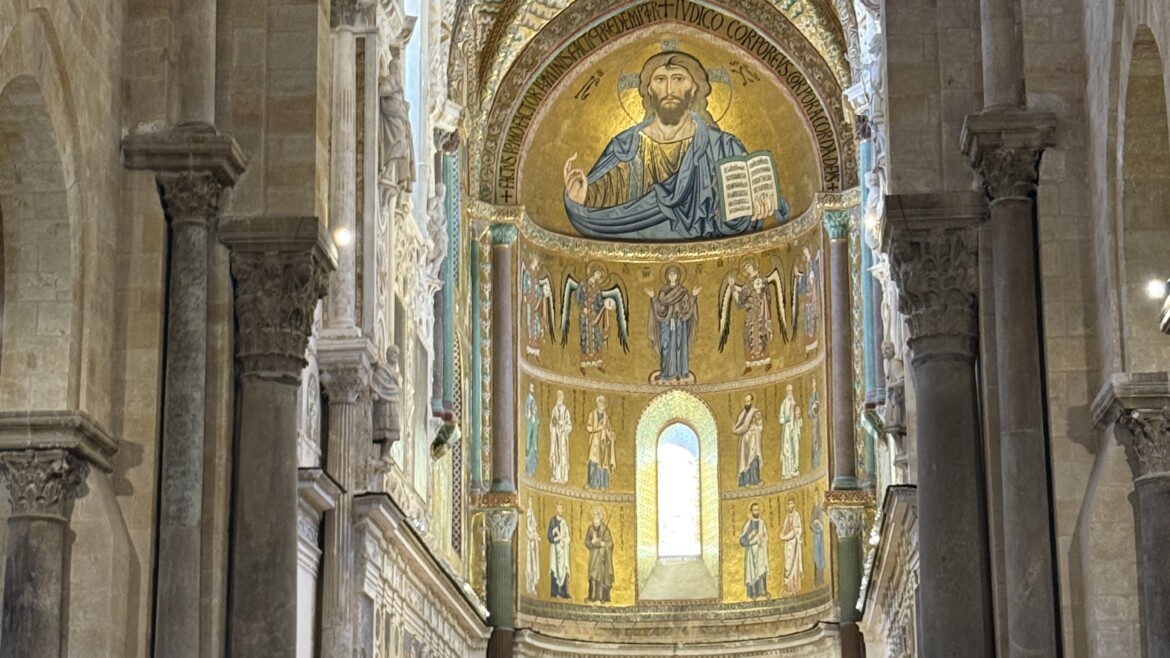
Cefalu is famous for their Norman Church which was built after Monreale was finished. I would suspect the workers came from Palermo to work on this Cathedral as the large Christ figure was identically the same. We witnessed a wedding going on in this 12th century AD church.
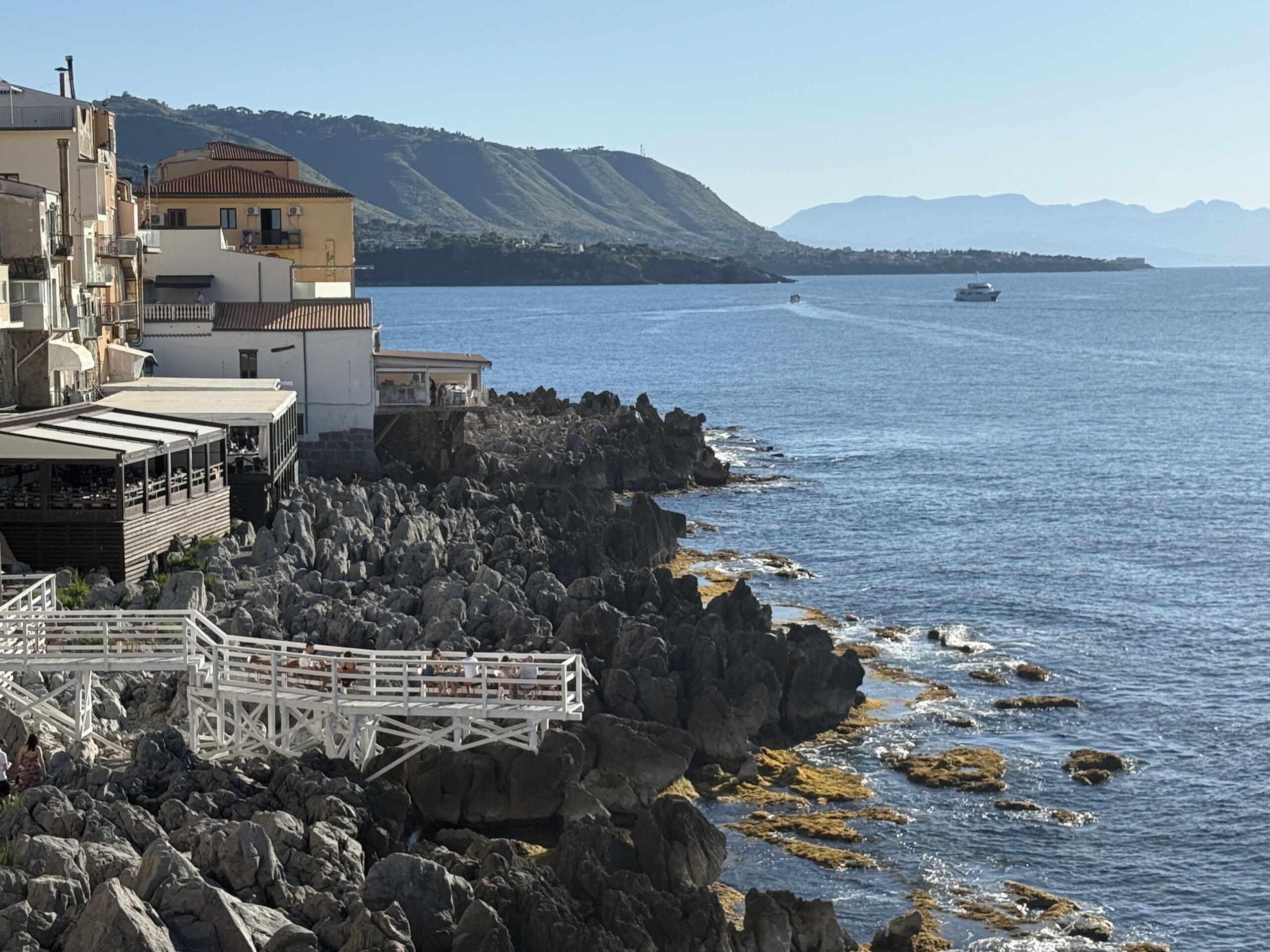
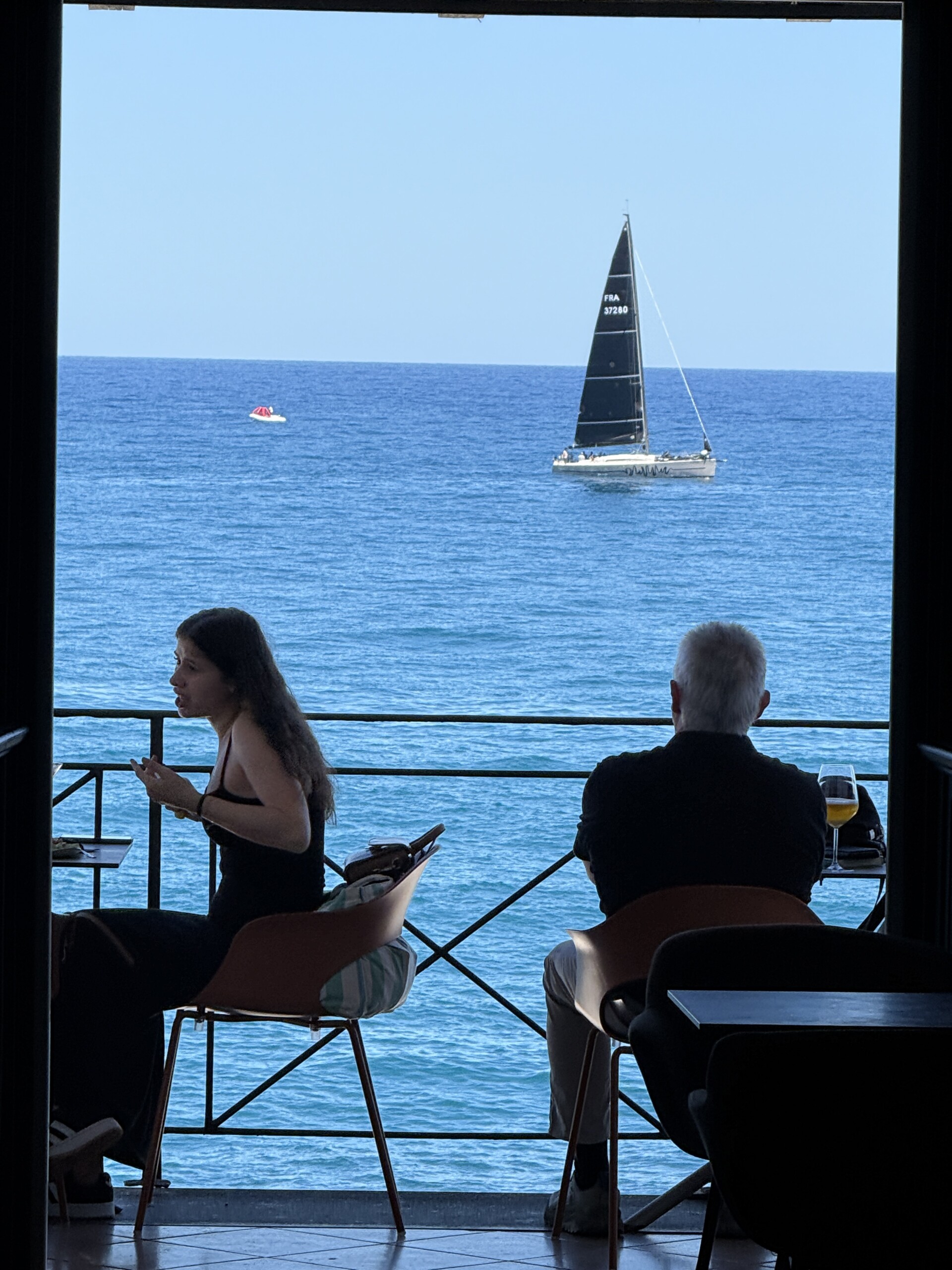
There were a number of restaurants right along the sea. Prices were higher and thus we headed inland.
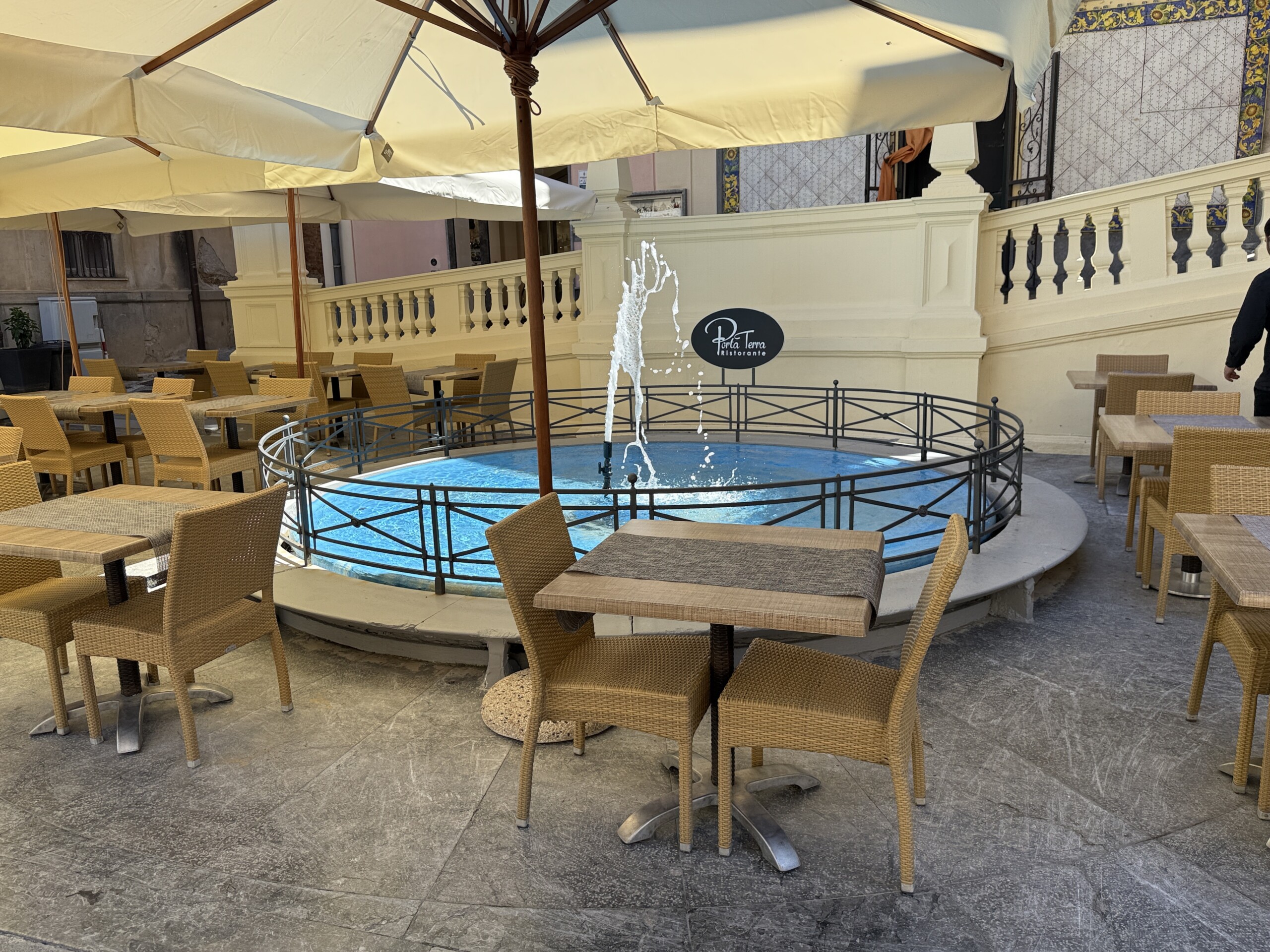
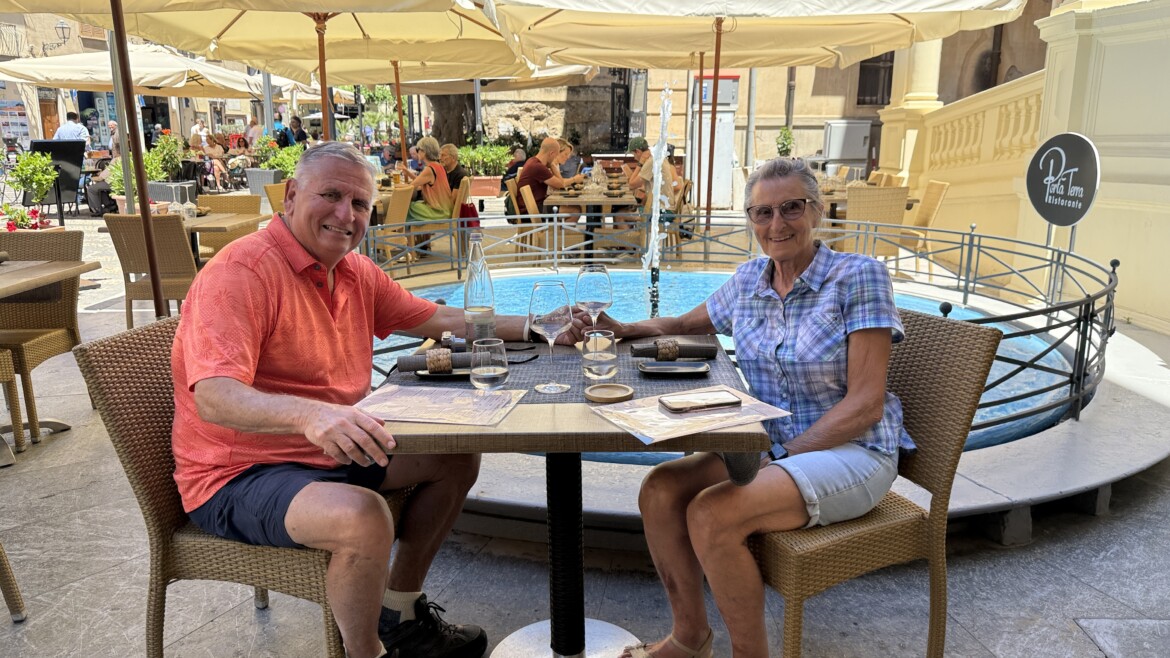
Porta Terra came to be our go-to restaurant. The restaurant installed a fountain to make-up for not being on the sea.
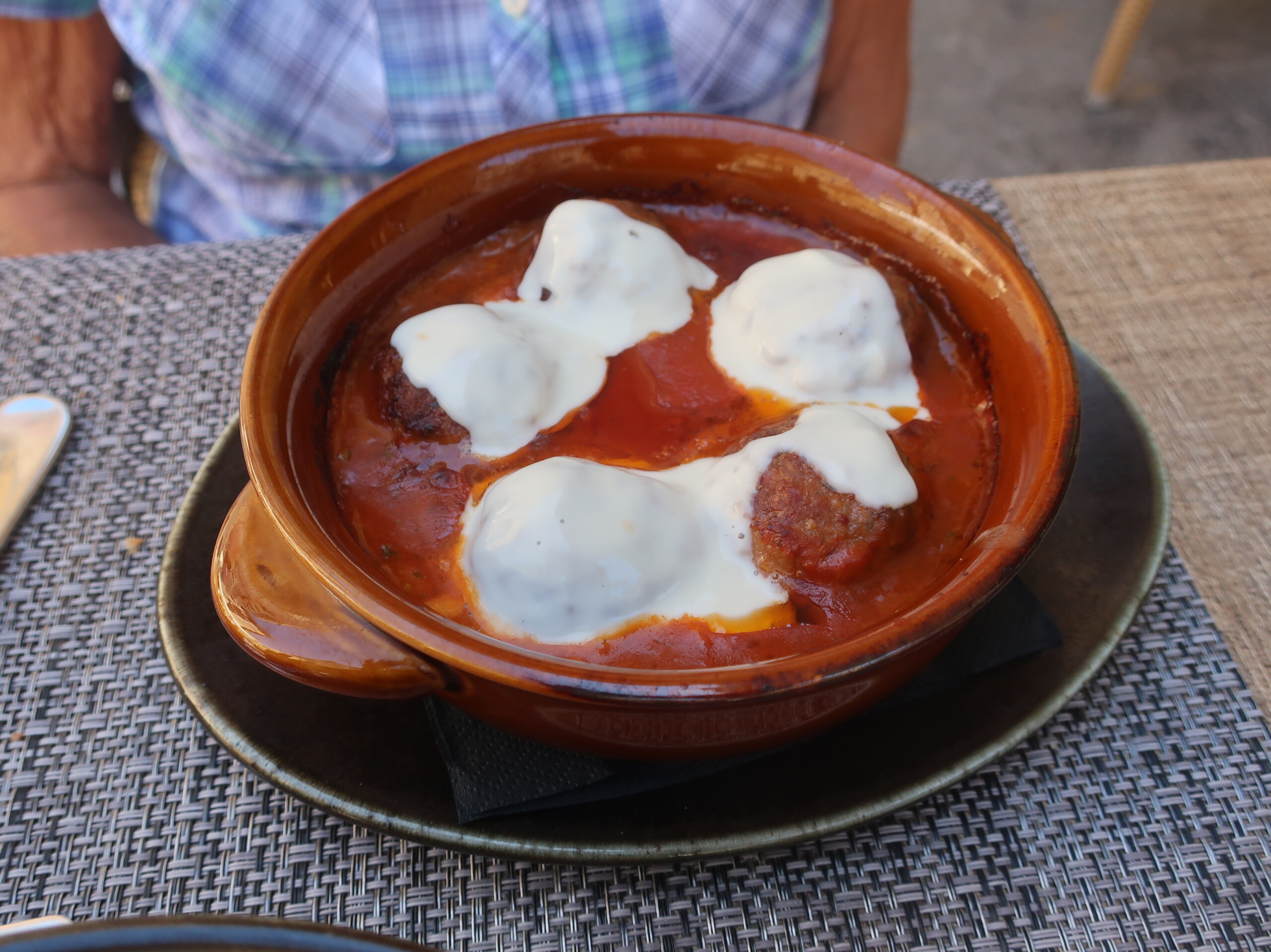
Kathie also noticed that the restaurant had meatballs, made with cheese inside. So delicious!
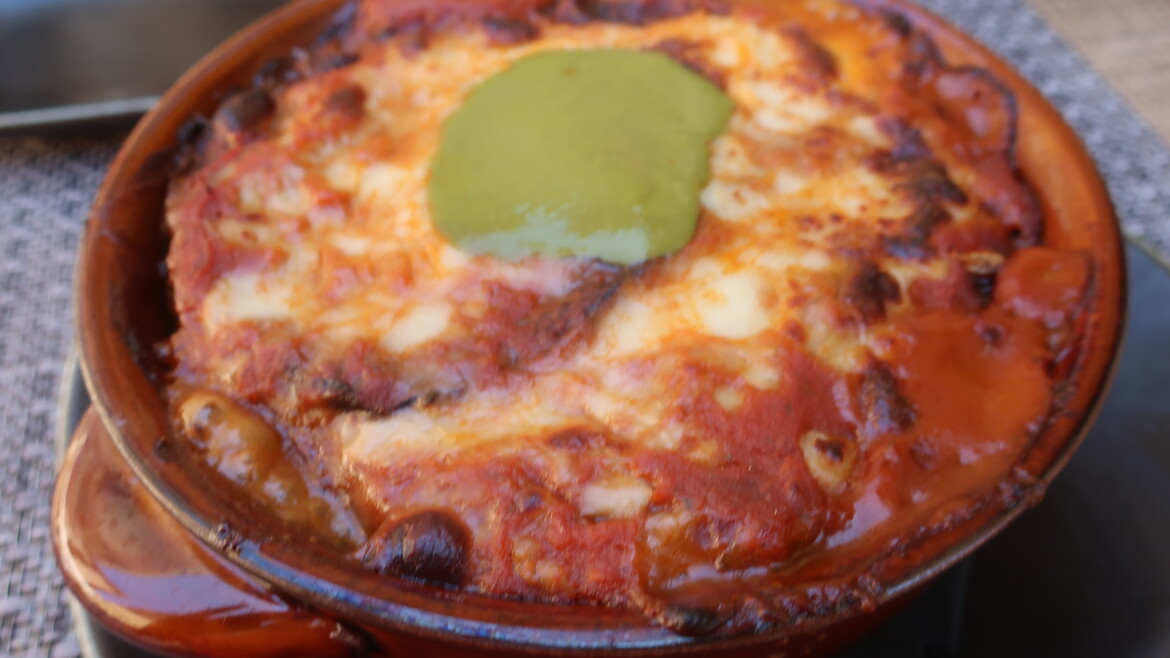
I enjoyed the egg plant. At one time in my life this dish was not my favorite.
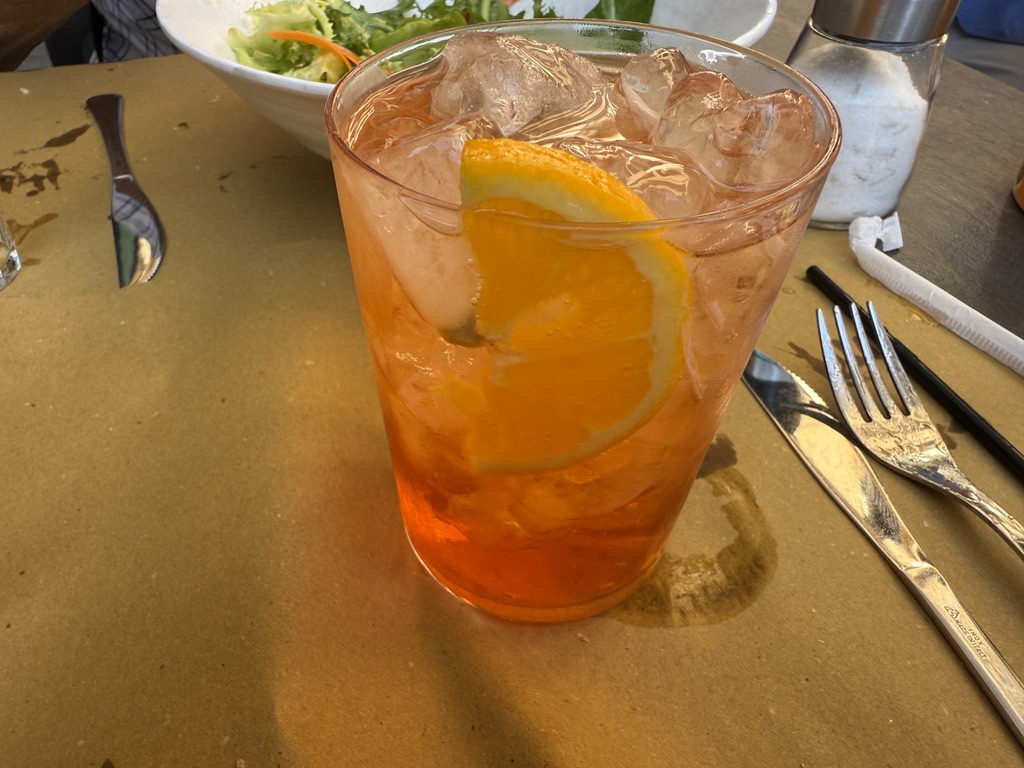
I did try the popular Italian drink known as “APEROL.” It is orange in color and indeed quite refreshing. It’s made with Prosecco, Aperol and a splash of soda water. A popular drink in Sicily and mainland Italy.
We enjoyed walking through the alley ways. The old town was constructed in such a way that there was always a breeze.
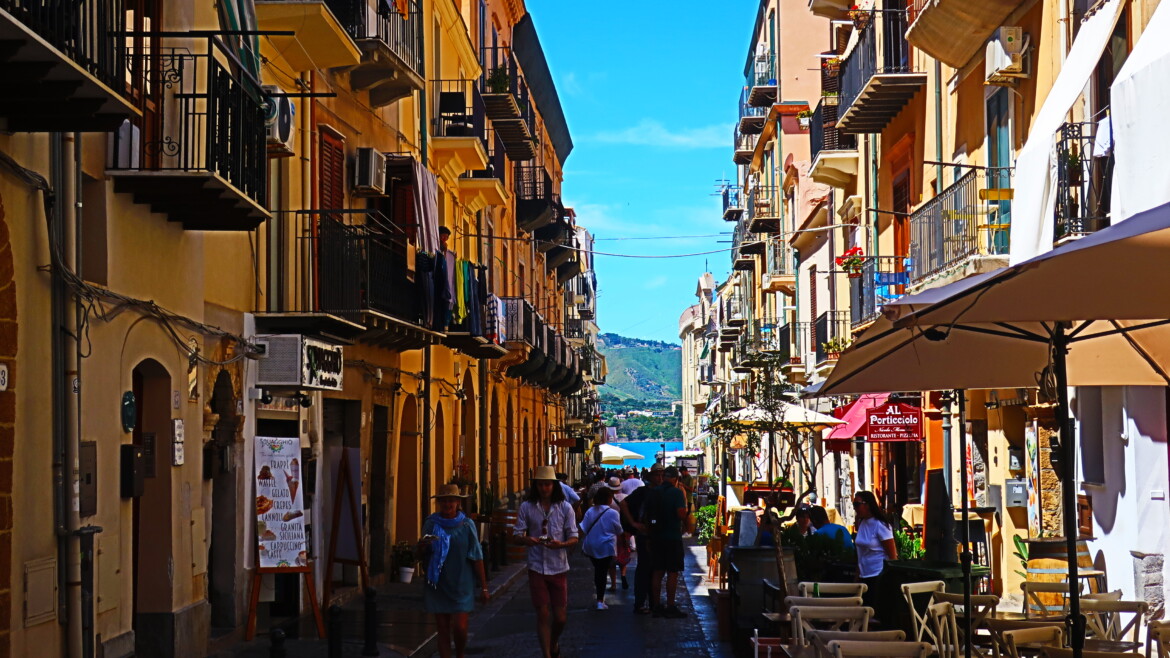
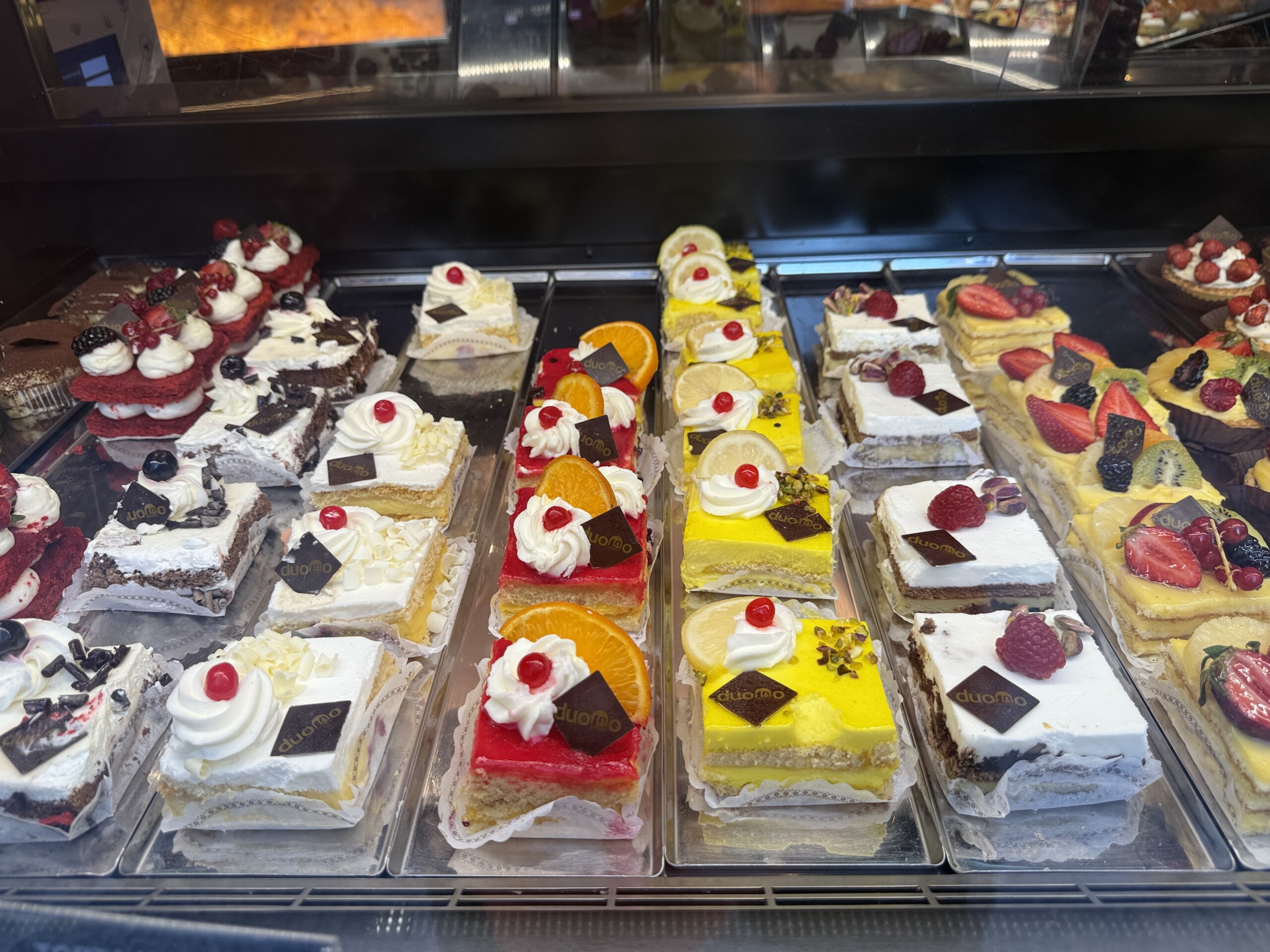
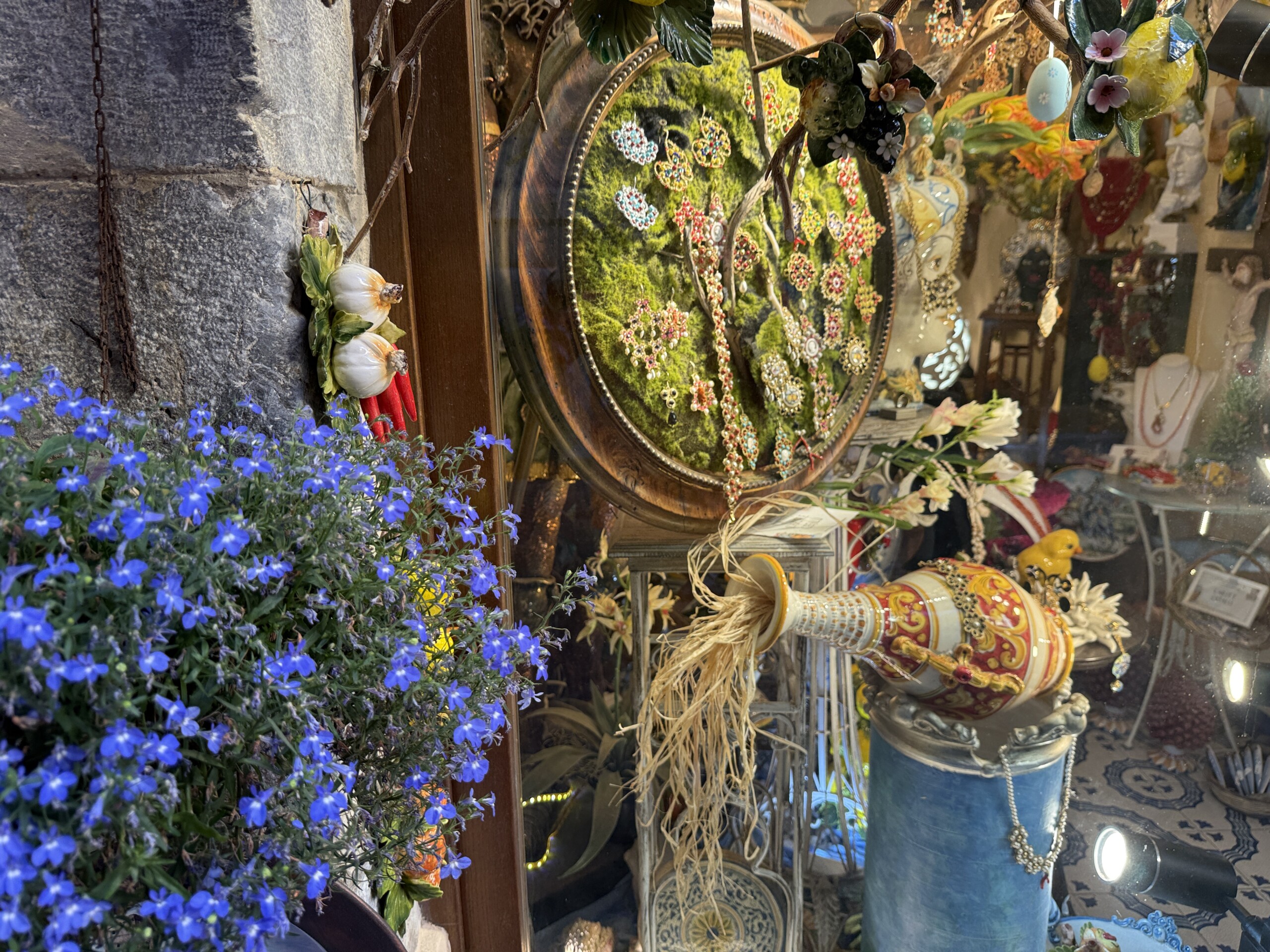
We did not walk up to the top of “La Rocca,” a rock formation that dominates over the city nearly 900 feet high. There are supposedly ruins of a Norman castle close by. There is always something you don’t get to see the first time visiting. La Rocca was our miss besides not traveling up to Mt. Edna. Onward on the train to famous Taormina.
Chapter 5. Taormina, “Pearl of the Mediterranean.”
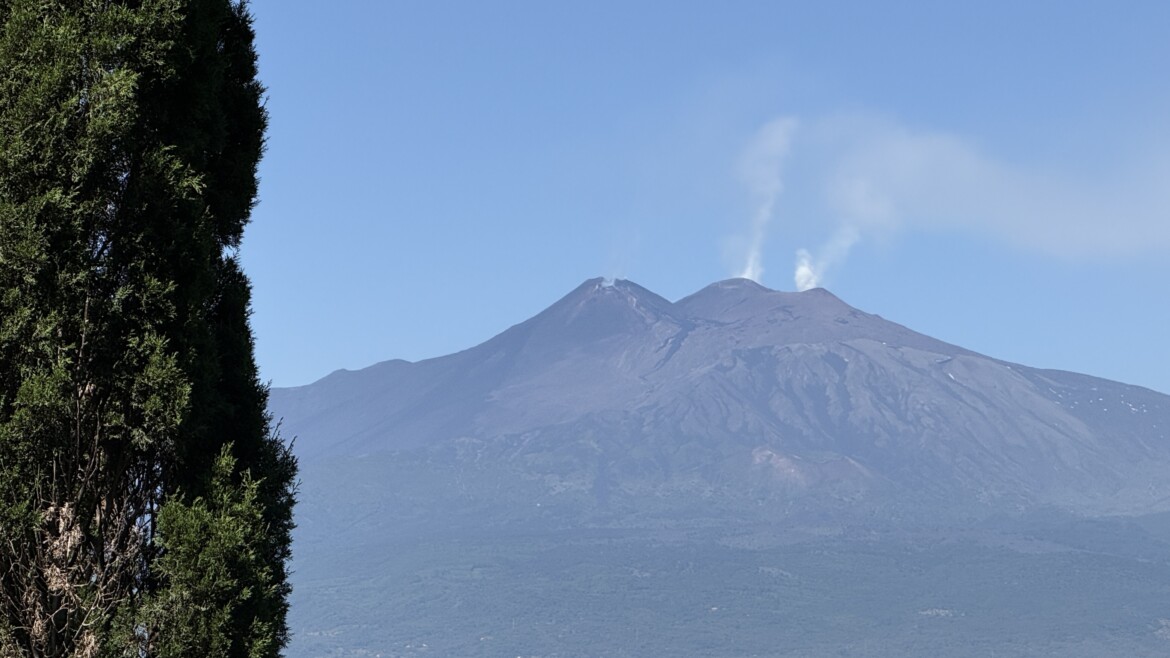
A three-hour train ride from Cefalu to Taormina on the east coast. Along the way we witnessed Mt. Edna exploding. Unfortunately, we were on the wrong side of the train to take a picture.
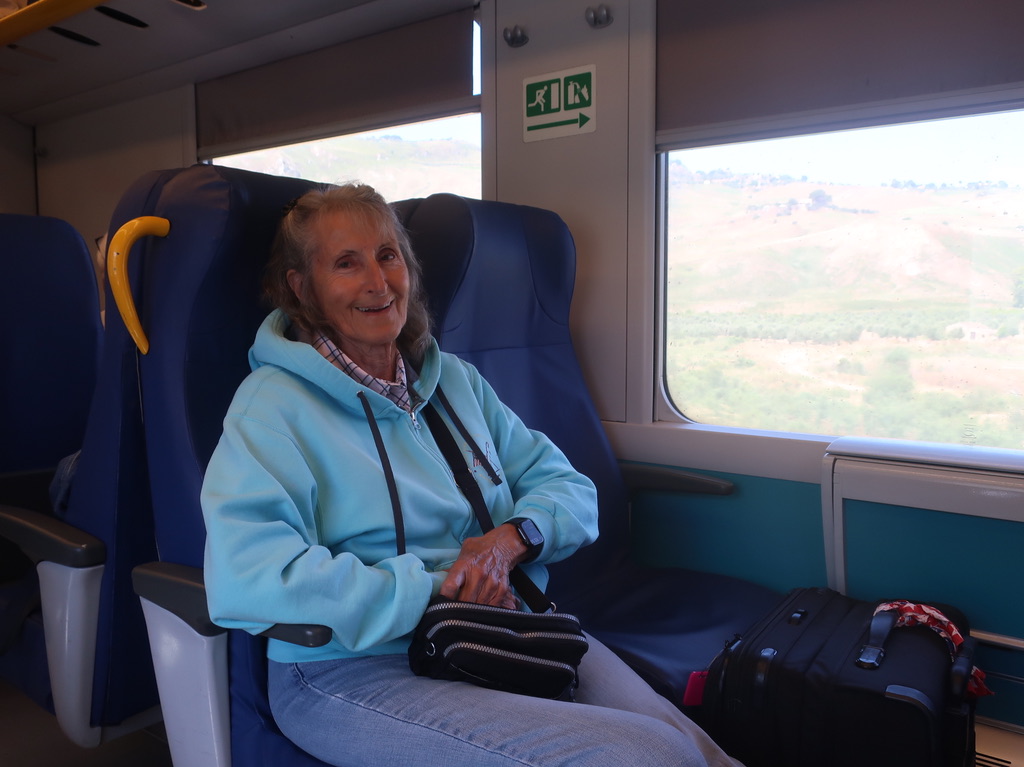
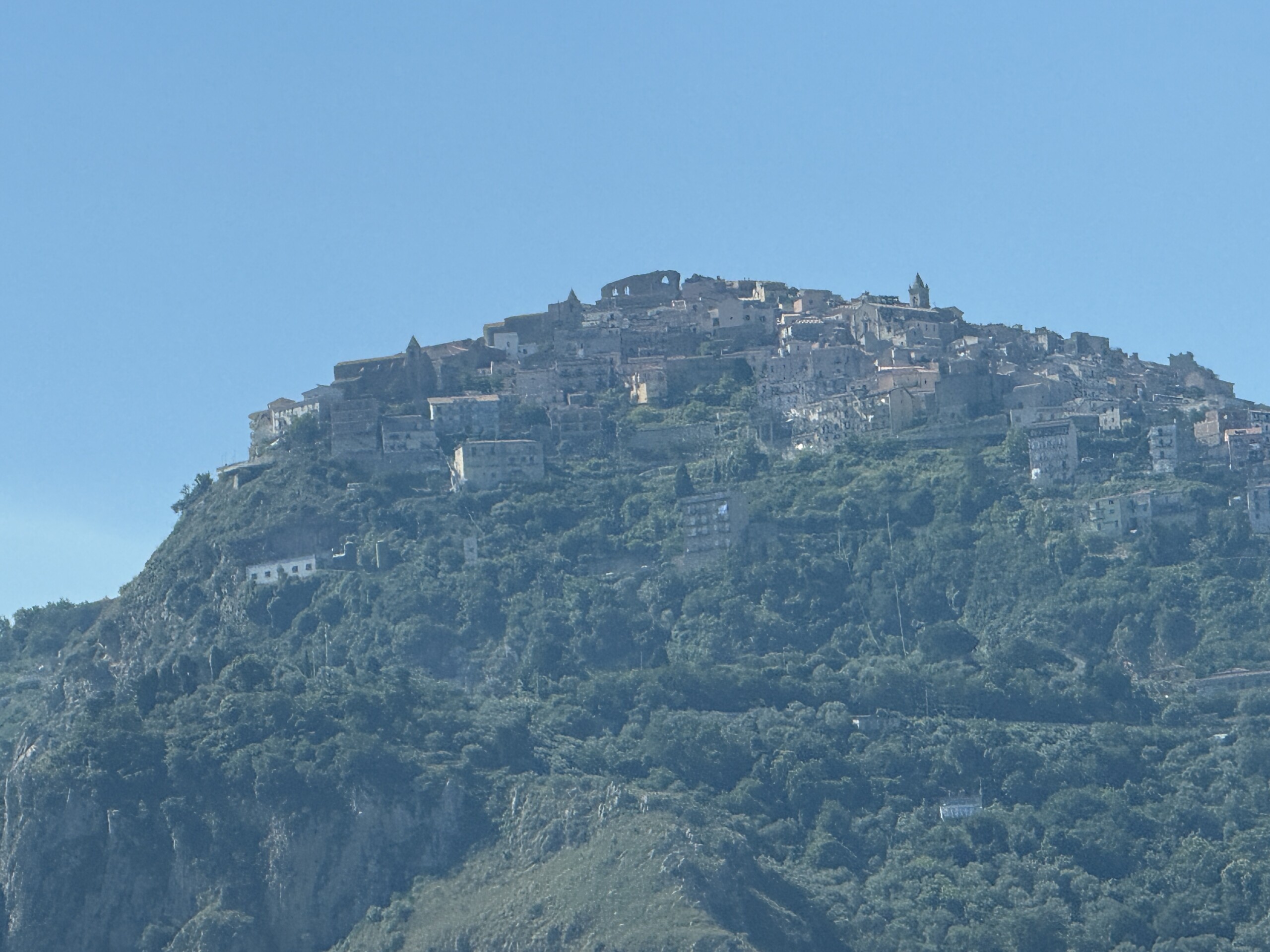
We transferred trains in Messina. Along the way, not far from the city of Milazzo, we saw the volcanic archipelago known as the Aeolian Islands in the Tyrrhenian Sea. Did we see Lipari? Vulcano? Another place we need to see for another time. There were a number of villages on top of small mountains or hills along the way. Names unknown.
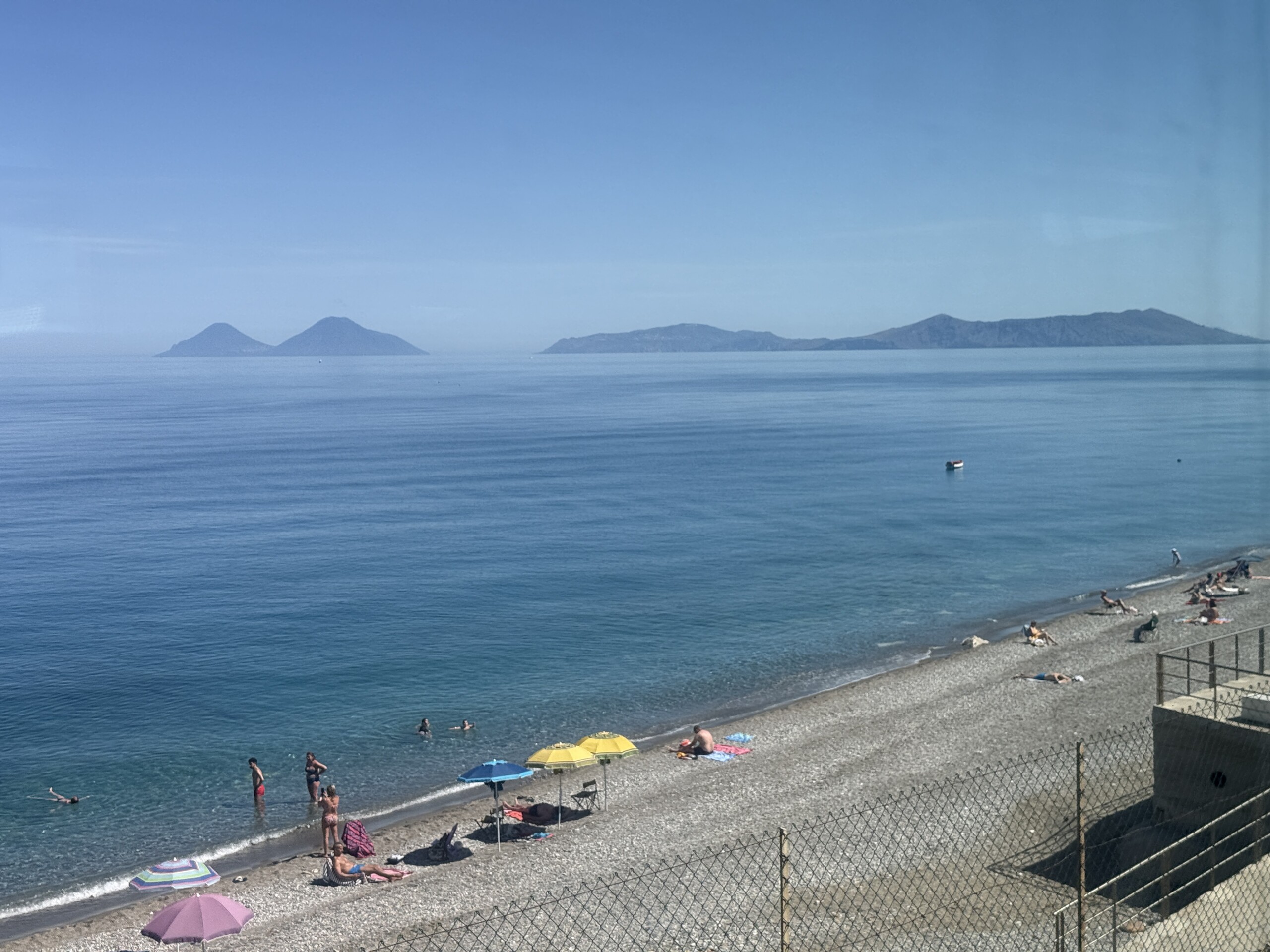
Recently there was an article highlighting the idea of building a two-mile bridge over the Strait of Messina. Today one needs to take a ferry back and forth to the mainland of Italy. It takes about 30 minutes. Passenger Trains are placed on a ferry to come across the strait.
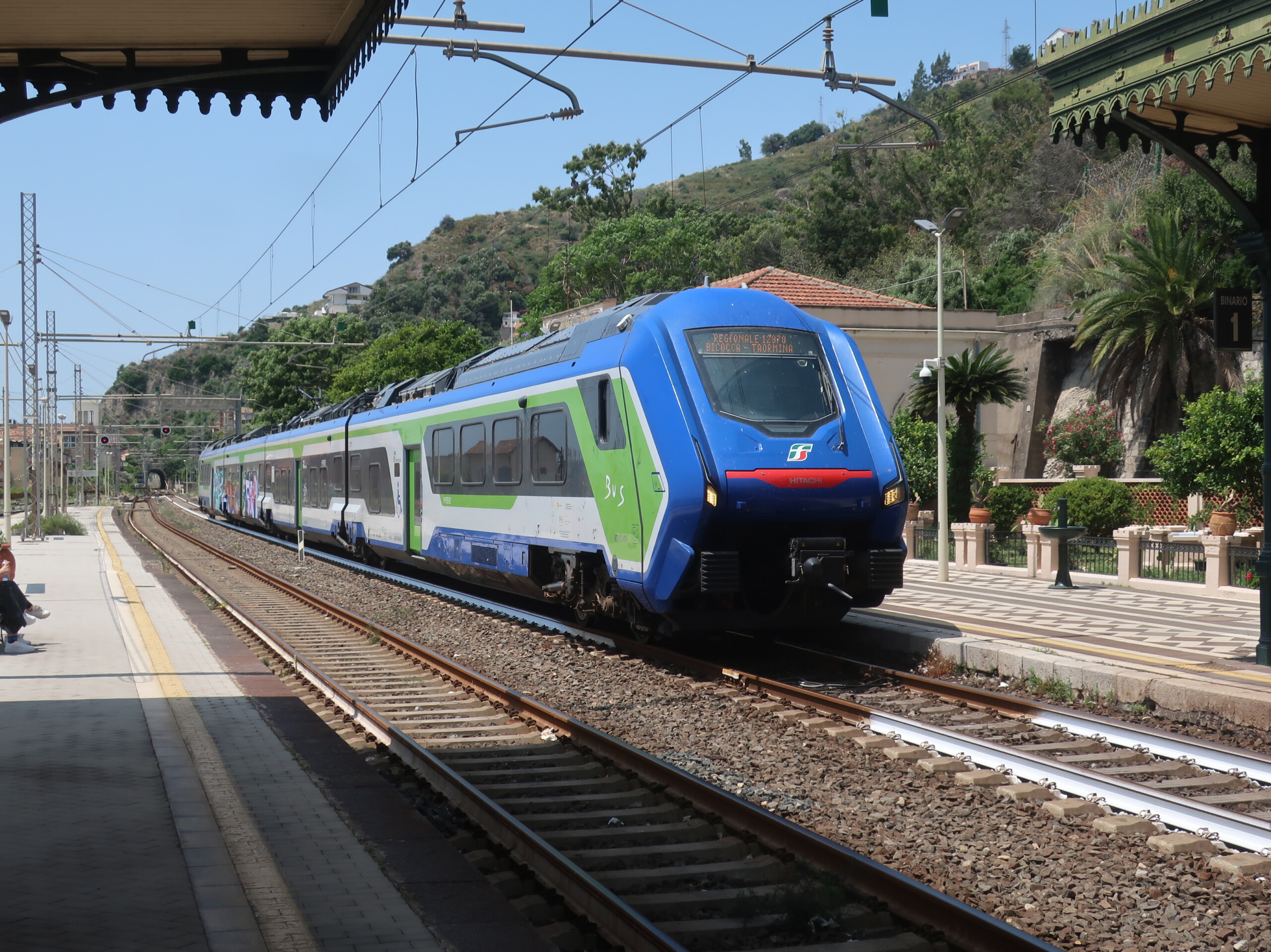
We had four lovely days in Sicily’s famous and classic resort town of Taormina. Choosing where to stay was rather a dilemma. First, most of the hotels are quite expensive—several at $3000 a night.
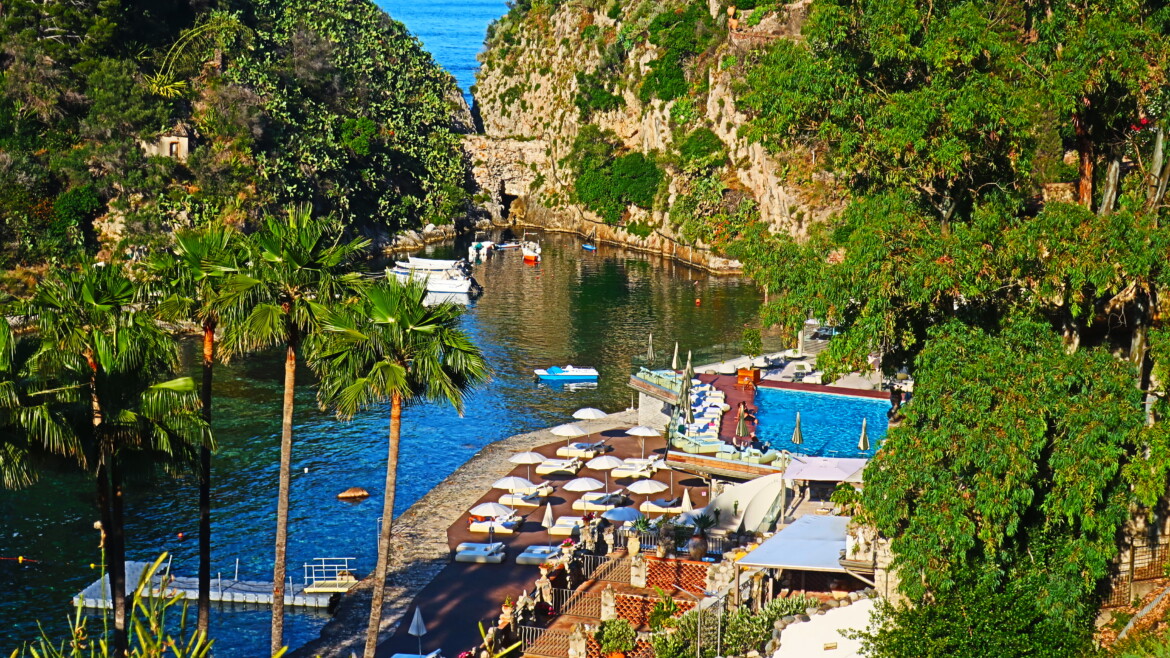
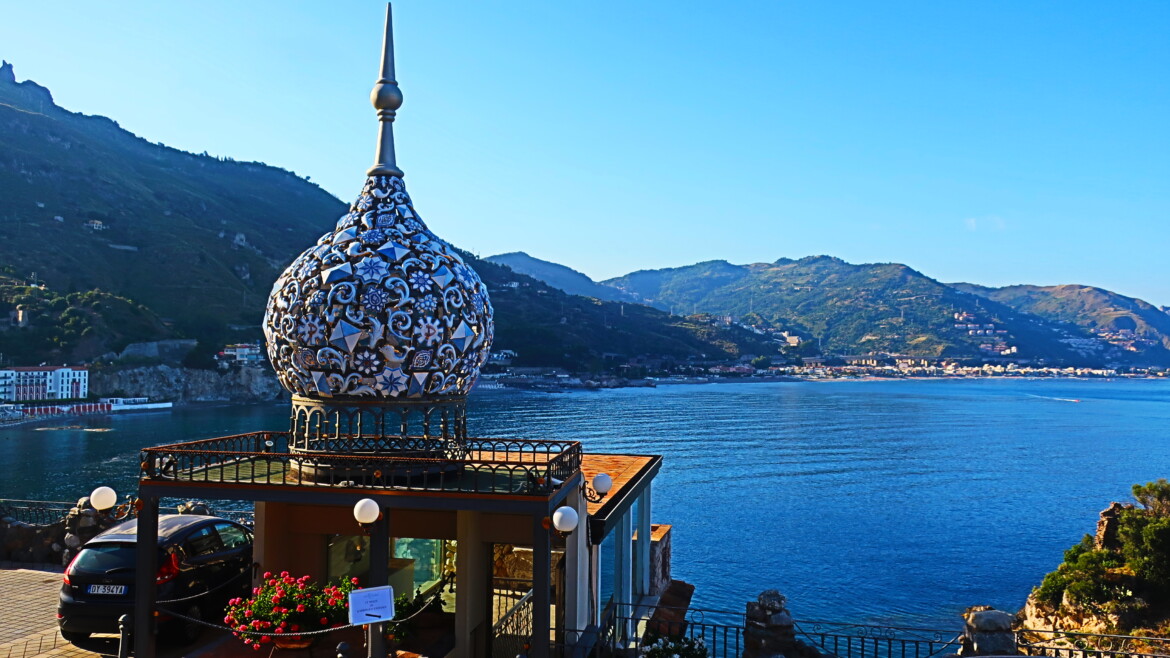
Secondly, there were hotels along the coast, or along the mountain cliffs close to the center of town.
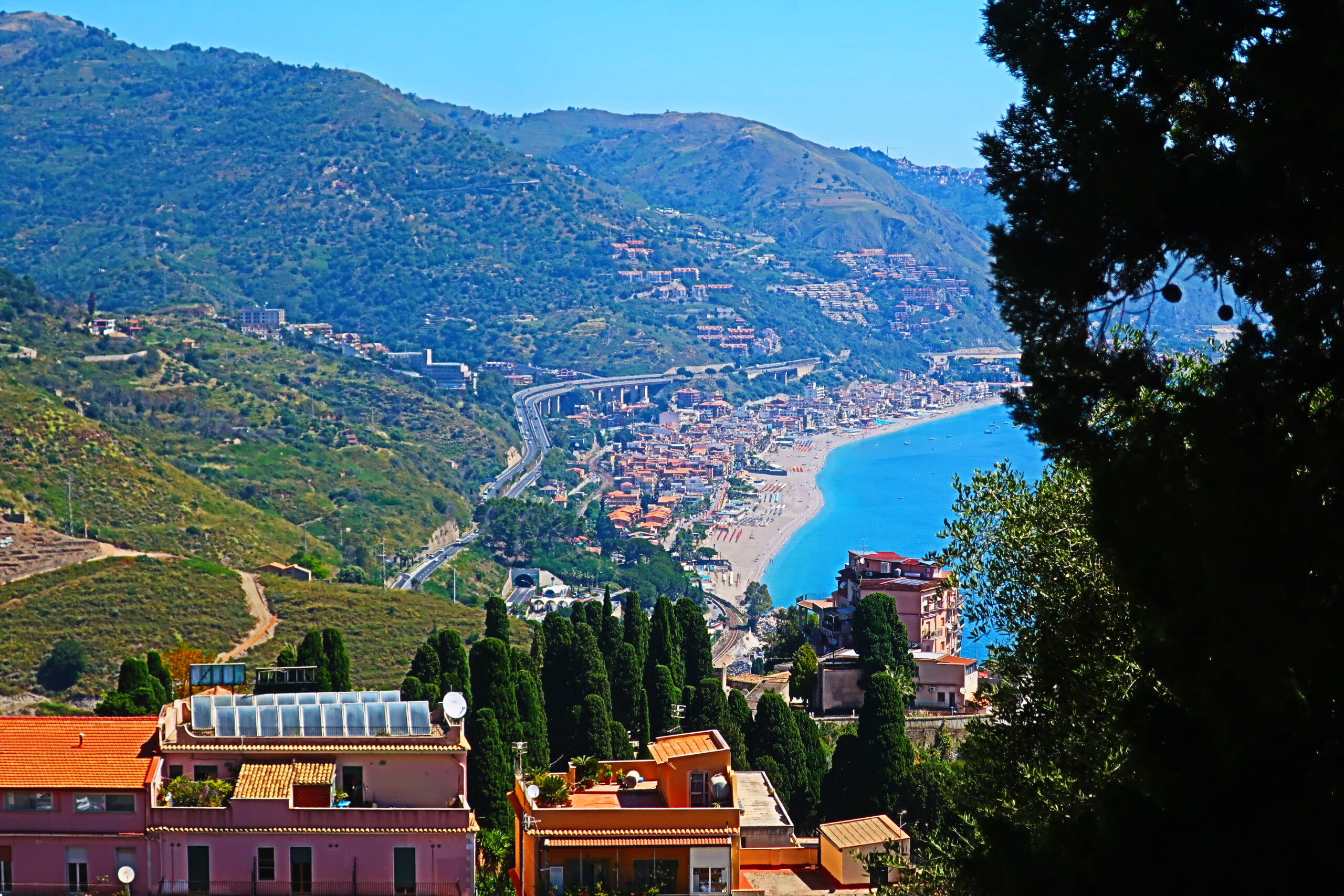
We choose to be along the coast, not far from the railroad station, in a place called “Panoramic Hotel.”
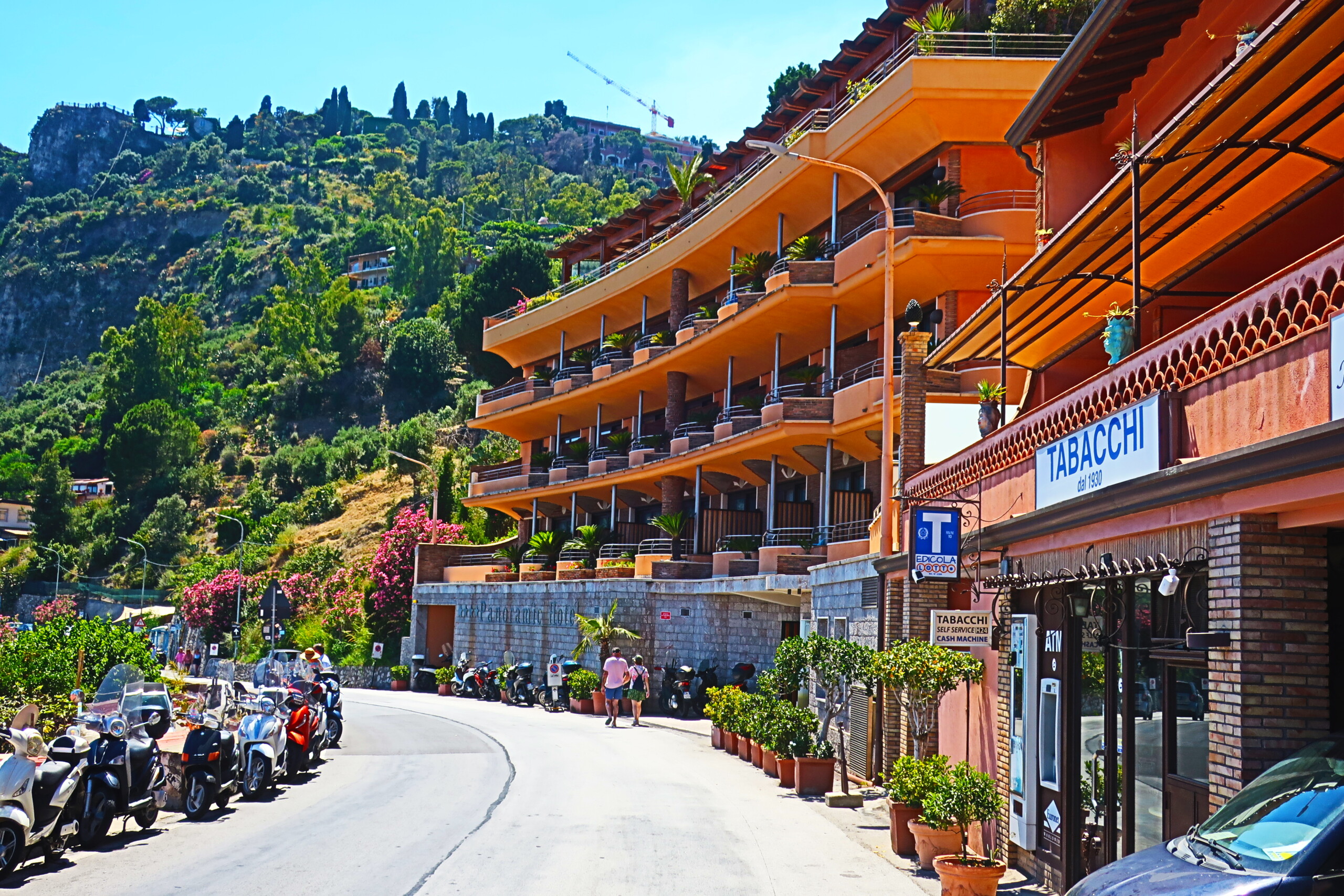
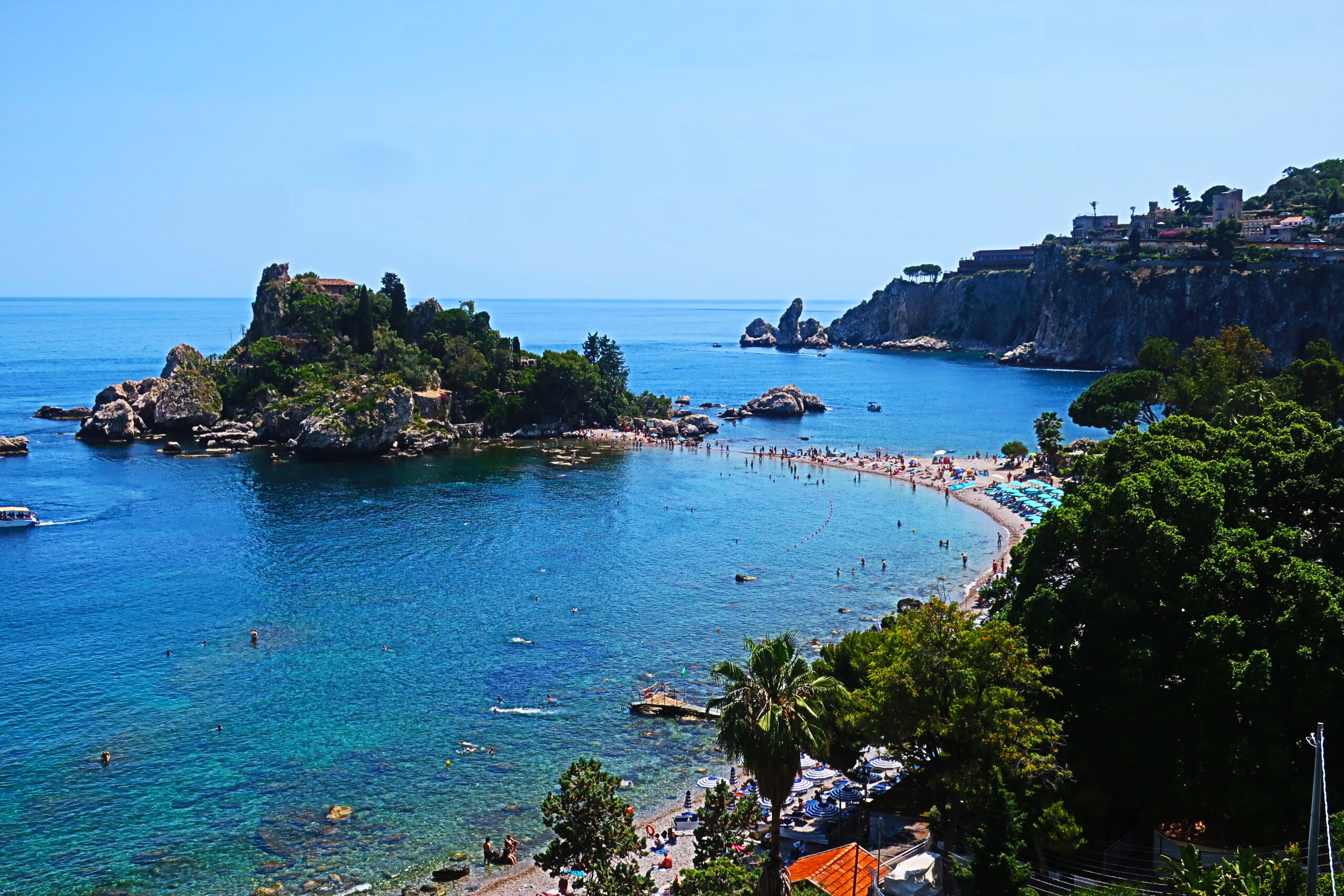
The views from this 4-Star hotel were stunning as it overlooked the famous Isola Bella Beach and Island.
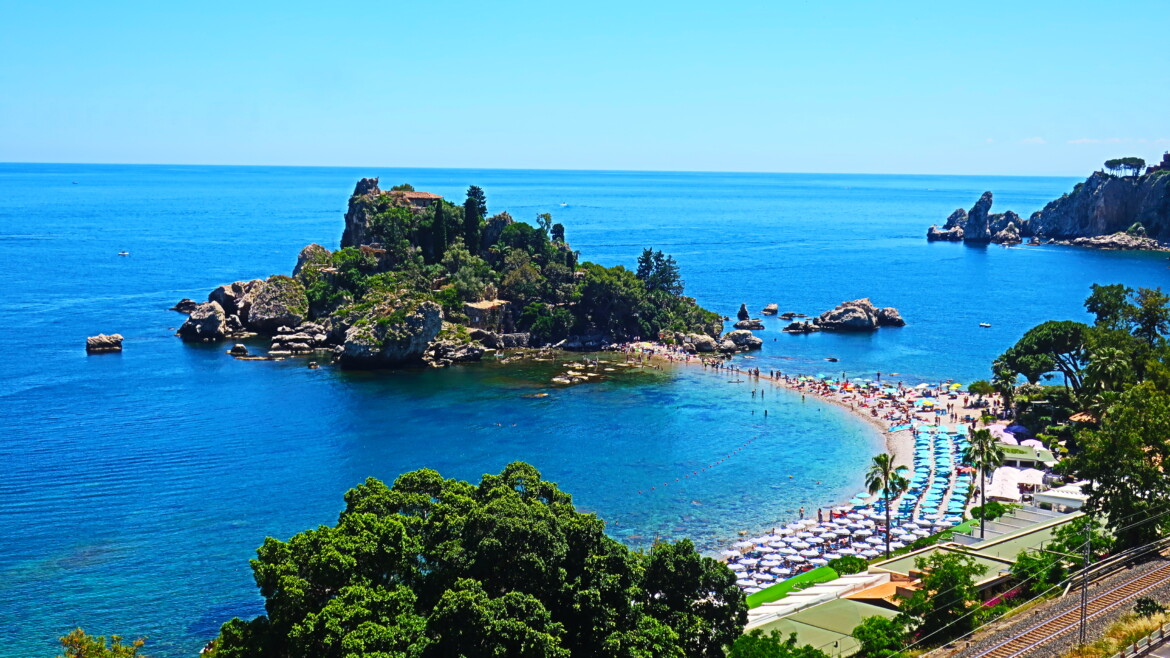
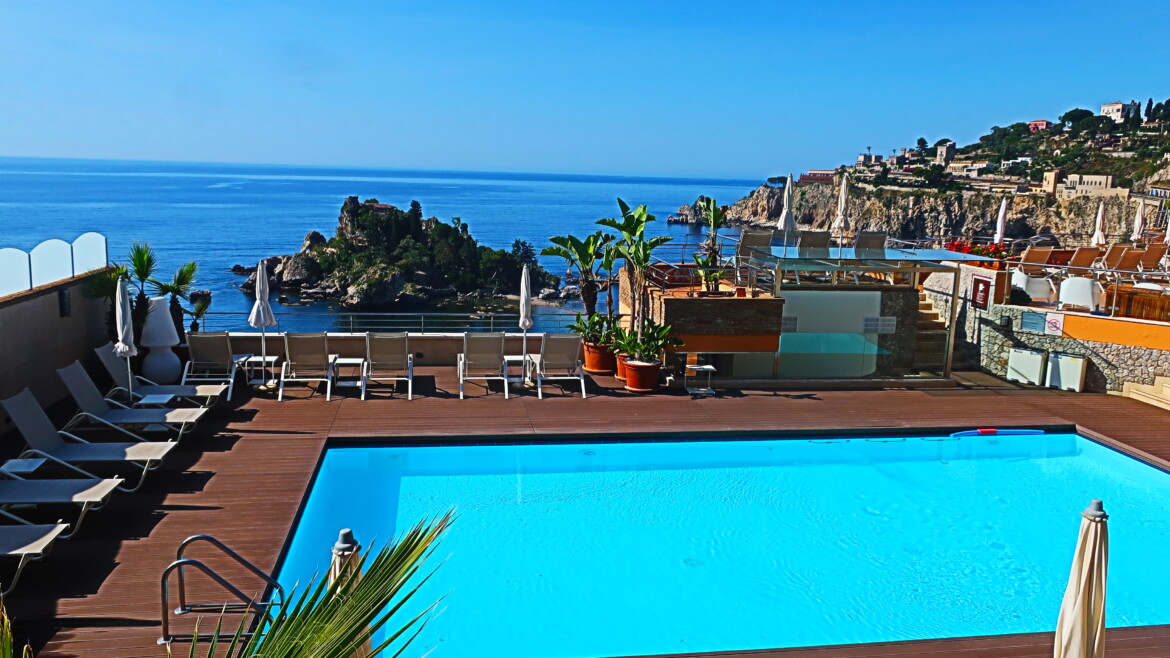
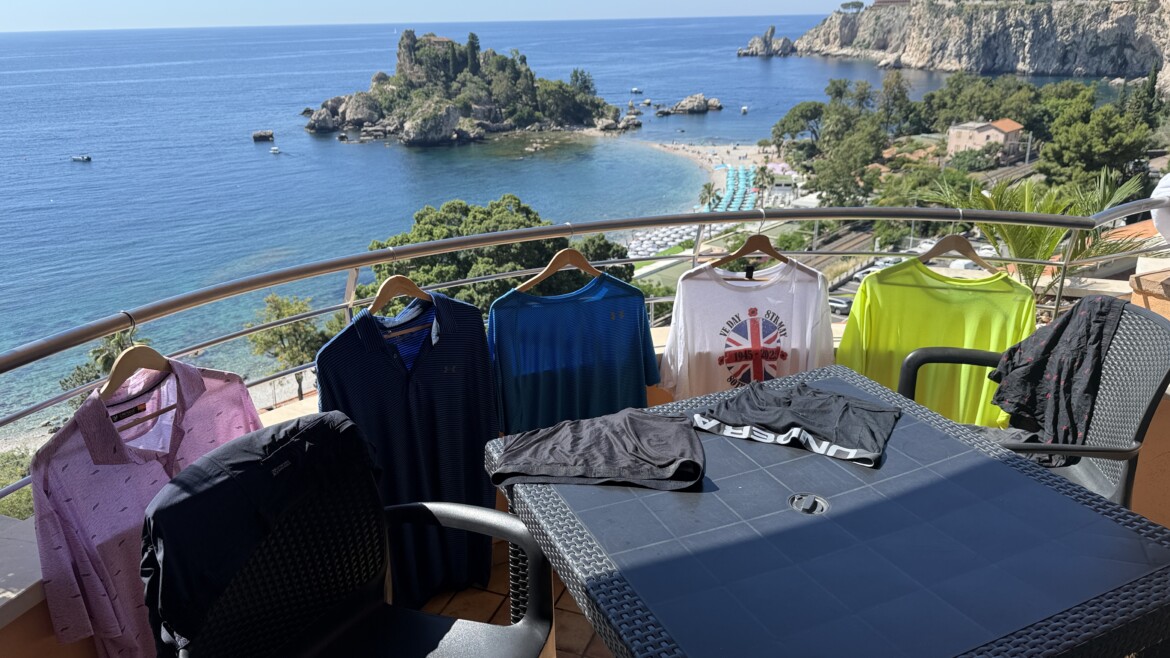
A heated pool, superb breakfasts and a good size room with a big enough balcony to enjoy became our home. Since there was enough privacy, we did our wash one day and used the balcony as our dryer.
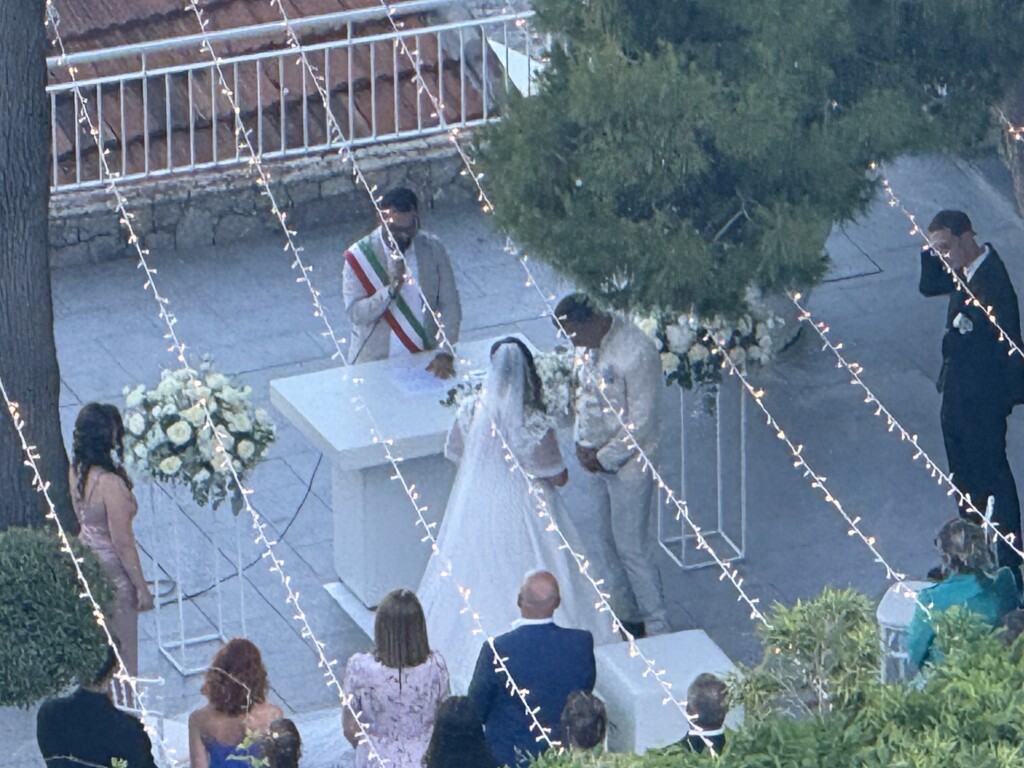
From our room, we observed a wedding down by the beach area.
We did meet a British couple who now resided in Dubai. Both of them are lawyers and love the sun in the Middle East.
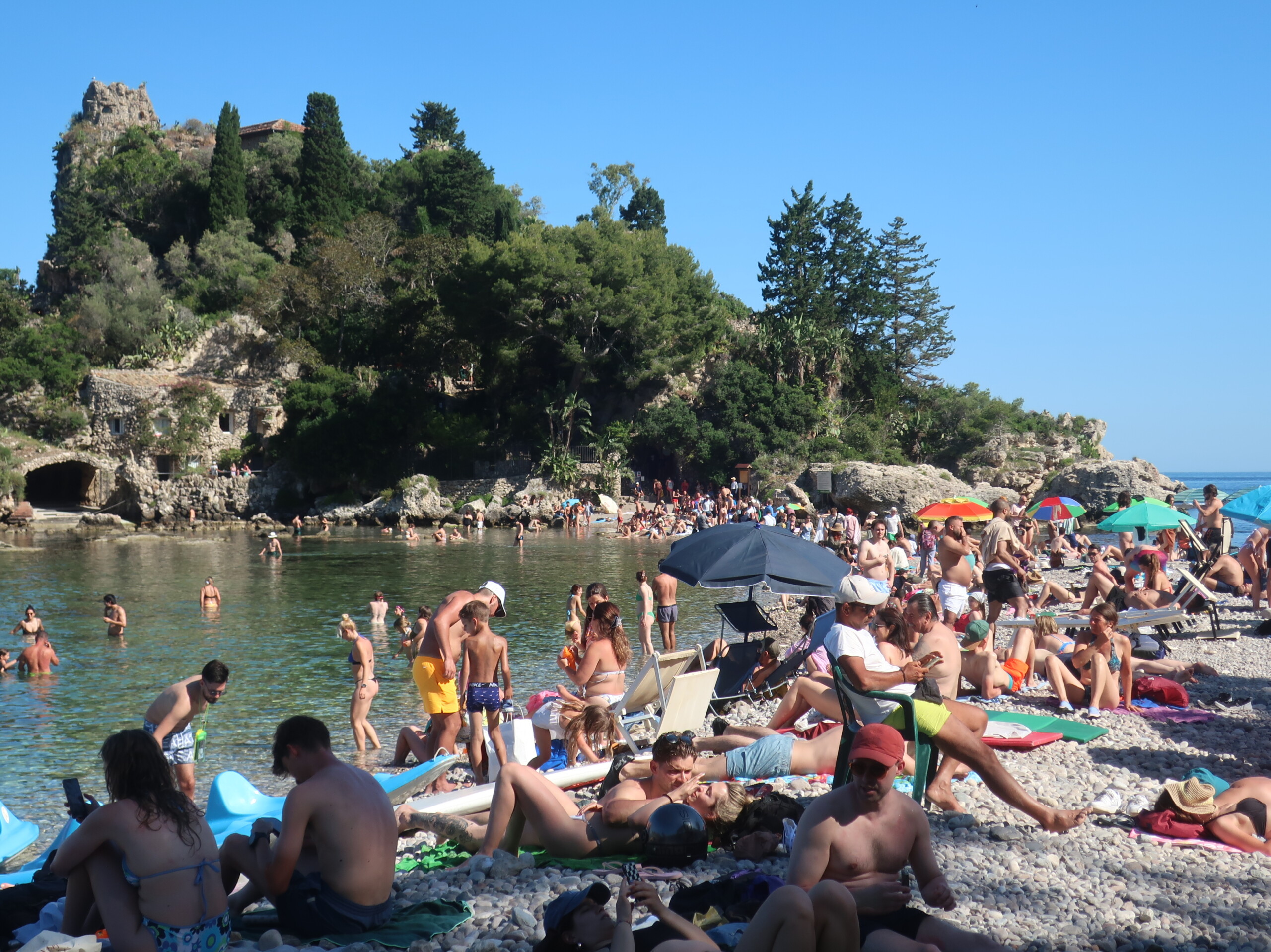
Having “water-shoes” at the beach would have been welcomed. There was no sand, but all sizes of pebbles. Trying to walk to the cold water was excruciating. Eventually, I got there and had goggles for the 20–30-foot visibility. I was able to find a floating Italian “cork” which became my souvenir. Swimming off the Greek Isles in past years seemed a whole lot easier.
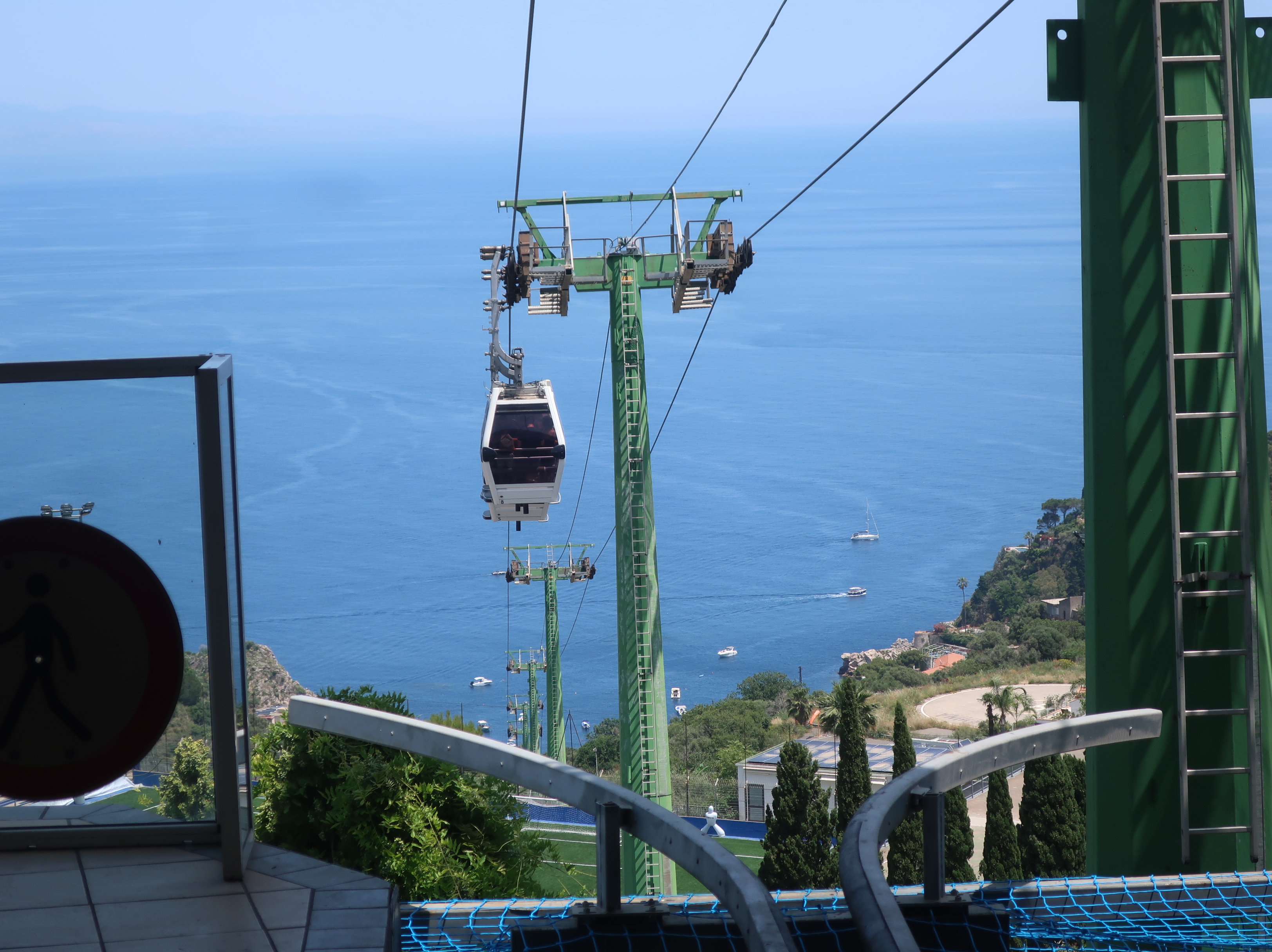
Most people take the aerial tram up or down to the center of town. There are actually 8 cars which fills-up with 8 people each to take you up in 15-minutes. For $10 Euros round-trip, it was the best way of traveling the 800 feet in the elevation difference.
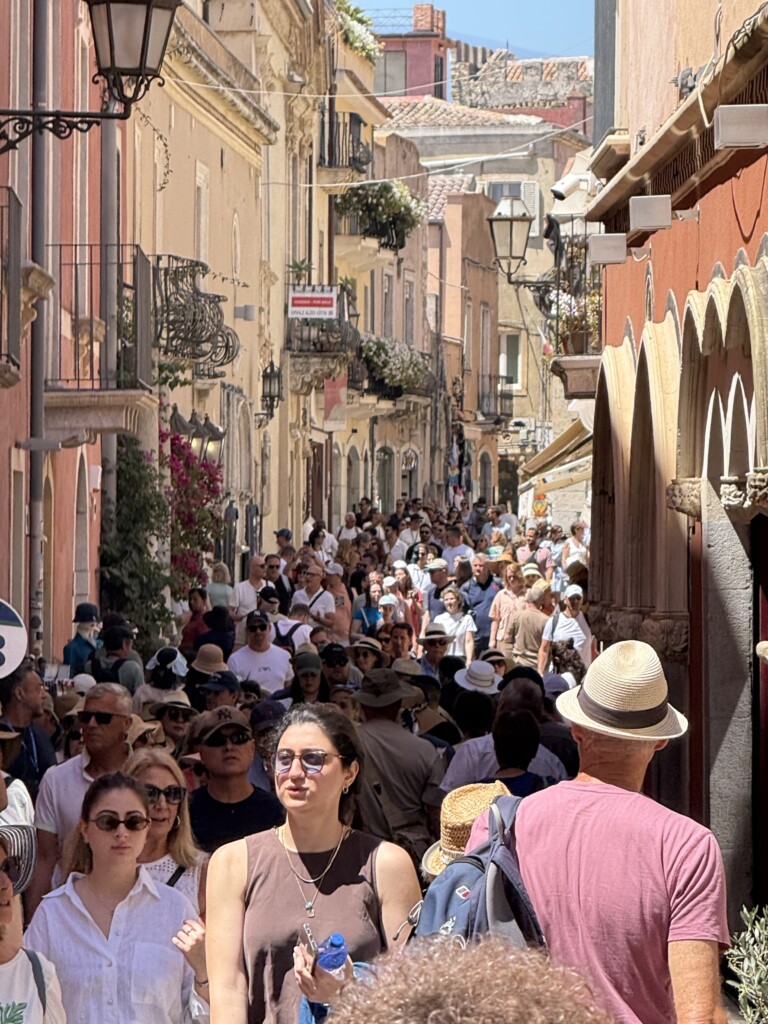
In the beginning of June, the main avenue for people only, Corso Umberto, was indeed crowded with tourists and cruise passengers. There were plenty of shops, café’s and clothing boutiques.
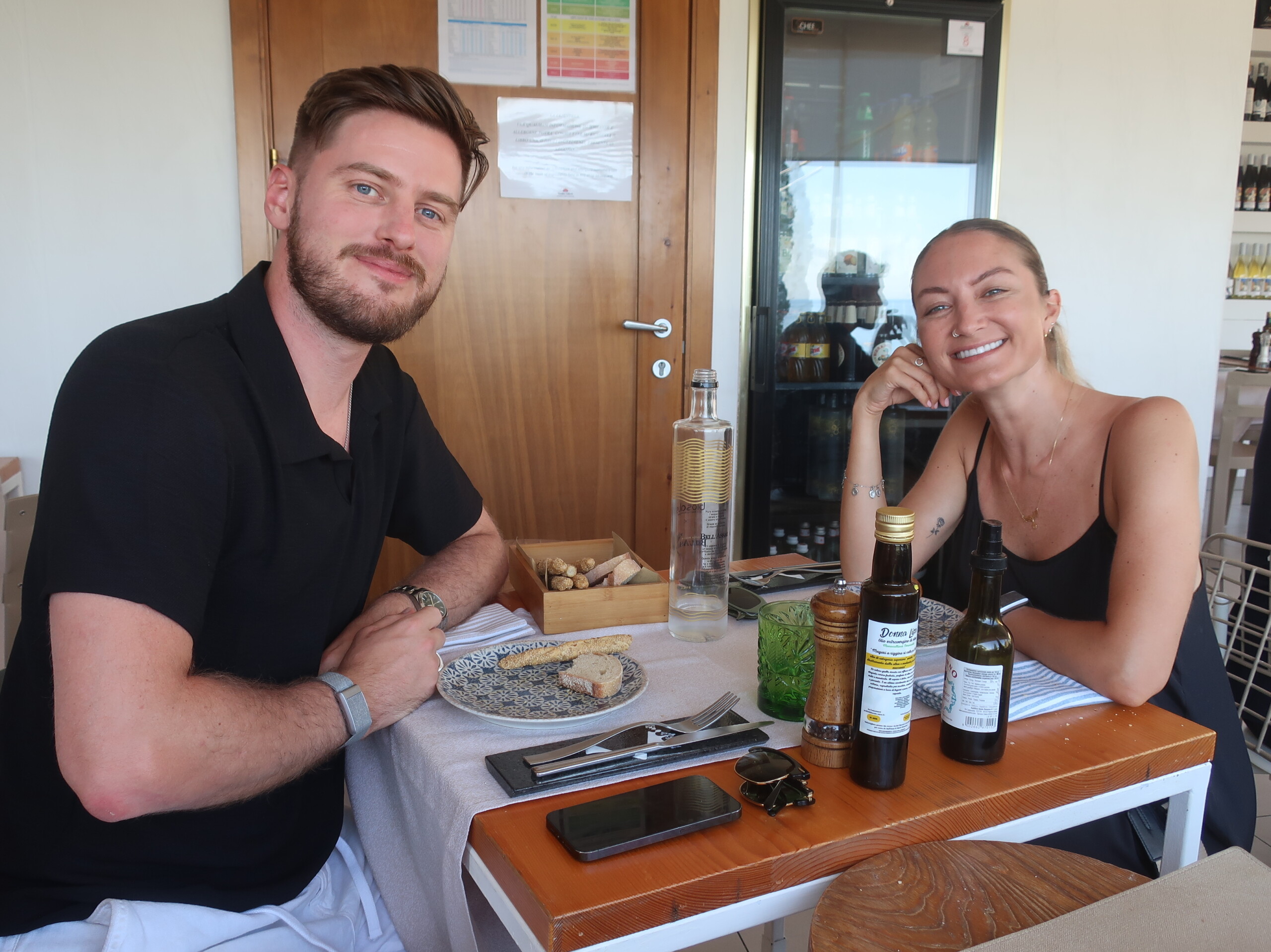
Restaurants, like La Botte, show off with pictures of various actors who have eaten in their establishment.
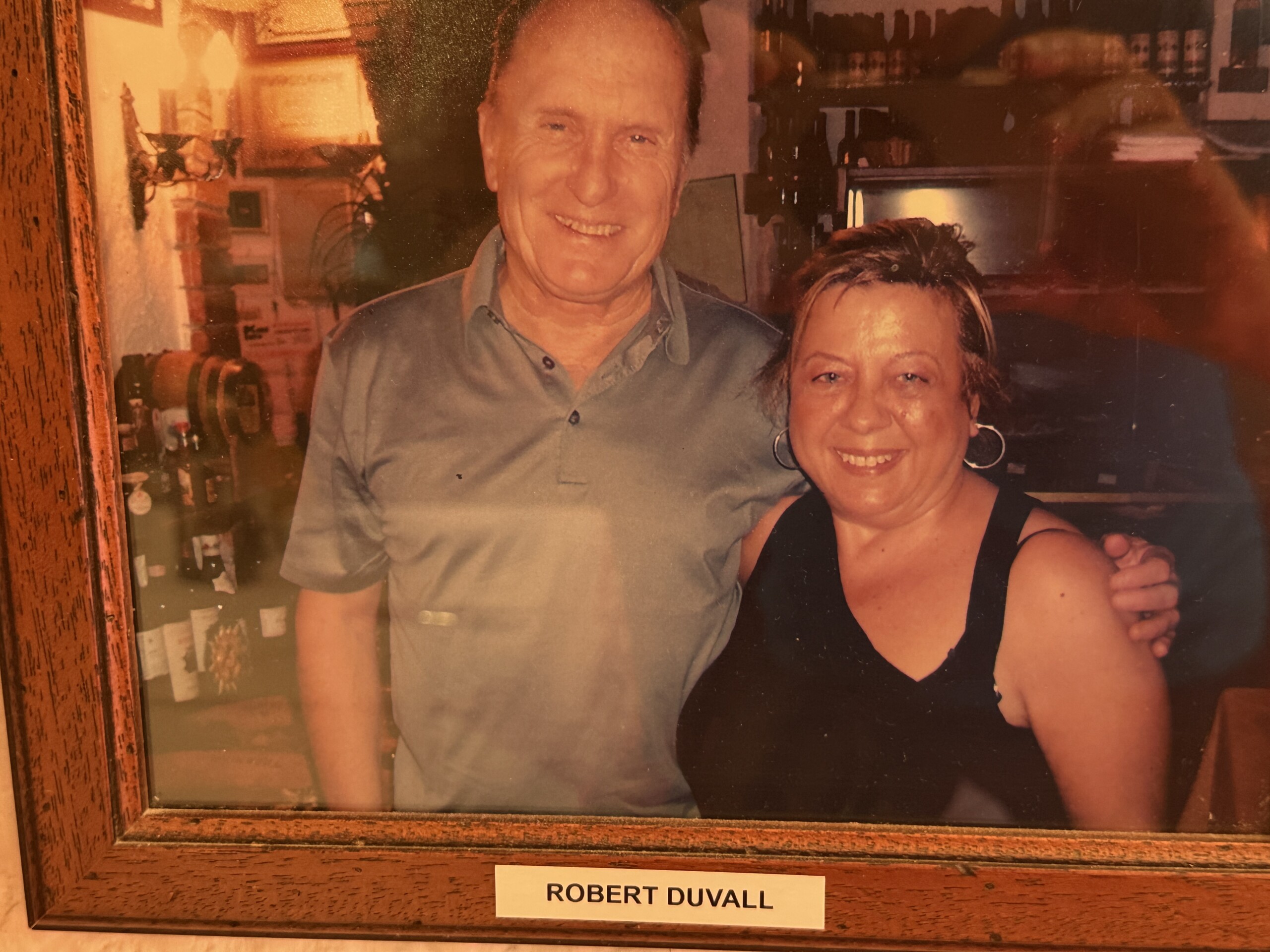
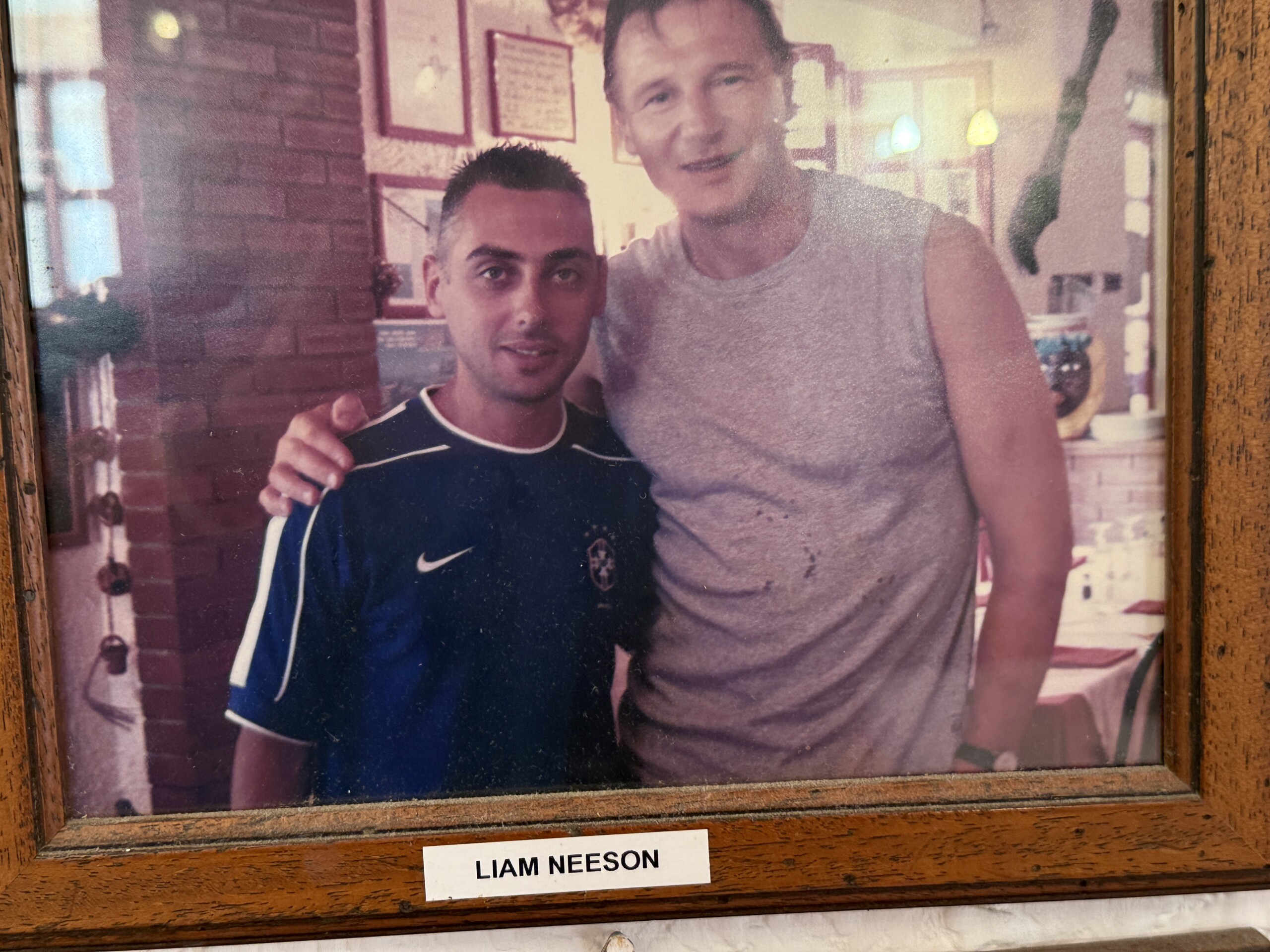
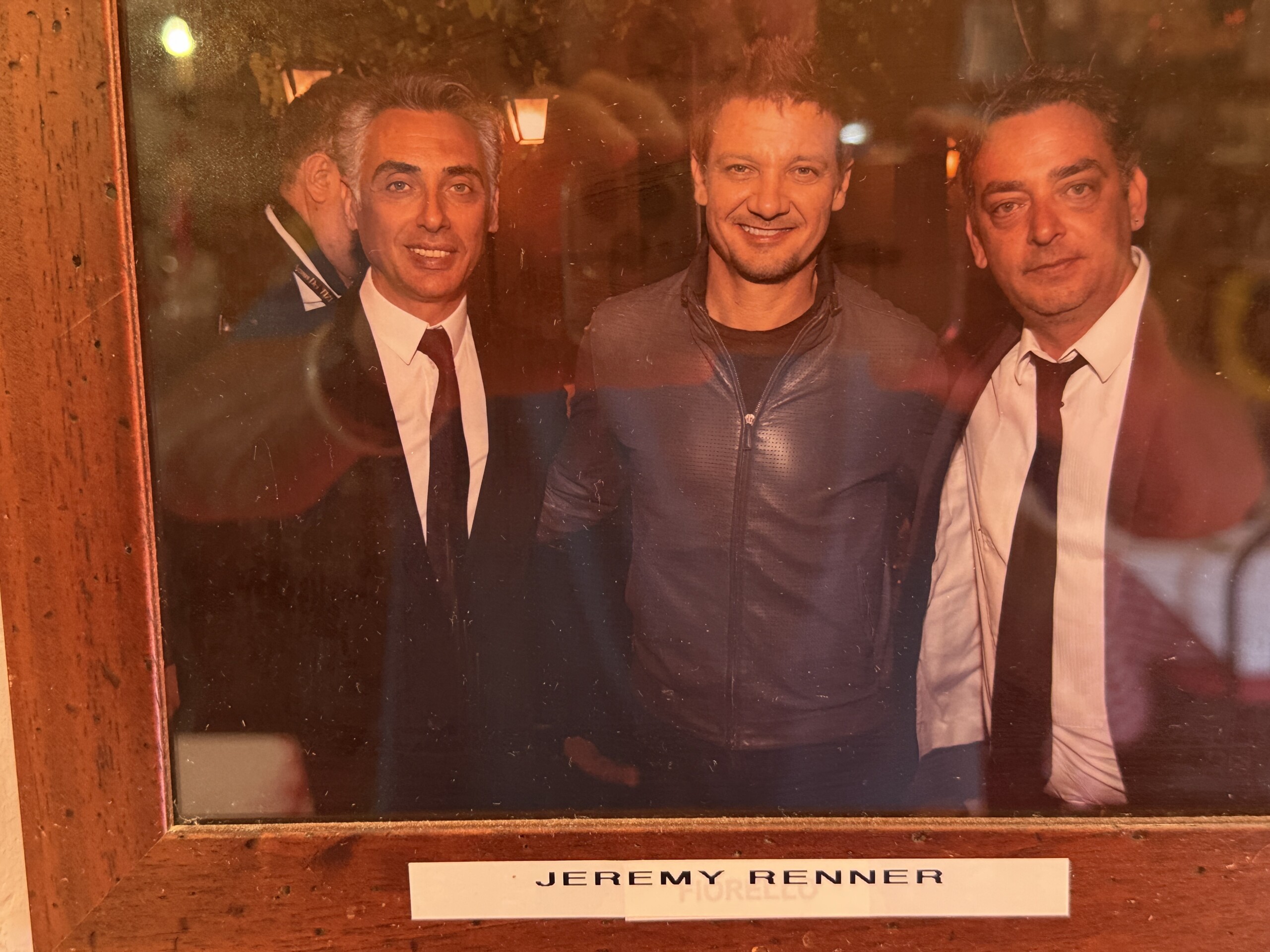
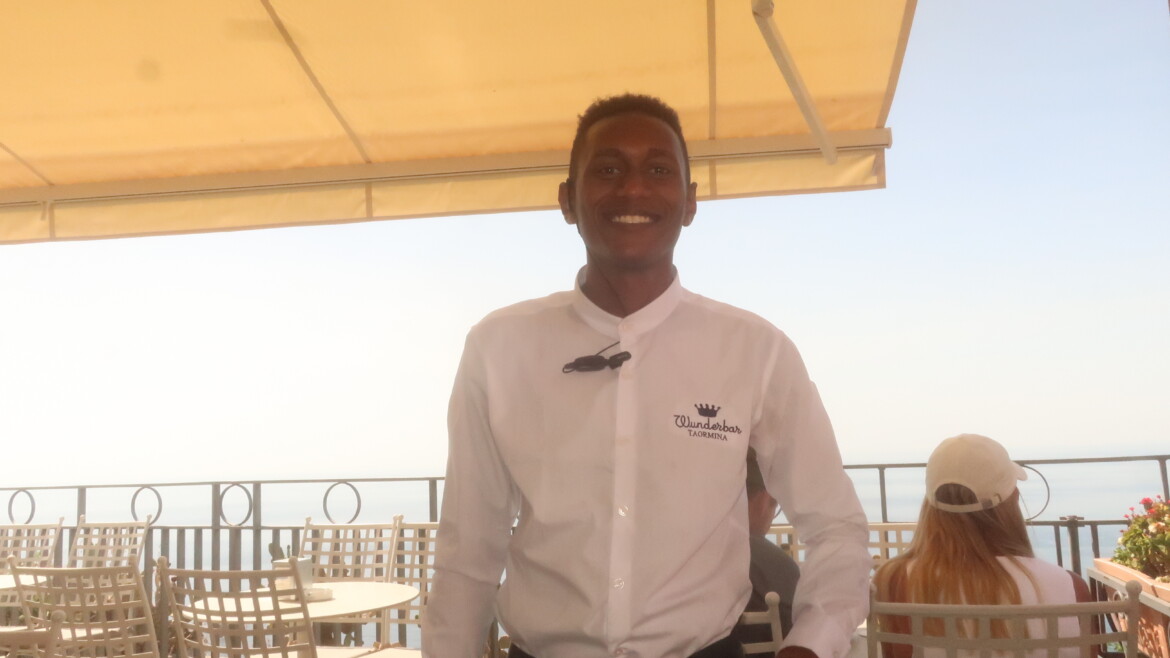
We stopped ourselves at the “Wunderbar” enjoying sugar free Coke-Cola. The views over the valley were majestic. Our waiter was a delightful Ethiopian named “DA.” He could speak 4 different languages.
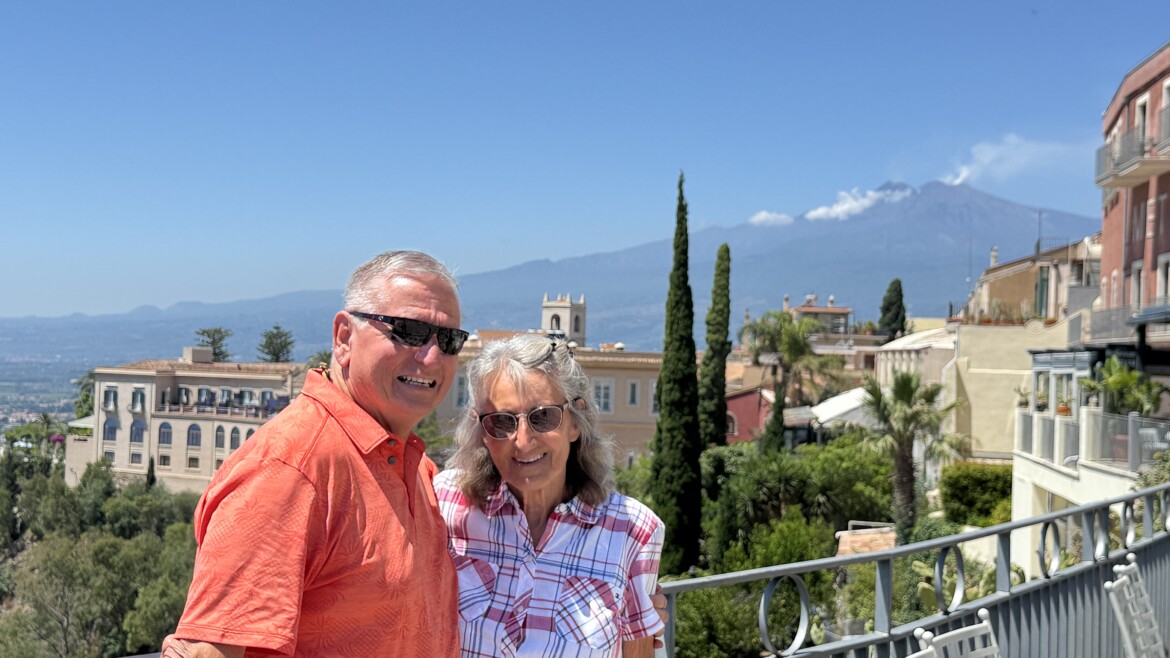
On the way back we took a side street to the Greek-roman Theater built in the third century BC. The Romans later came and remolded it, hence the hyphenated name. The Romans were famous for incorporating gladiator games and wild beasts.
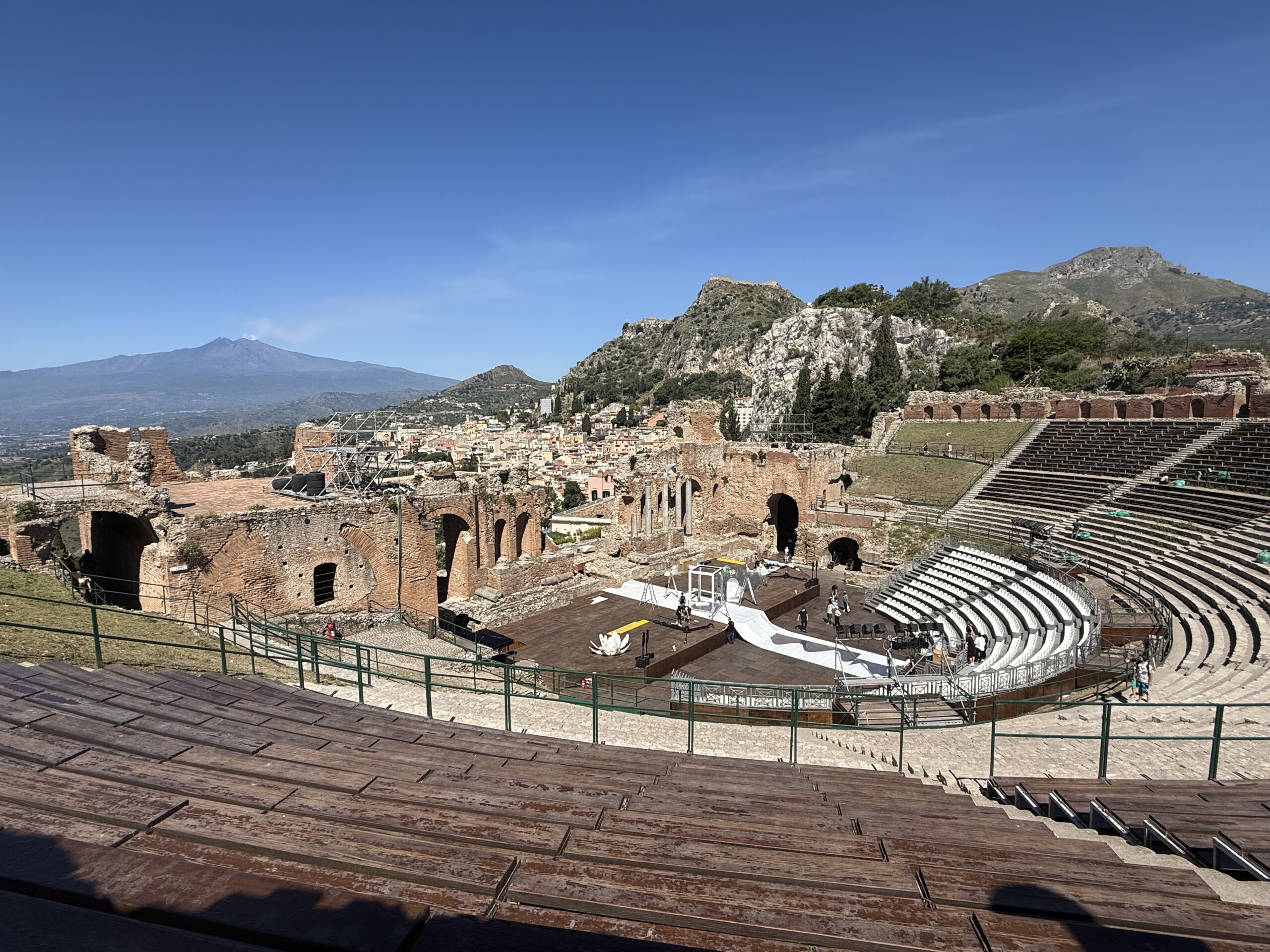
The theater faces Mt. Edna which represents(fire); on the east there is the Ionian Sea (water); the salty air represents (air) and all the stones represented (earth). We have been to other antiquarian theaters in the past, but this theater was dominated by the impressive Mt. Edna.
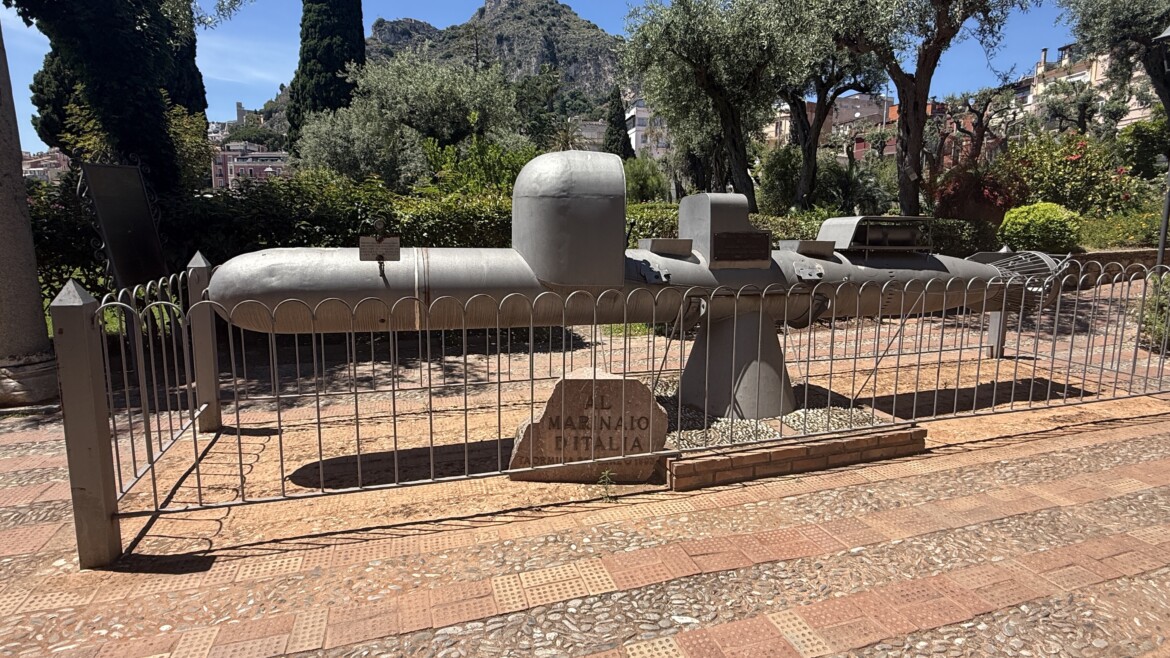
Nearby was a park which overlooked the valley too. A section of the park was dedicated to the Italian Army. There was even a one-man sub—known as Maiale, or “pig” on display. Parts of Taormina were heavily bombed during WWII.
Chapter 6, Ortigia (or-TEE-jah), The Old City
Just under a 2-hour train ride south of Taormina, is the ancient city of Siracusa where the train ends. A short taxi ride away in the island of Ortigia, the place where you want to be.
There are two small bridges which connect Siracusa to Ortigia. On a separate small island is the sculpture of Siracusa’s famous mathematician and scientist, Archimedes (c.287-212BC).
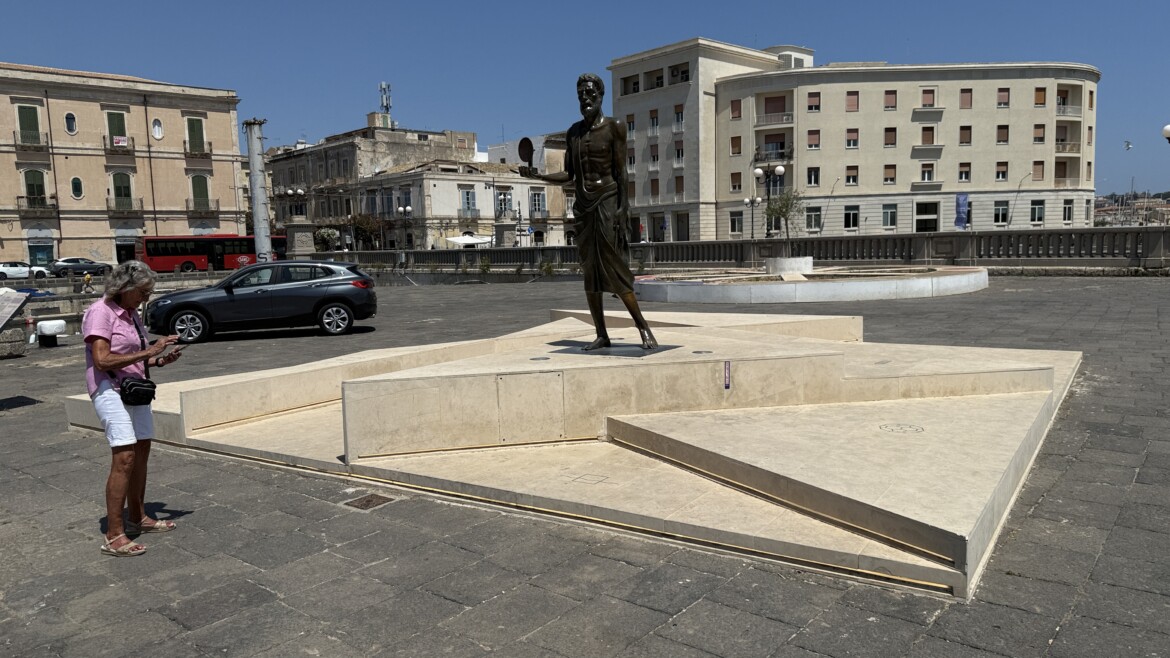
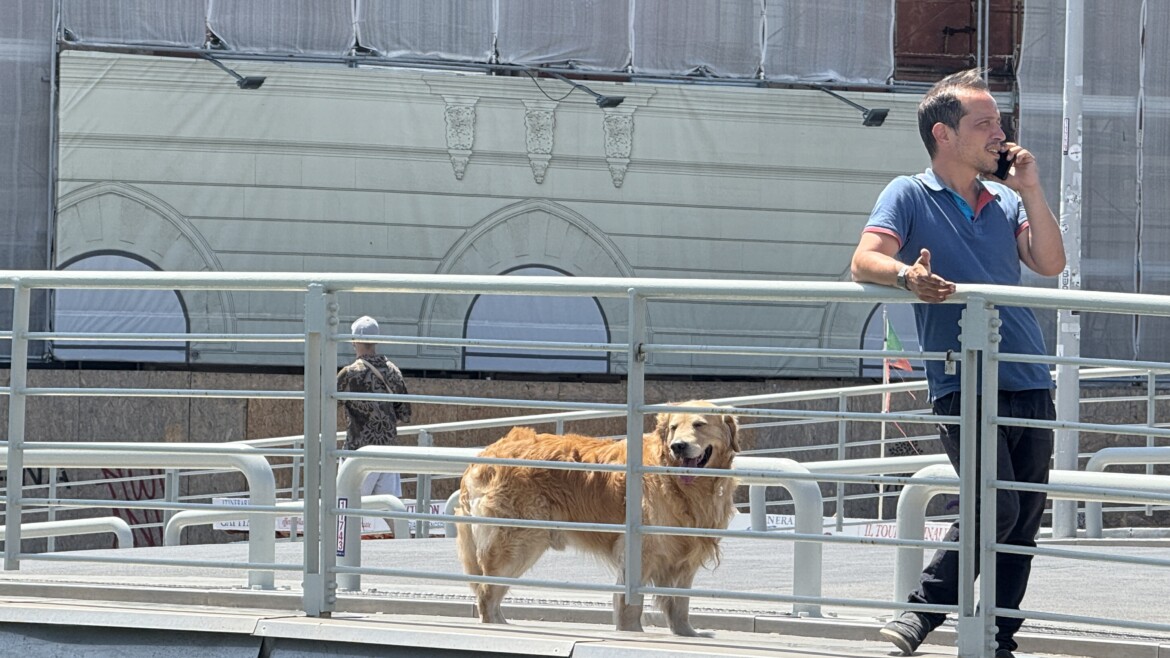
We thank—or maybe not– Archimedes for developing calculus. Then, too, when the Romans were attacking Siracusa by ships, Archimedes developed a device to burn the ships with mirrors. He is the one who shouted “Eurkeka (I’ve found it), while measuring the density of metals with water displacement. Today, there is little excitement over the modern statue, and the bridge is used to walk your dog.
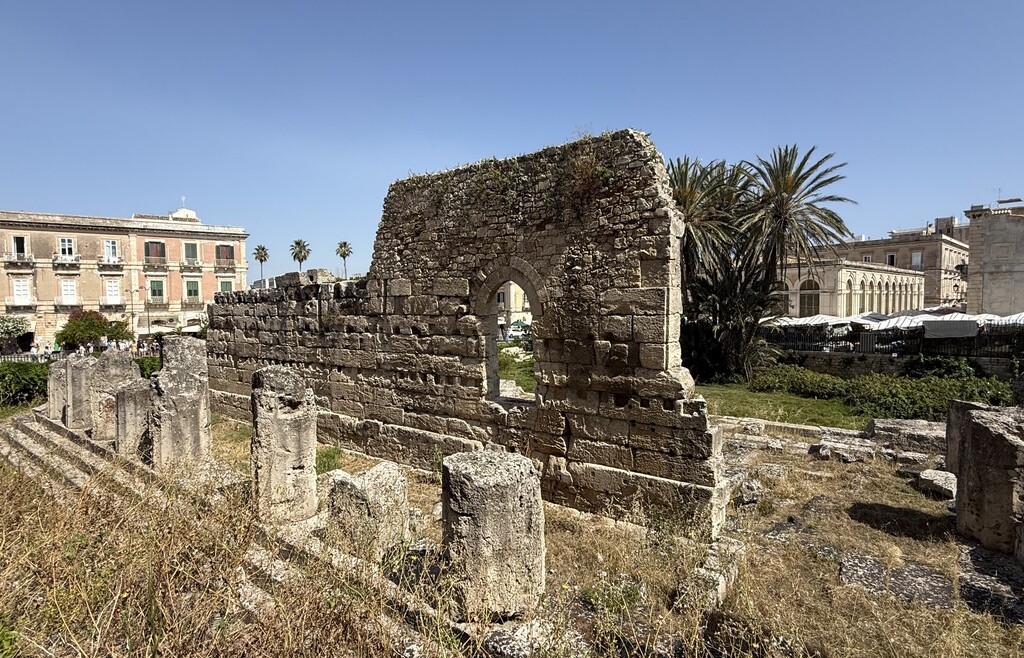
Not far away was Sicily’s first Doric Temple of Apollo which dates back to 580 BC. We picture this place to be massive at one time. The surviving columns leaves much to the imagenation.
Most people come for the day; others may stay for 2 days; we wanted to get to know the place and stayed four days. Our hotel of choice was Charme Hotel Henry’s House. We had a seaview room, but really enjoyed seaview terrace for breakfast.
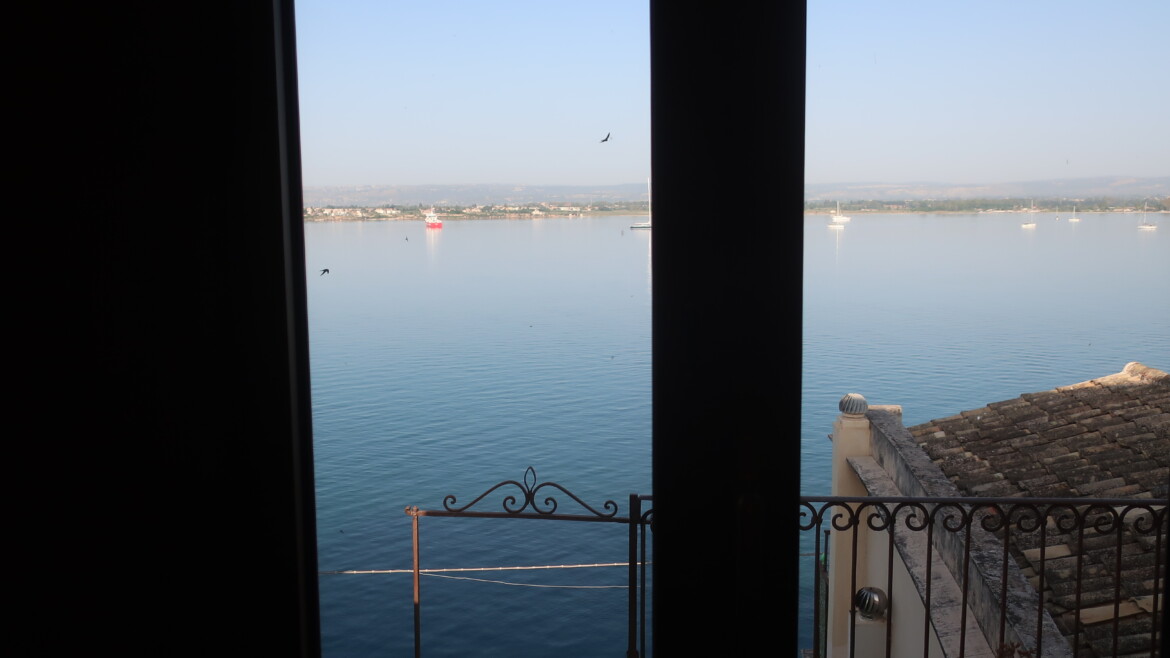
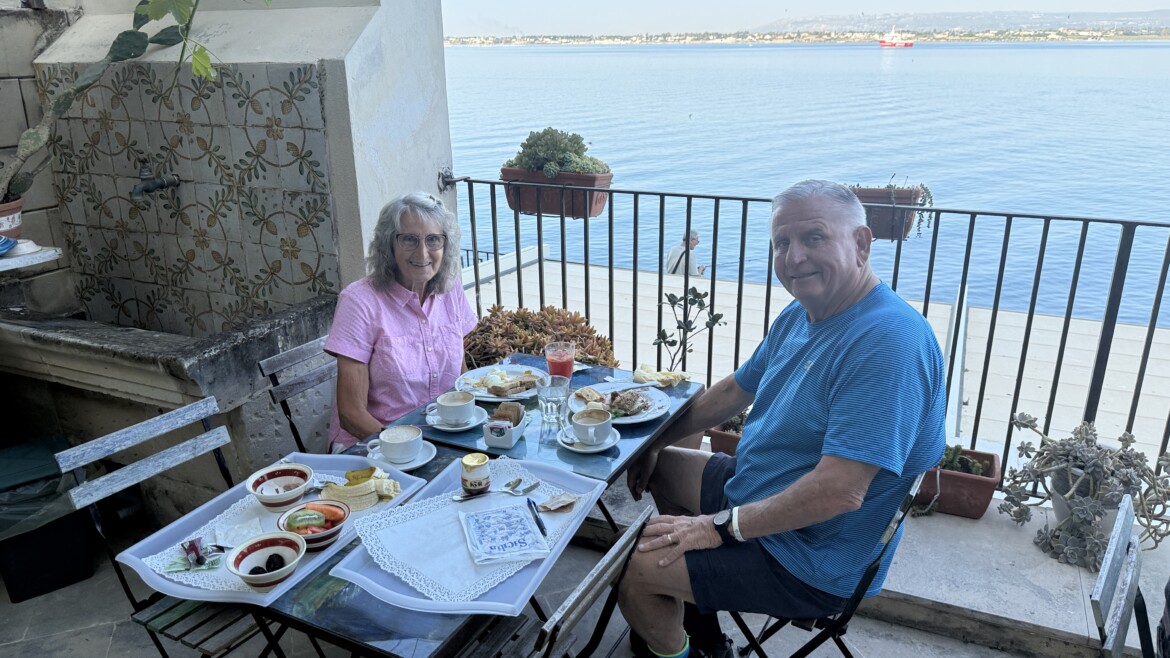
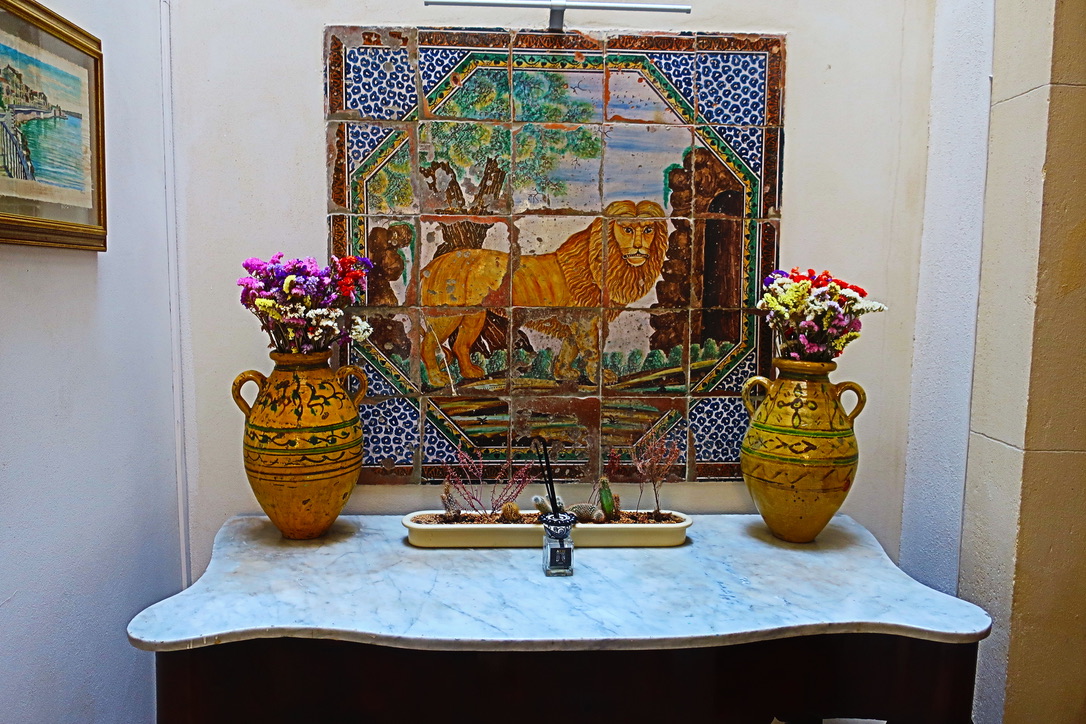
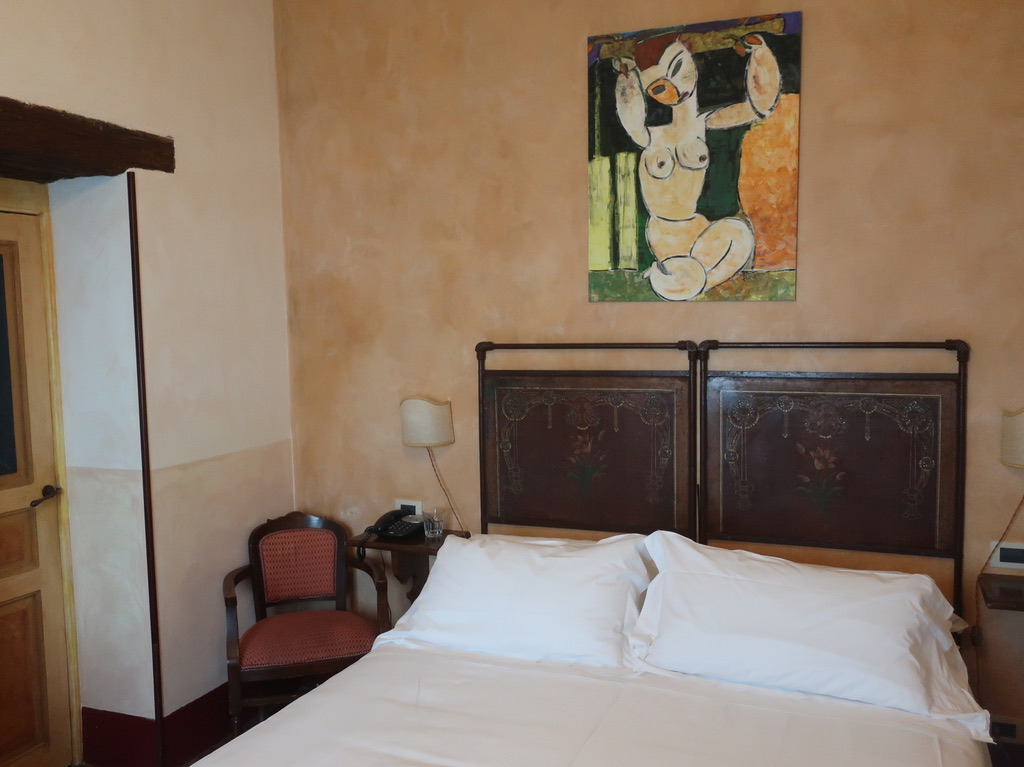
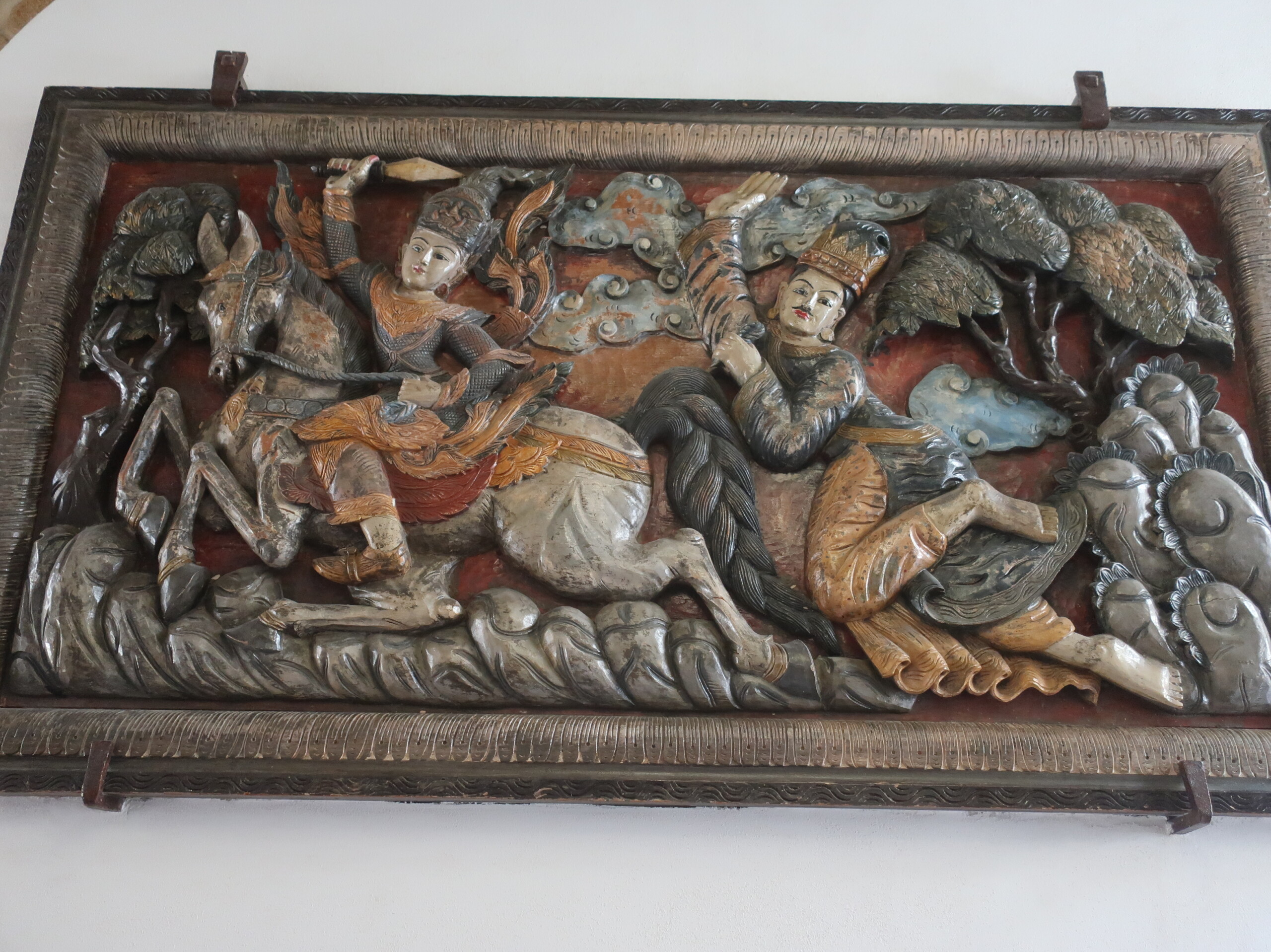
The hotel was a bit quirky with antique furniture and modern art. The staff are ultra-friendly and informative.
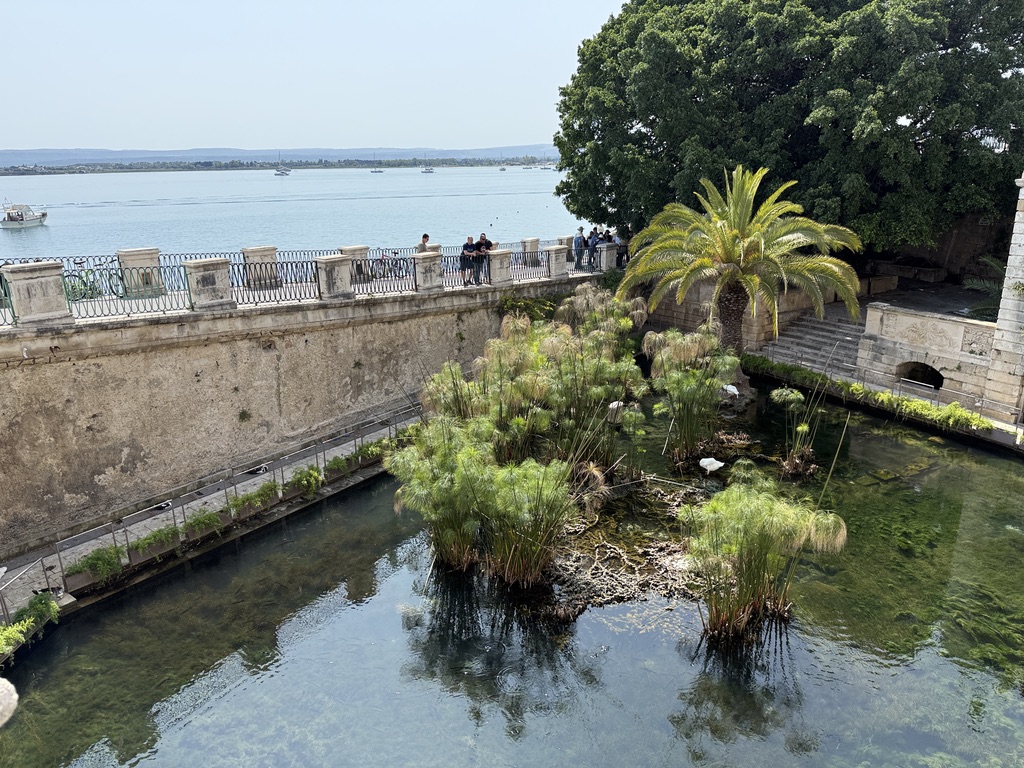
Close by is the Fountain of Arethusa. It is a fresh water spring that were used by the Greeks in 8th century B.C. It later became an area for tanneries and until 1800’s a community laundry. Today, it is known as the “fountain of the ducks.” Papyrus still grows in the spring—the same substance to make writing material used by ancient Egyptians.
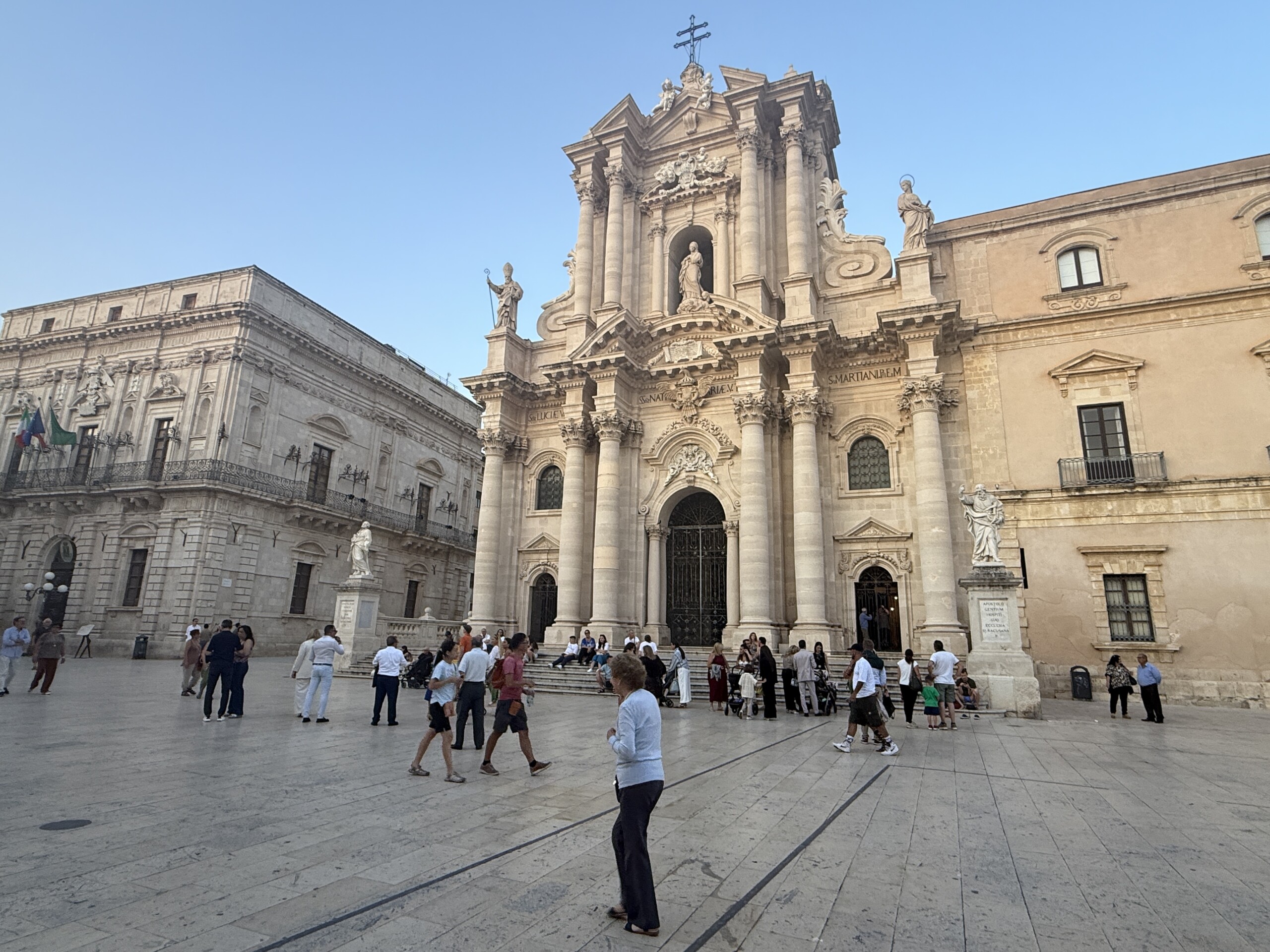
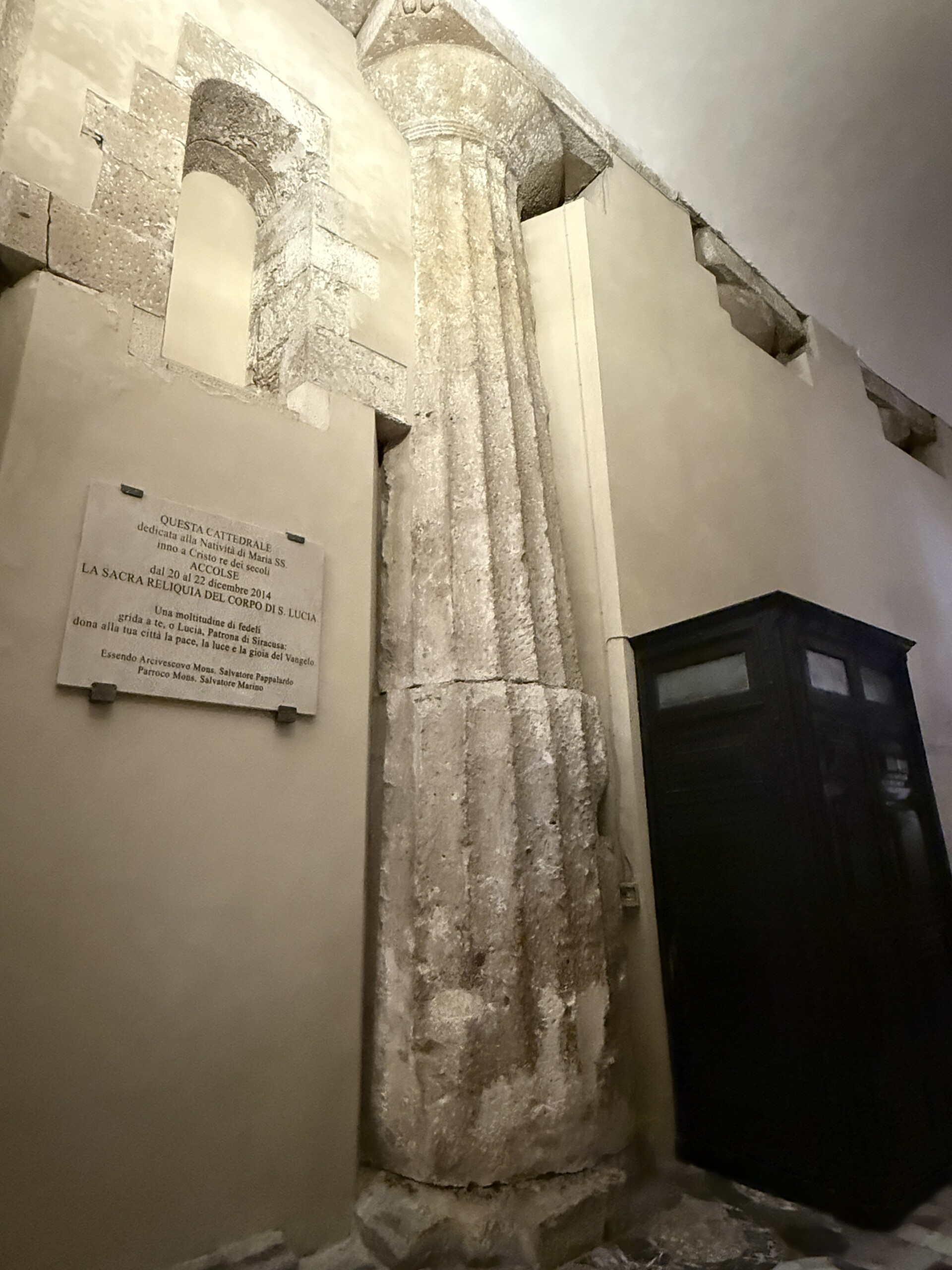
A short distance, too, is the Piazza Duomo, a large square which becomes a reference point for us. At one end is the famous Baroque style Siracusa Cathedral which dates back to the 1750’s AD. The original Doric columns of a Greek Temple from the 7th century B.C. can still be seen which is incorporated in the Cathedral. In 2005 this Cathedral was designated as a UNESCO World Heritage site. For the 2 Euro charge to enter this Cathedral, it is well worth the money.
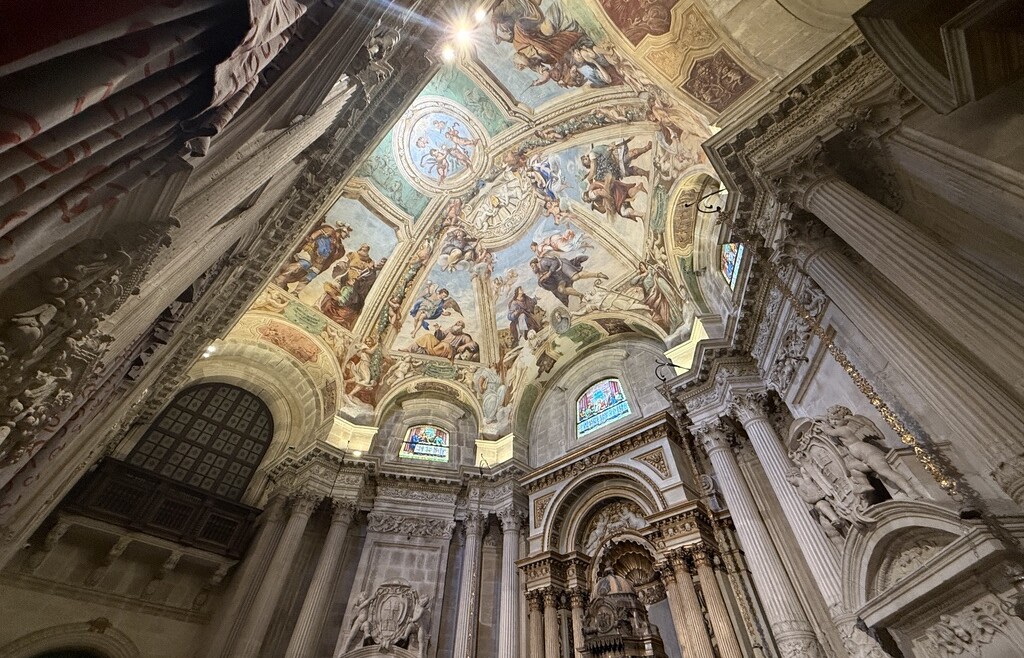
Like all of Europe, the churches in Ortigia are incredibly stunning.
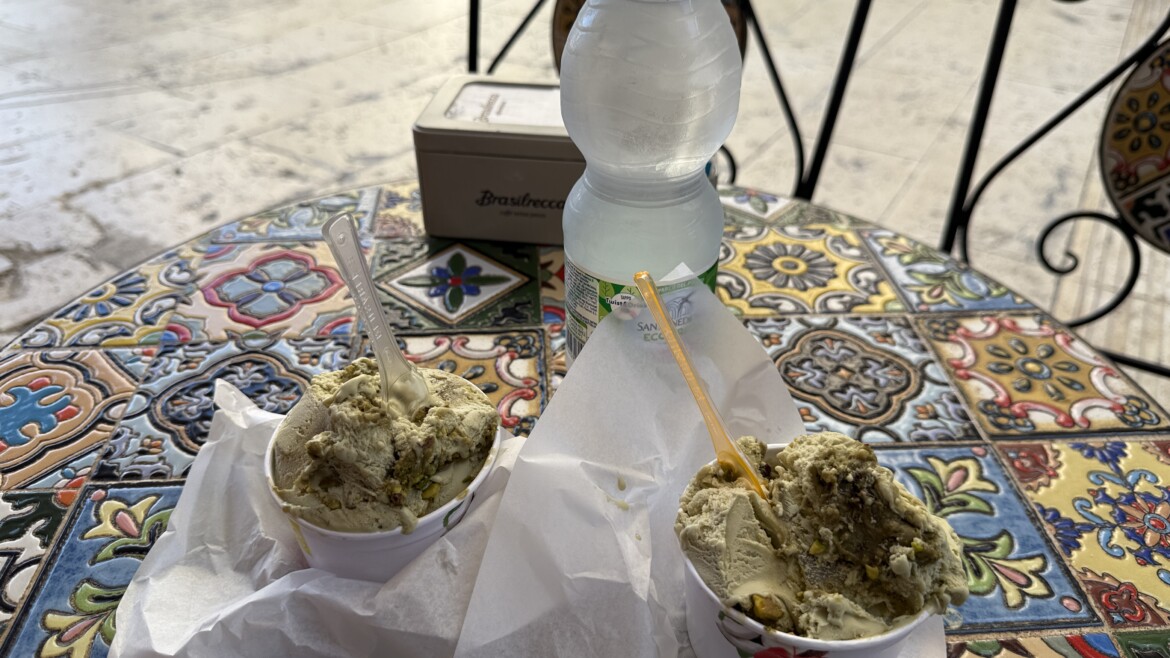
Just down an alley is where Kathie and I enjoyed a “Grand Pistachio Ice Cream” from Ocean’s Bar. What made it “Grand” was the extra pistachios used to supplement the ice cream. There is nothing better than good ole pistachio ice cream!
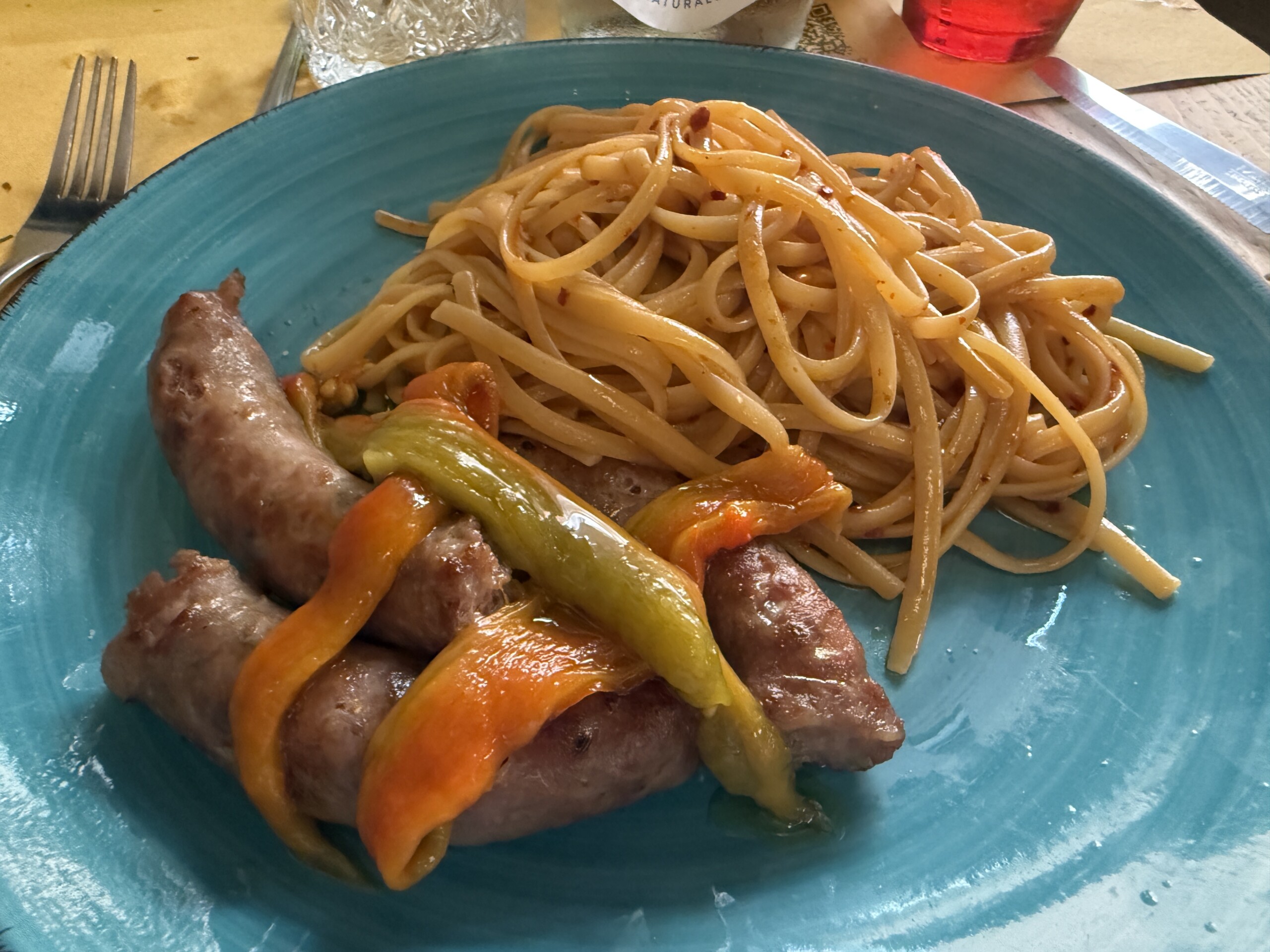
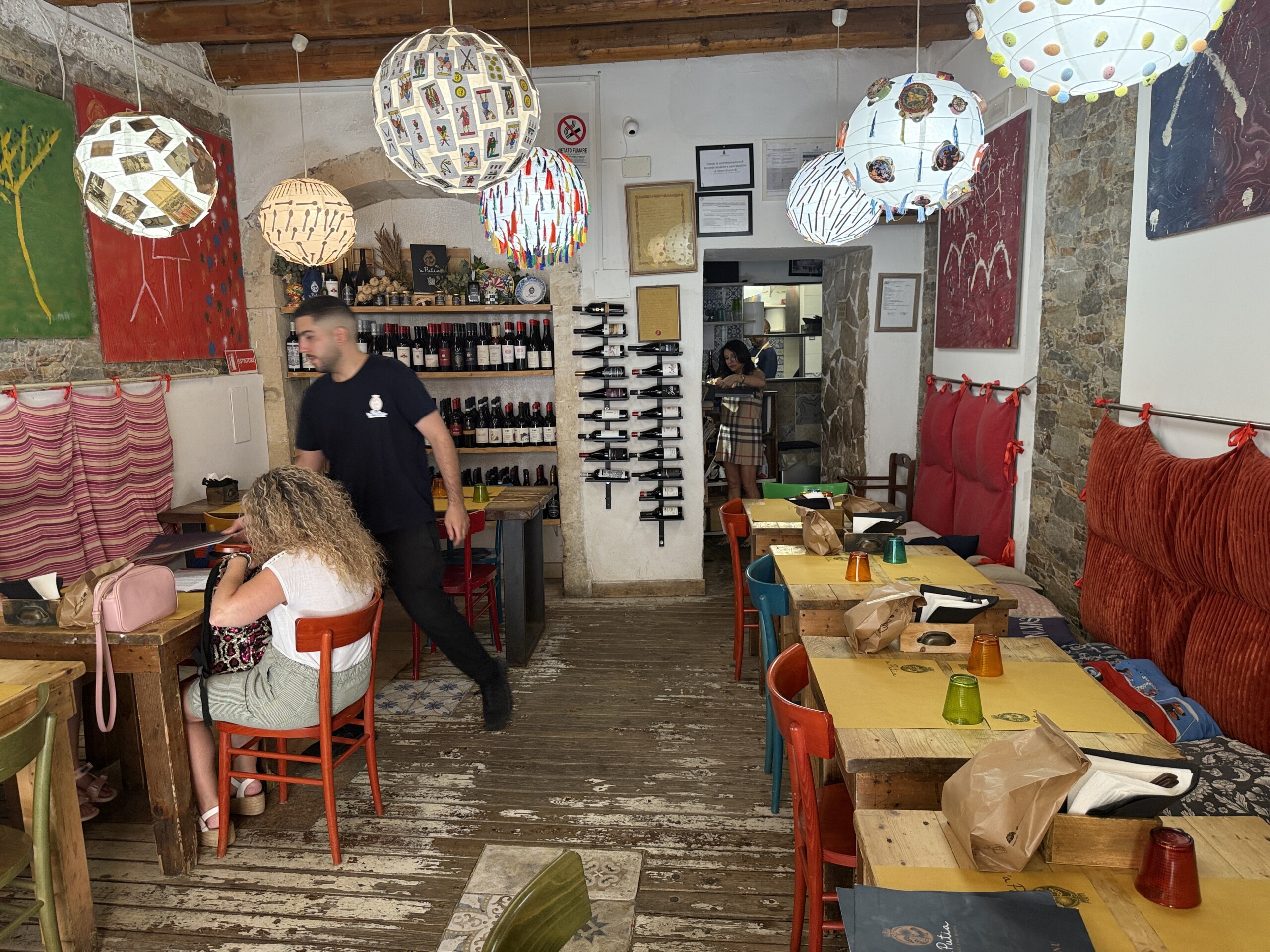
On another alley, we found a café known as “A Putia.” One of the informative staff members at Henry’s told us about it. A husband-and-wife team operates this small establishment serving genuine Italian food. Kathie had a number of salads as I enjoyed pasta with sausage made from a local village. The meals were delicious and we ate here not once; not twice; but three times! It was that good.
The Ortigia Street Market was not as lively as the Ballero Market in Palermo. Although, it was crowded nonetheless. it was fun to watch the various sellers with their fish, octopuses and meat products.
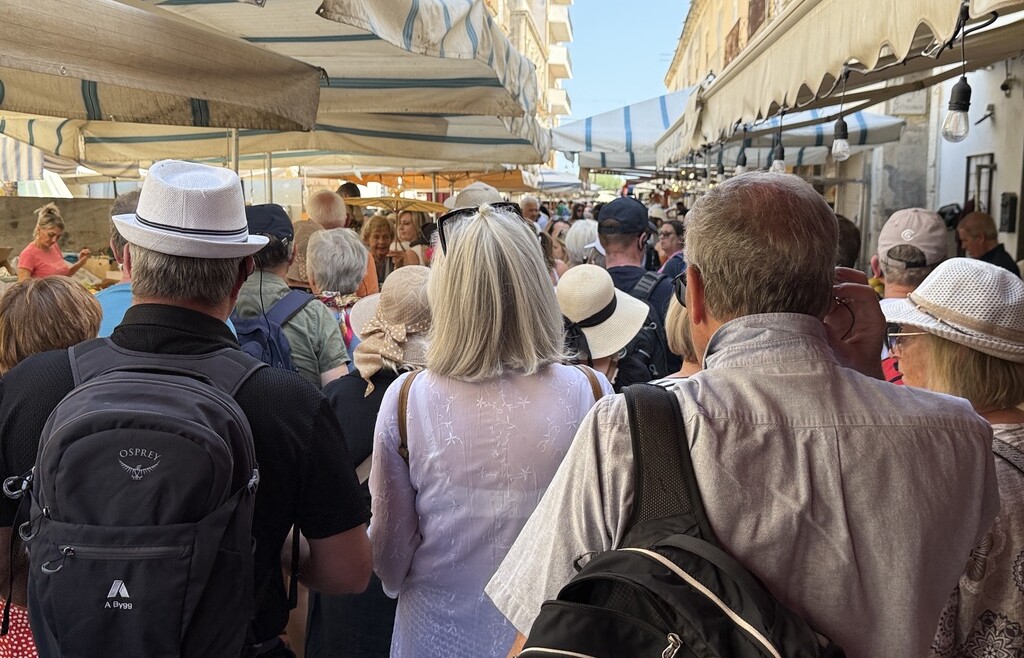
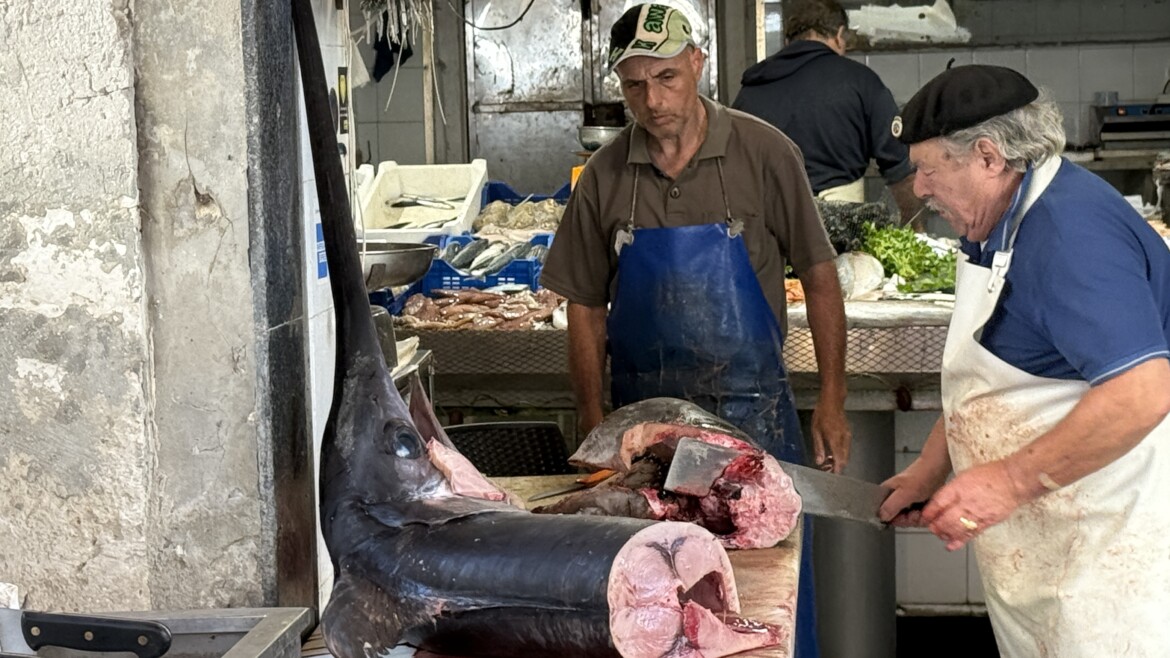
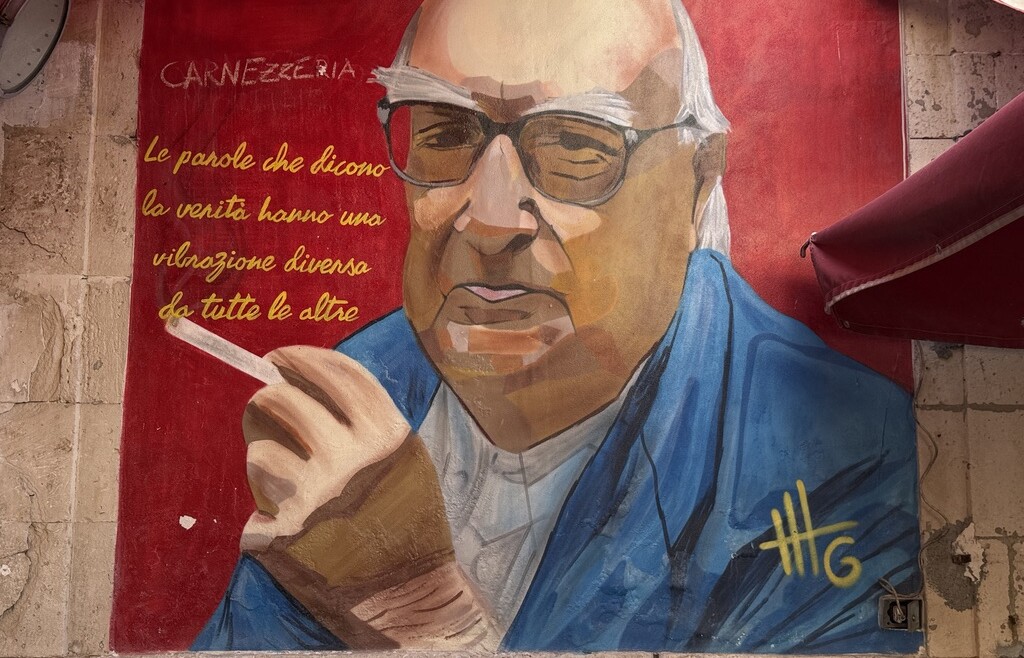
We thought this mural is rather unusual.
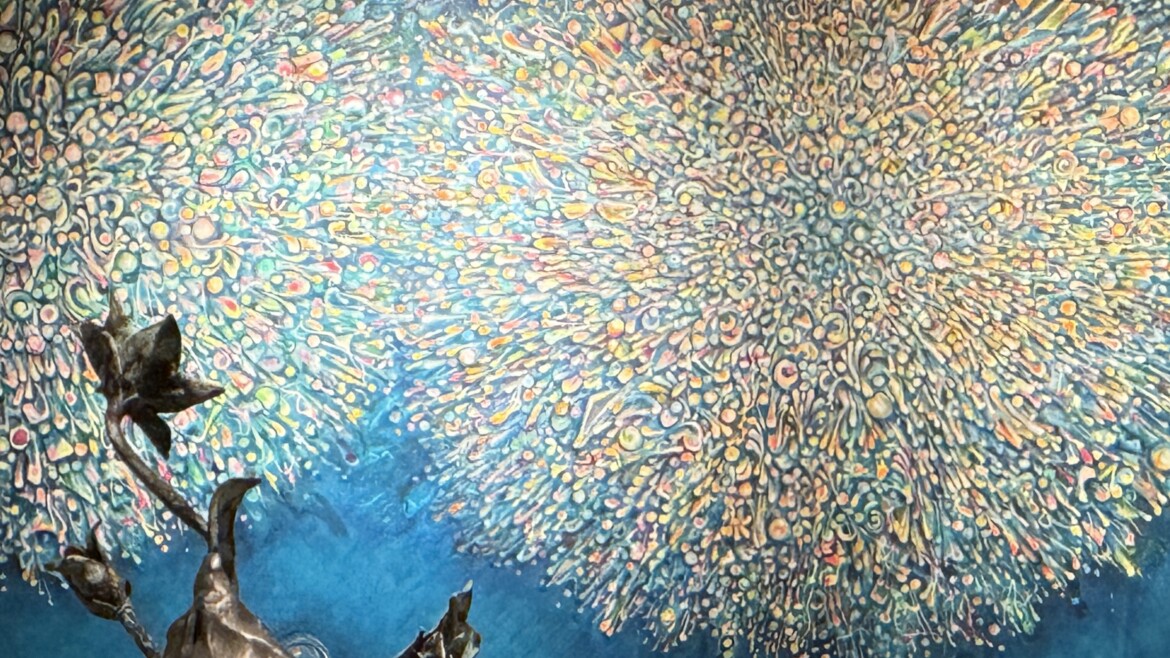
On the way back to our hotel, we stopped into an art studio. The painting below goes for 20,000 Euros.
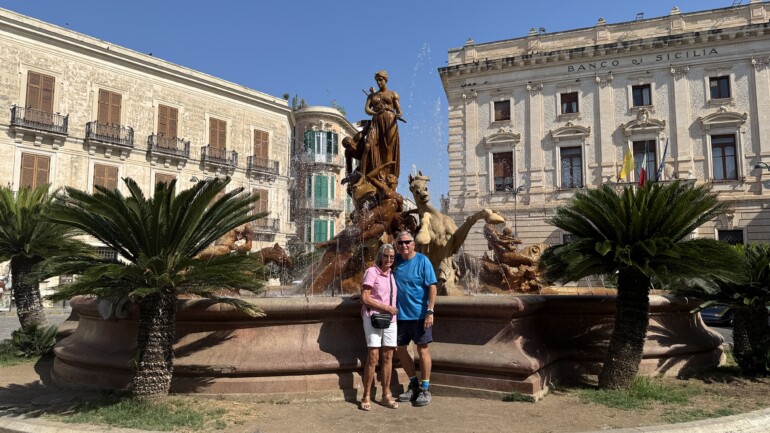
Finding the Fountain of Diana, we could not help but have our picture taken there.
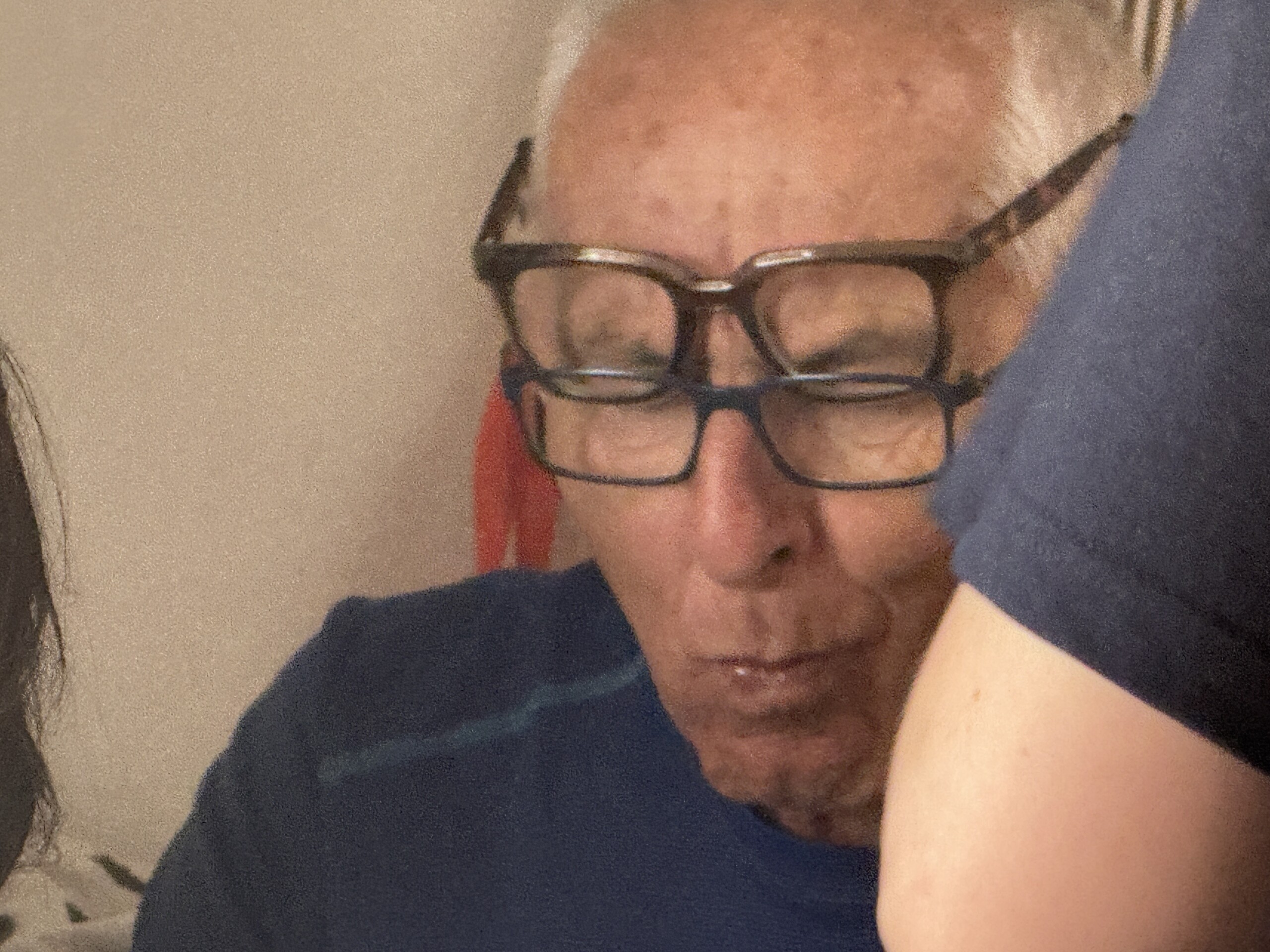
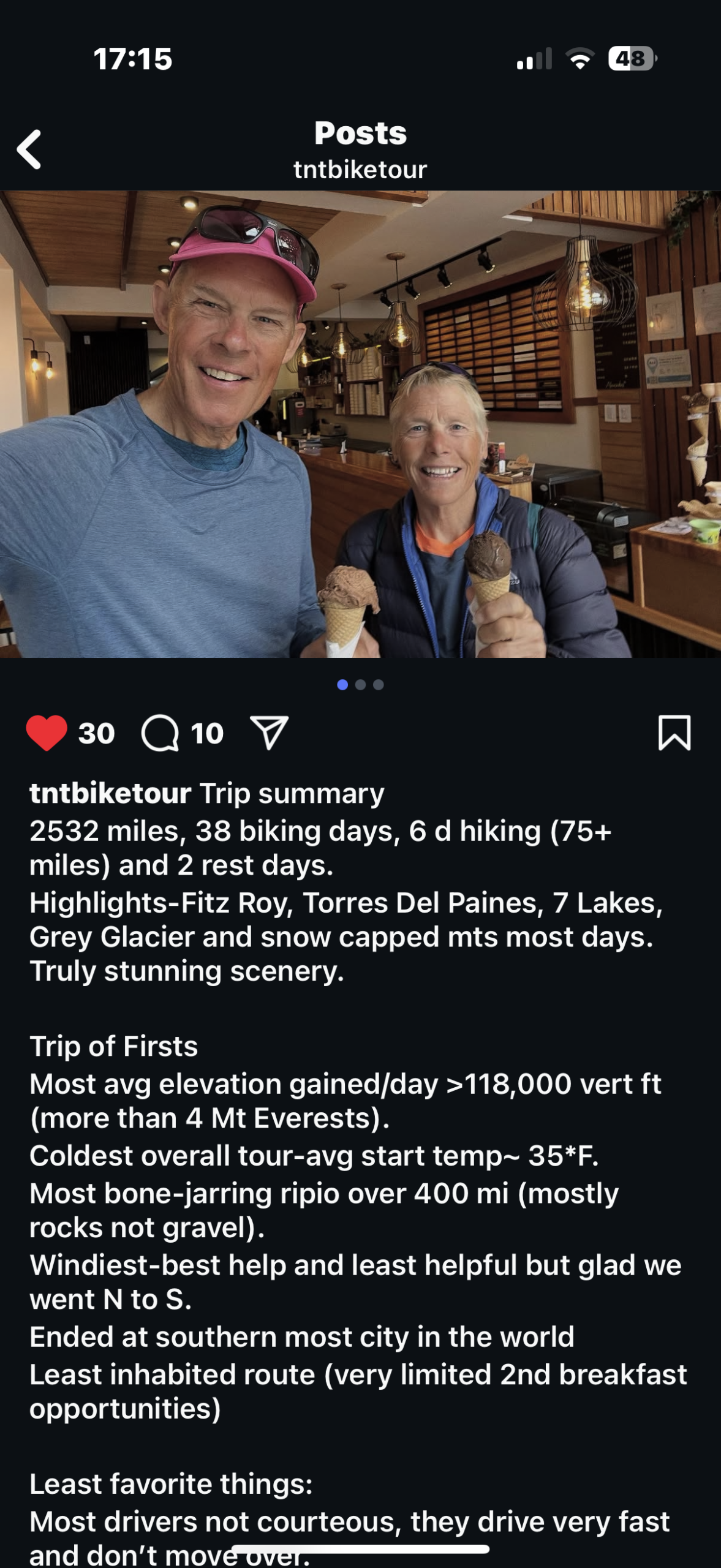
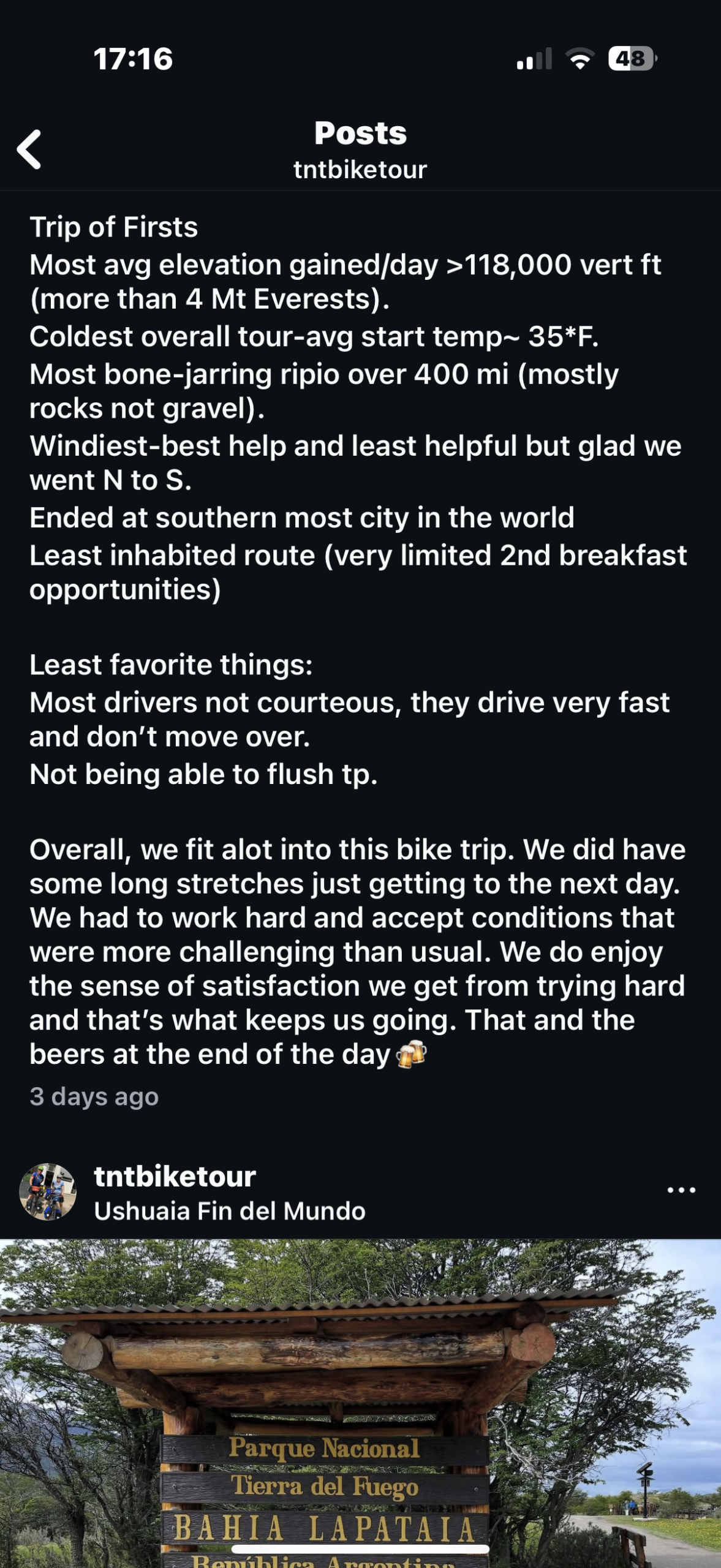
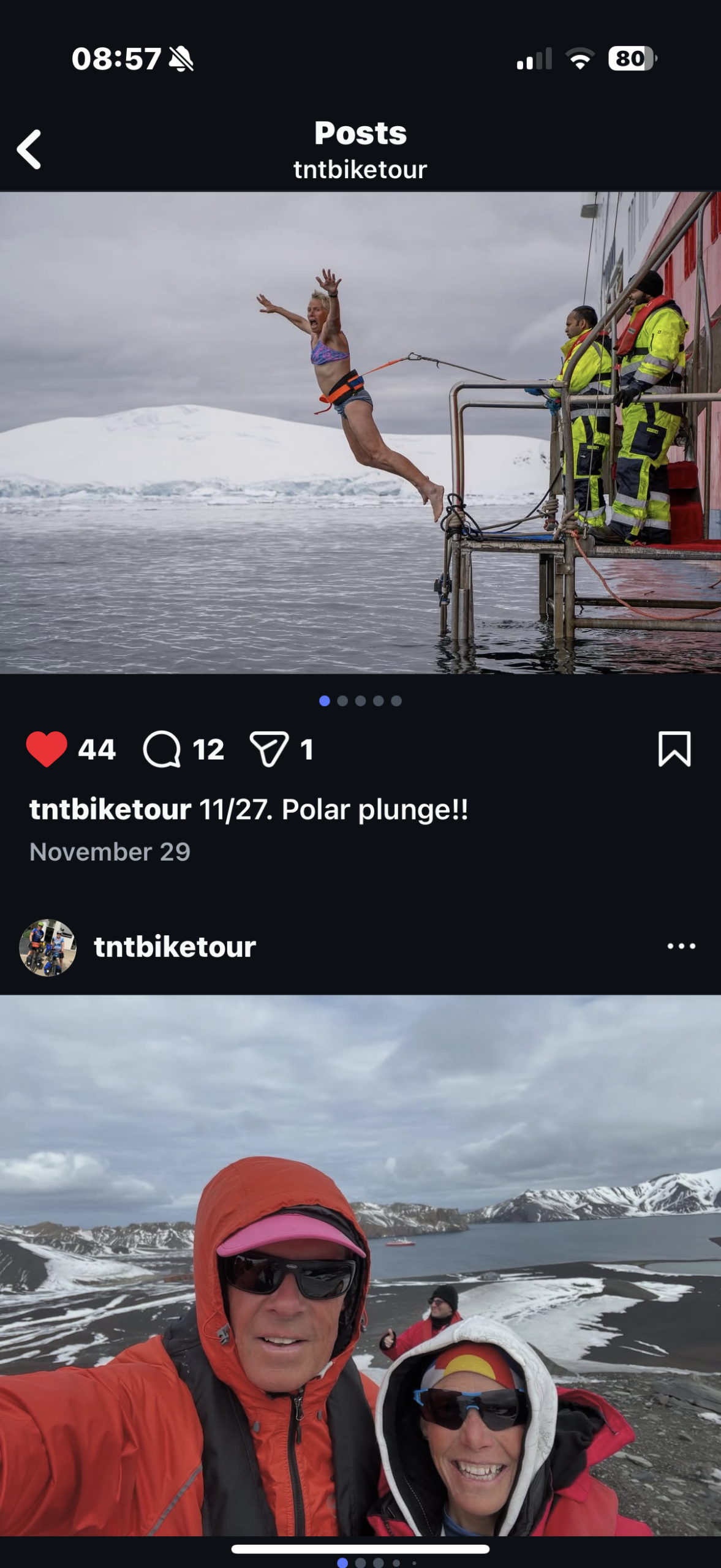
At breakfast, we happen to meet Tim Johnson from Colorado. He and his 88-year-old dad were making a trip around Sicily by car. Tim’s dad always wanted to see Sicily. This venture was a Father-to-son time. Tim did tell us that he and his wife, Tracy, were bicycling over a month down the spine of Chile and Argentina to the most southern city of South America. We are following them on INSTAGRAM: tntbiketour. There next journey is to take a ship to Antarctica.
We did take a taxi to Siracusa’s Archaeological Park. There is no one better than a friendly Italian. We have forgotten his name, but remember his story of being married to a Russian woman. They had two children together. She became homesick and divorced the taxi driver and took her 2 kids children to Russia. He now lives with his mom who takes real good care of him. He appreciated how friendly we are.

There are two ancient theaters in the park. The larger one is Greek and dates back to 500 B.C. It can hold 15,000 people. The theater still operates in the summer from mid-May to July.
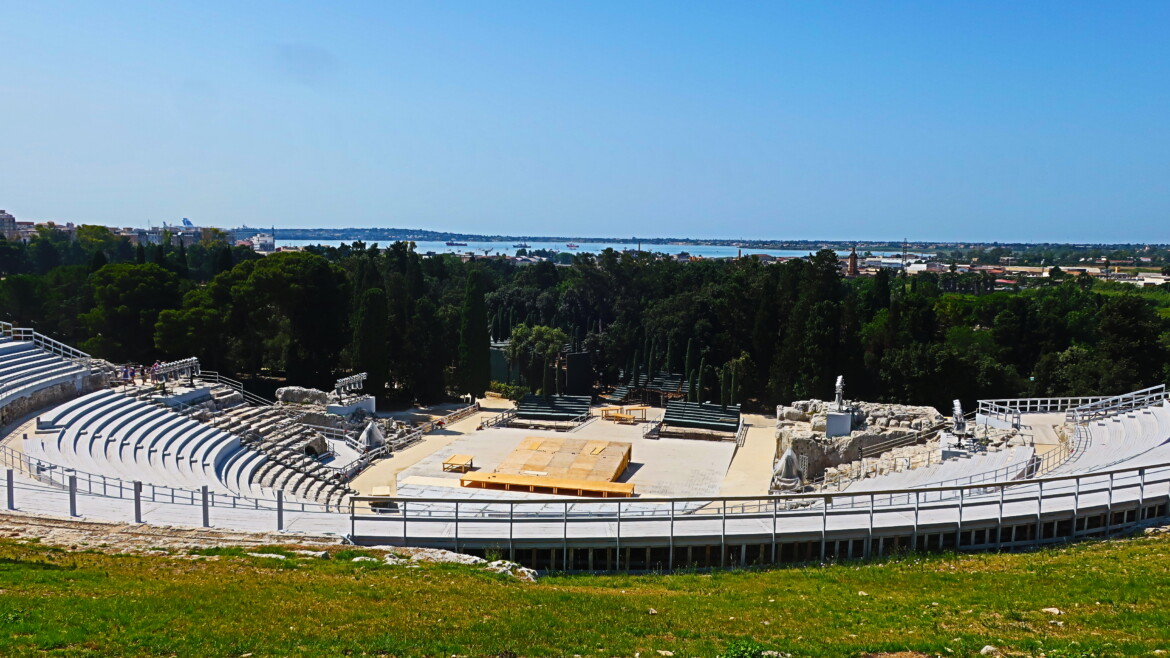
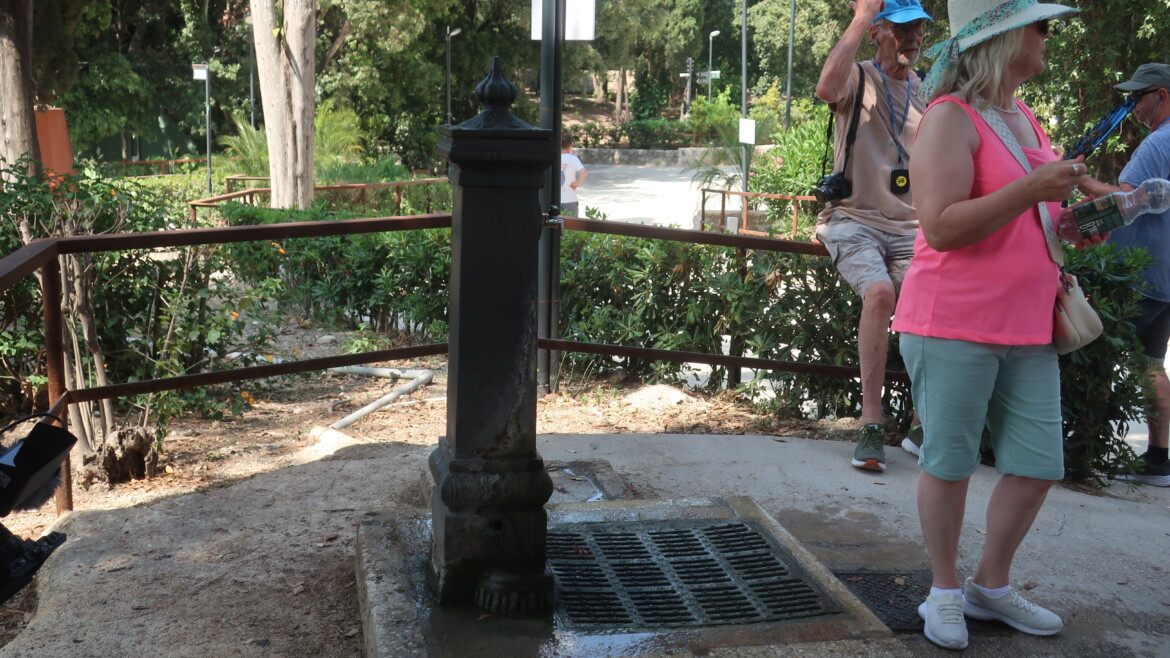
The temperatures in mid-June were hot. Luckily, there was a water spigot at the base of this theater. No cold water fountain here though.
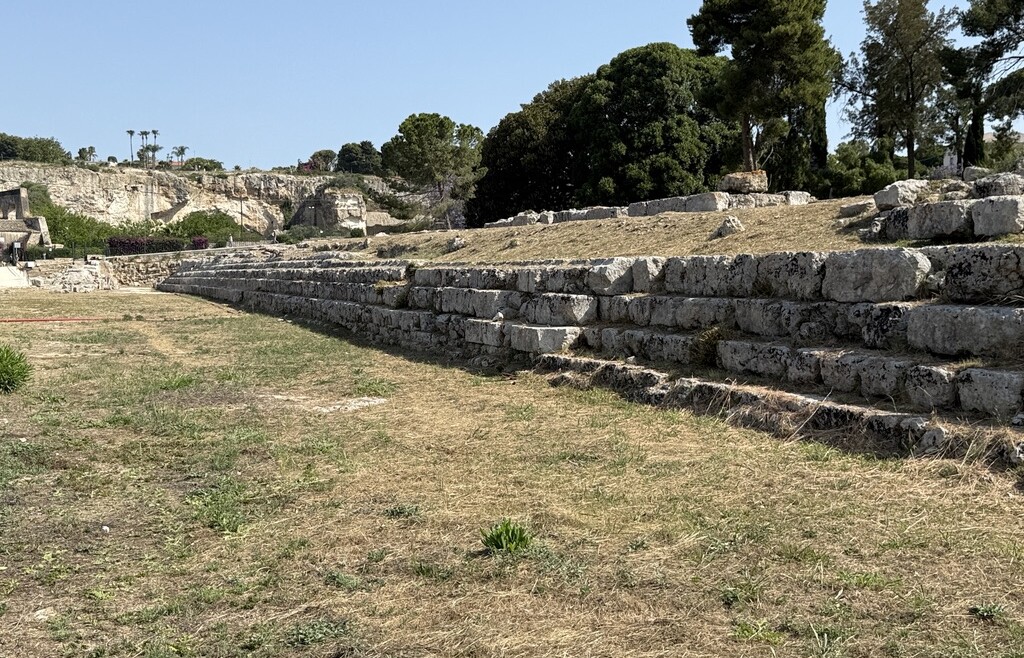
Along the way to the Roman Theater is an alter where 450 bulls were massacred at one time for a big barbecue party.
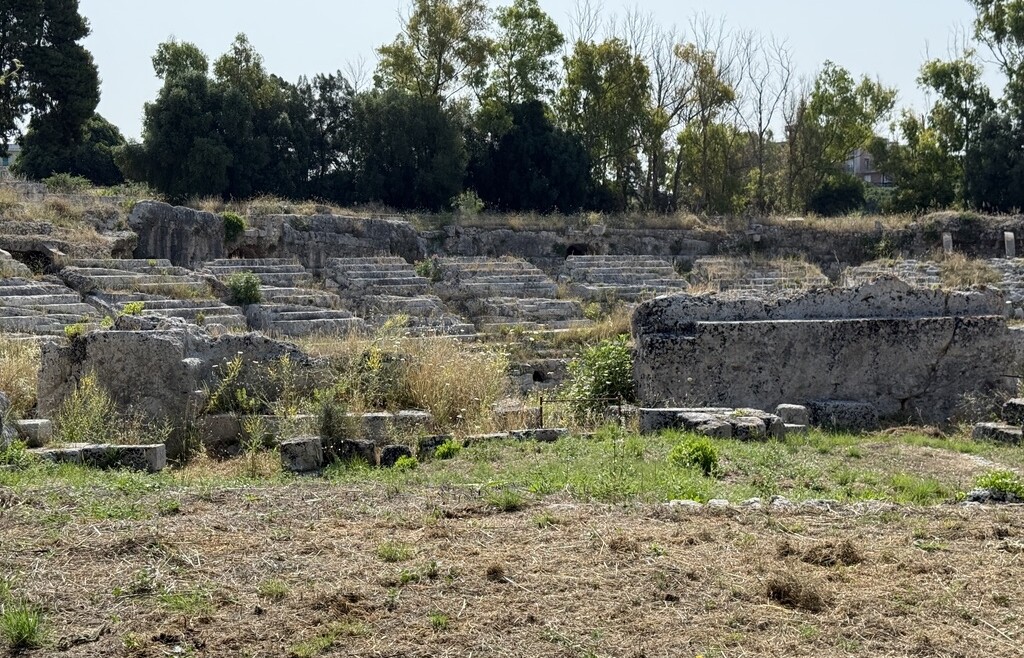
The Romans built a separate theater in 212 BC. The theater is definitely smaller. Sand was placed in the theater to soak up the blood. The Romans are famous for their brutal entertainment using blood and gore.
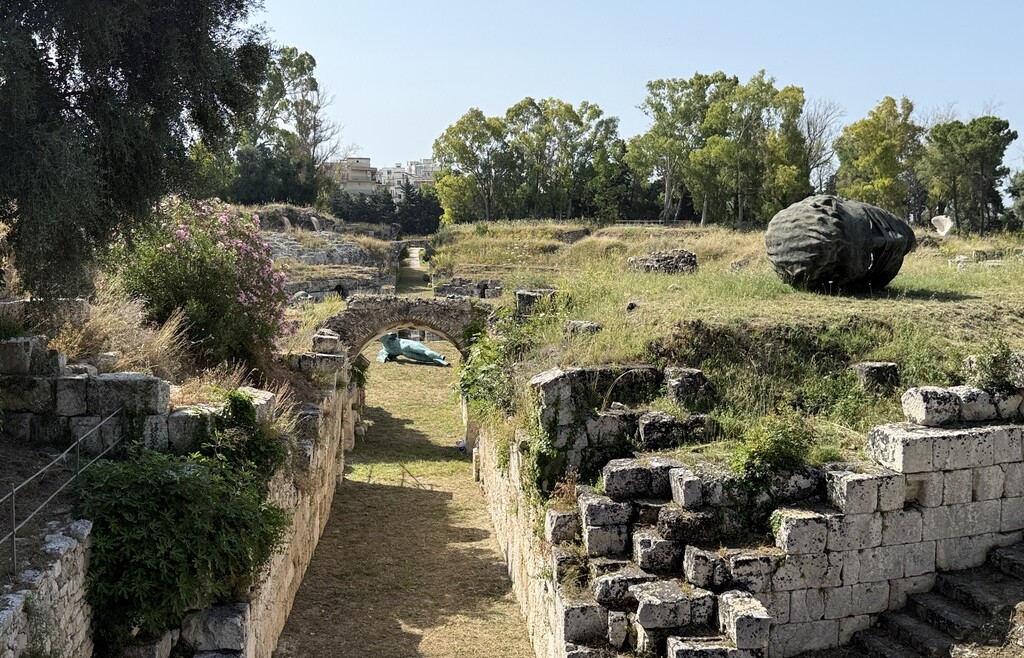
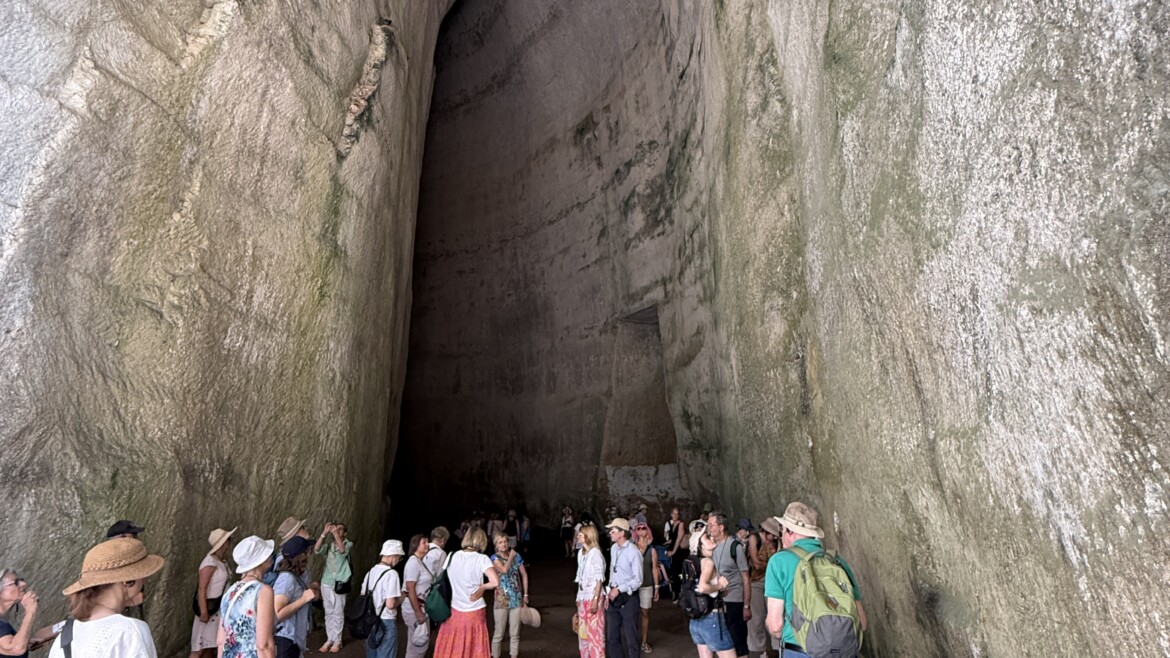
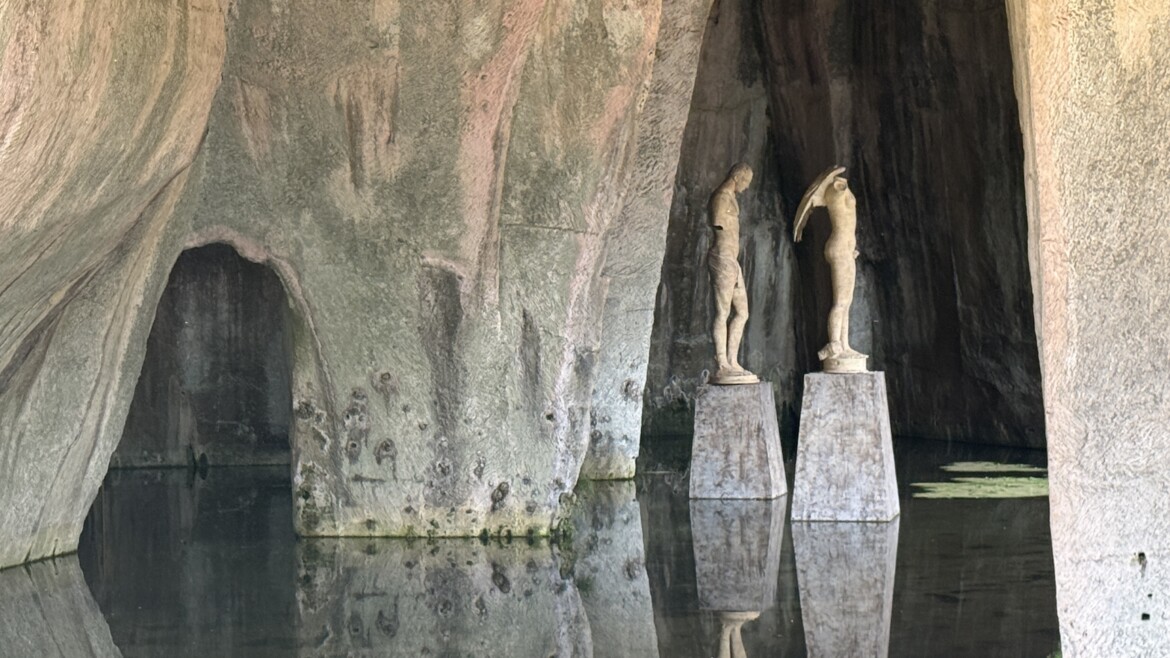
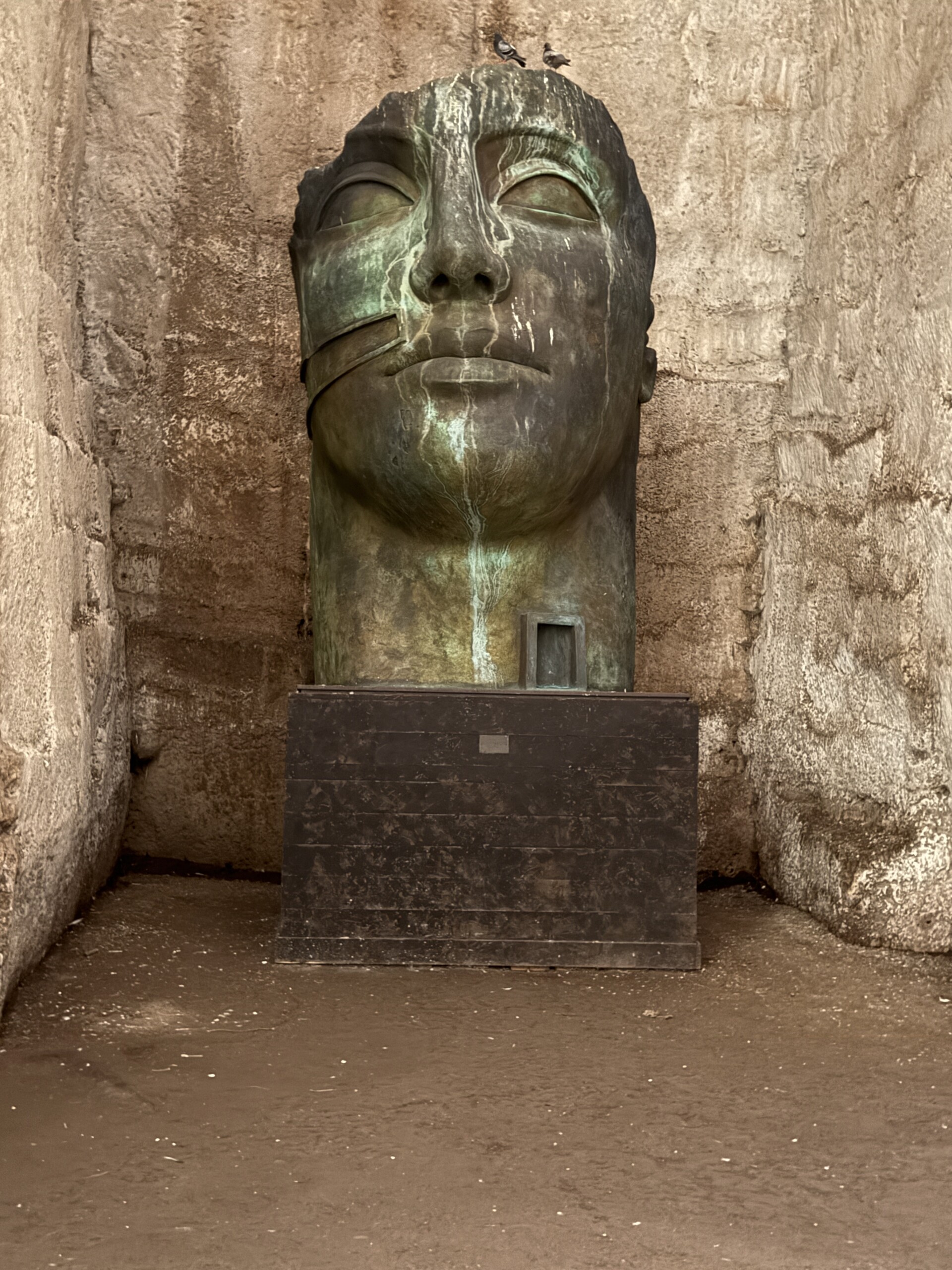
What Kathie and I found fascinating were the caves used by slaves to quarry stone to make the theaters. One cave is known as the “Ear of Dionysius” as rulers would eavesdrop on the slaves below.
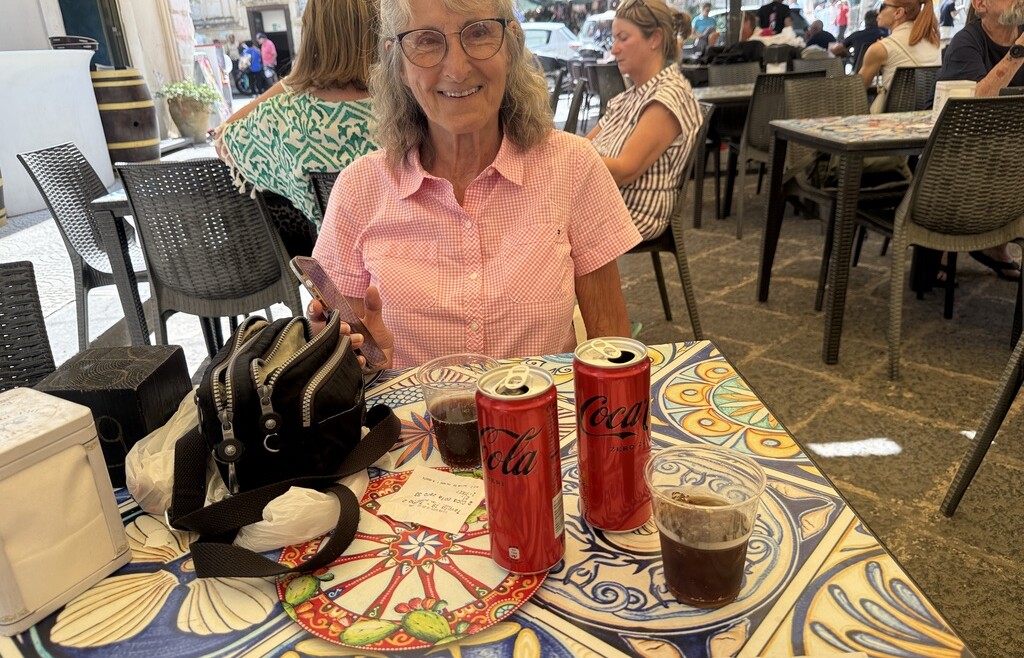
We ended our self-guided tour by having our standard sugar free Coke by the only café at the entrance. We watched as hordes of tourists and tour groups flock in.
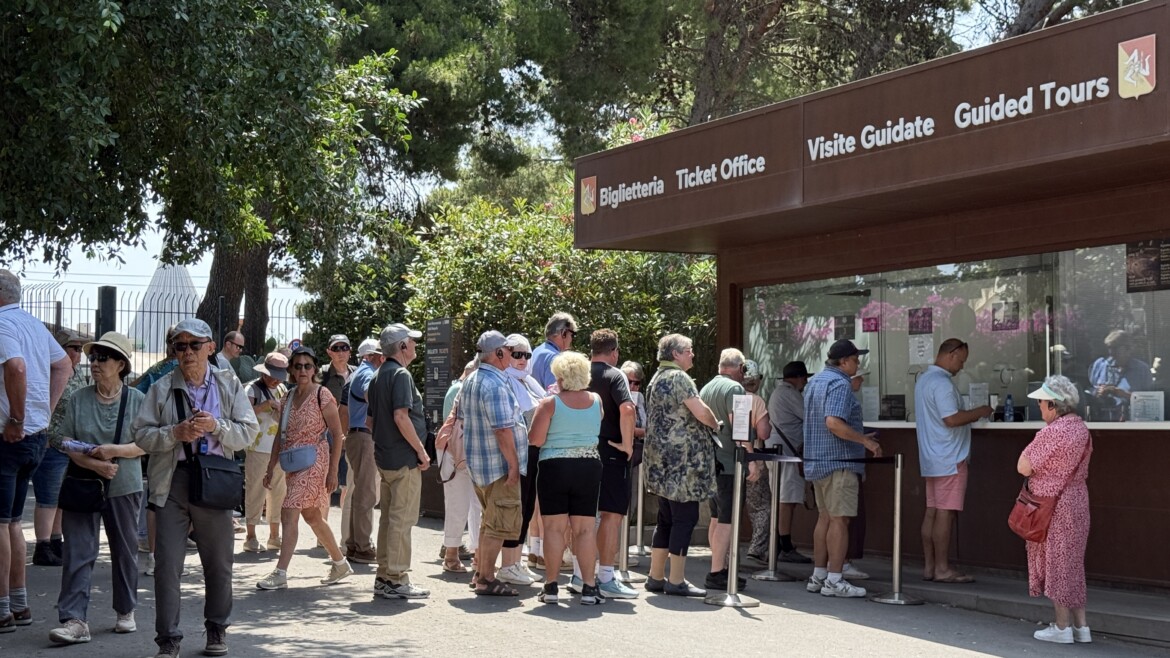
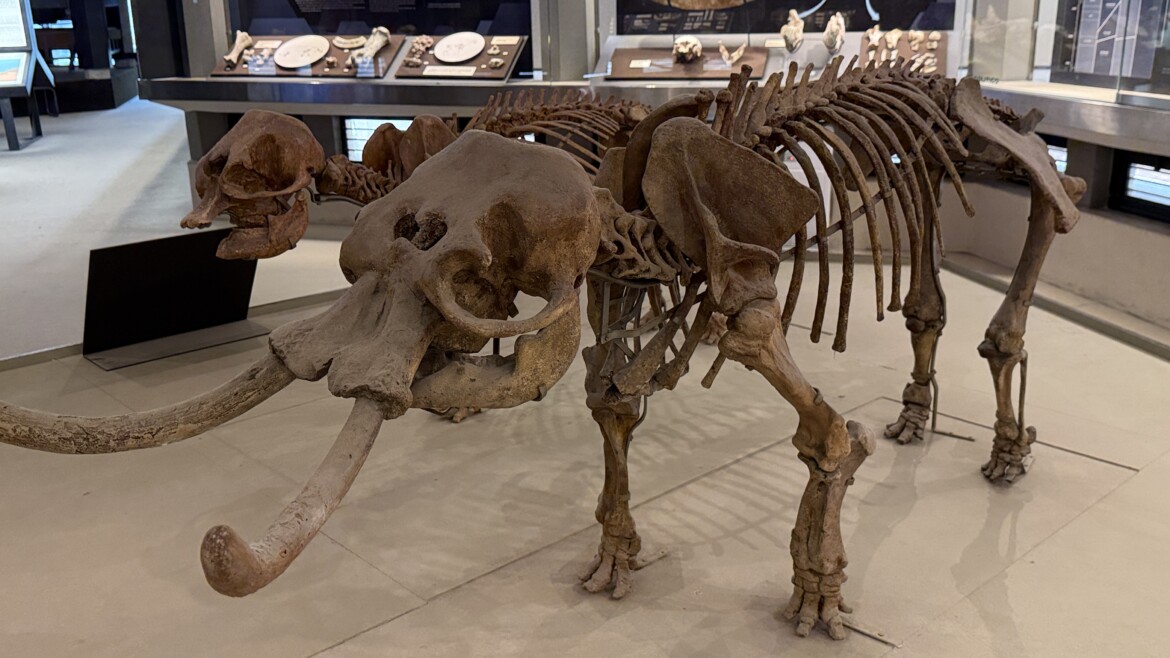
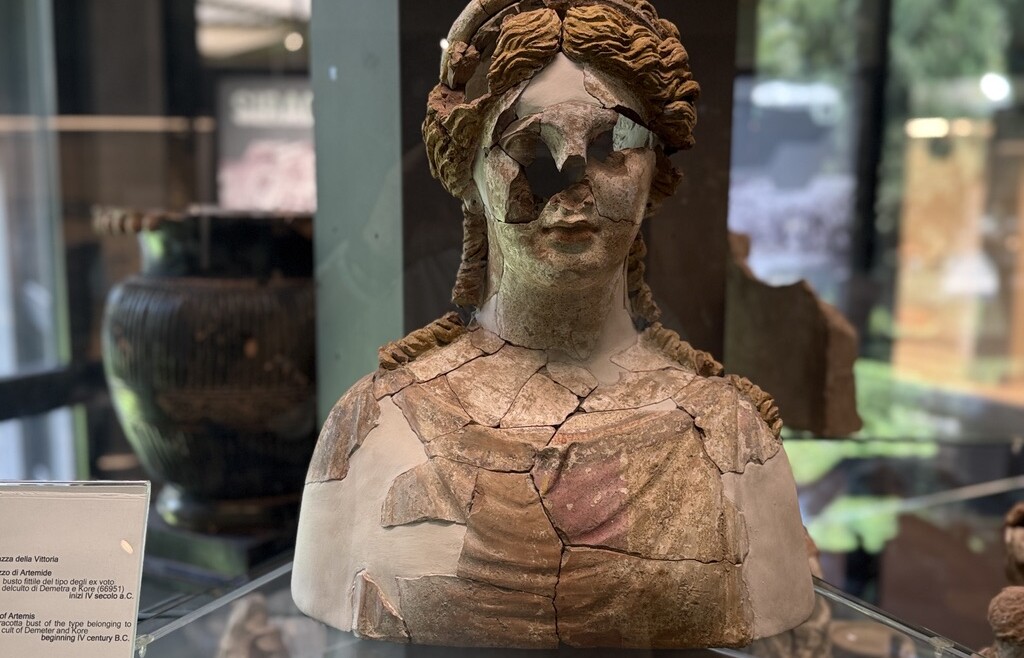
We walked the half-mile to the Archaeological Museum. In hind-sight we should have called for an UBER as it was hot. The map made the sites seem relatively close. The museum was well air-conditioned to our benefit. The two-floor museum is considered to be the finest museum in Sicily. Although, we preferred the one is Agrigento. You just can’t beat that 40-foot statue of Telamon. There were a good number of artifacts at this museum though.
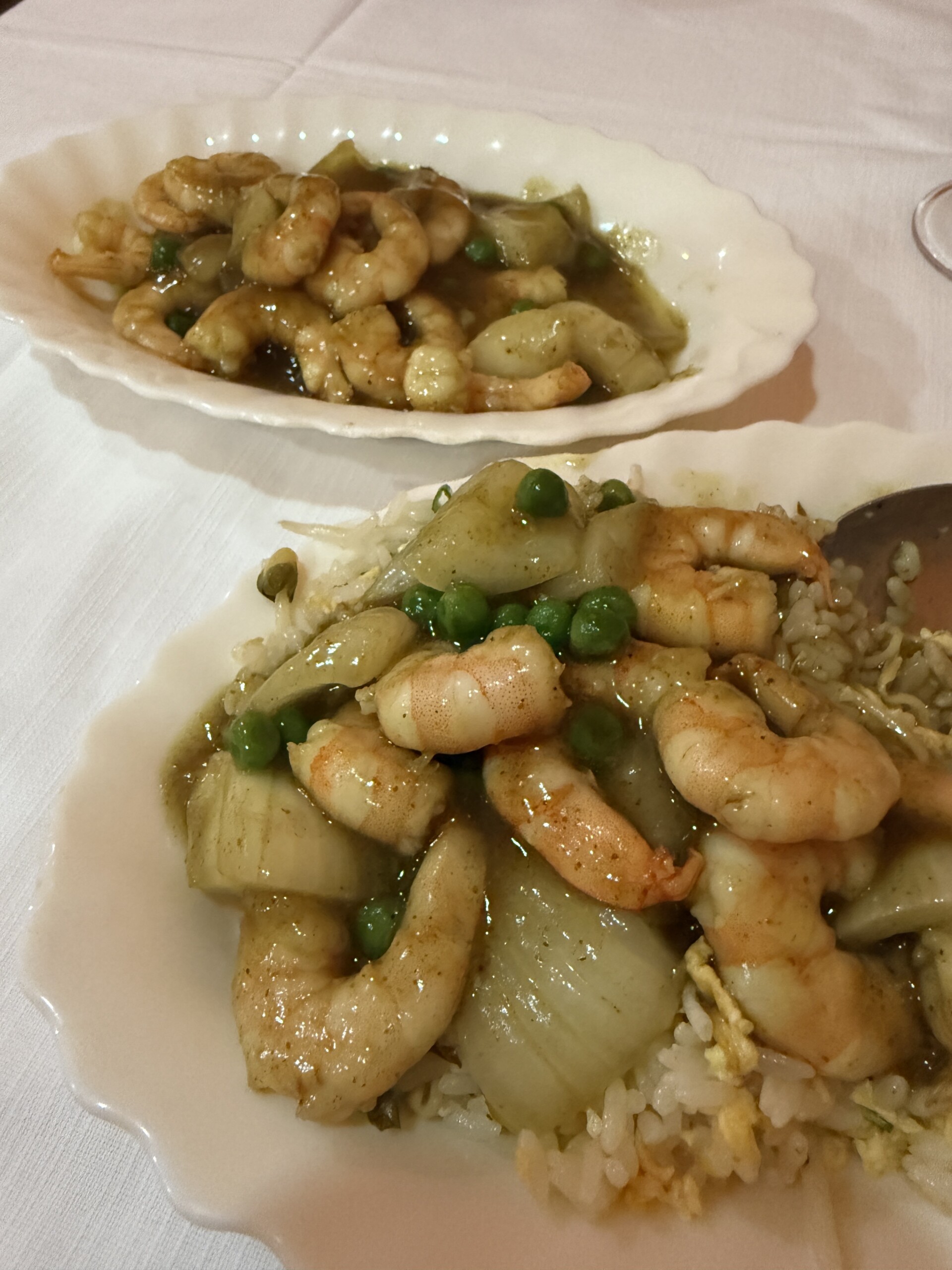
By our hotel, I found a rare Chinese restaurant. I love Asian food. After 3 weeks, I was getting tired of Sicilian food. Kathie allowed me to indulge.
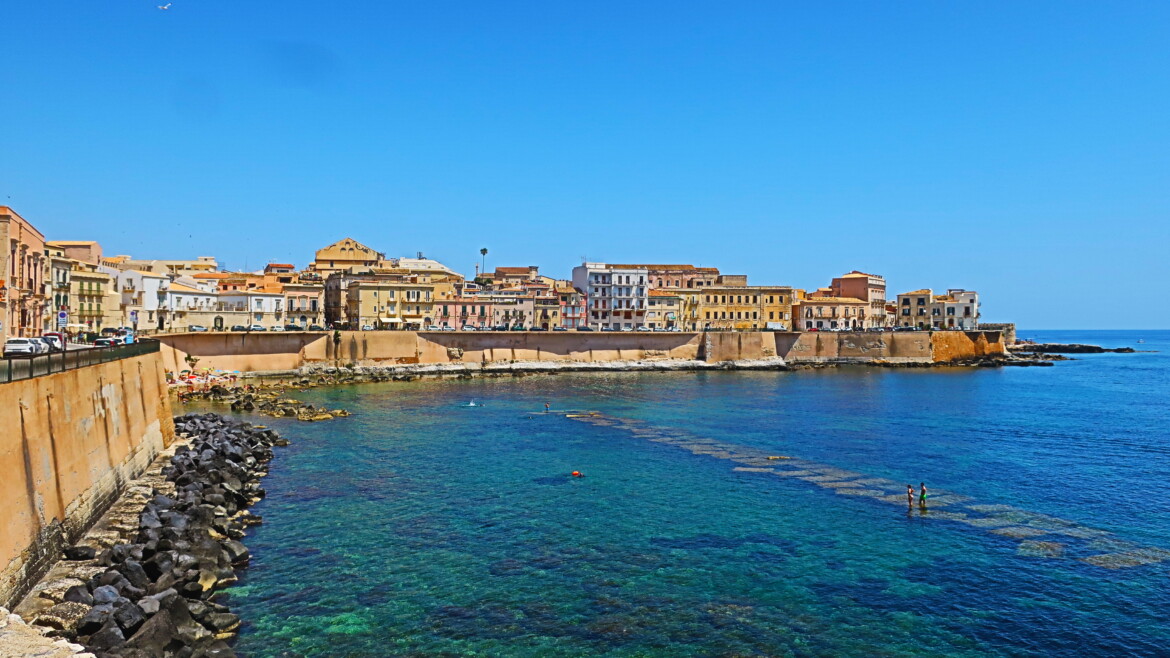
There are parts of Ortigia which are absolutely charming. We could have traveled to another picturesque village of Noto, but decided to spend our short period of time in Ortigia. You just can’t see everything.
Chapter 7 Catania “City of the Elephant” or “The Black City”
Just over an hour north of Siracusa is Sicily’s second largest city, Catania. International planes fly out of Catania as well as Palermo. Every so many years, Catania suffers from volcanic ash—hence the nickname. Just 20 miles away is Mt. Edna. Due to recent explosions, we decided to forgo Mt. Edna for a future journey. Air quality does suffer if the winds blow your way.
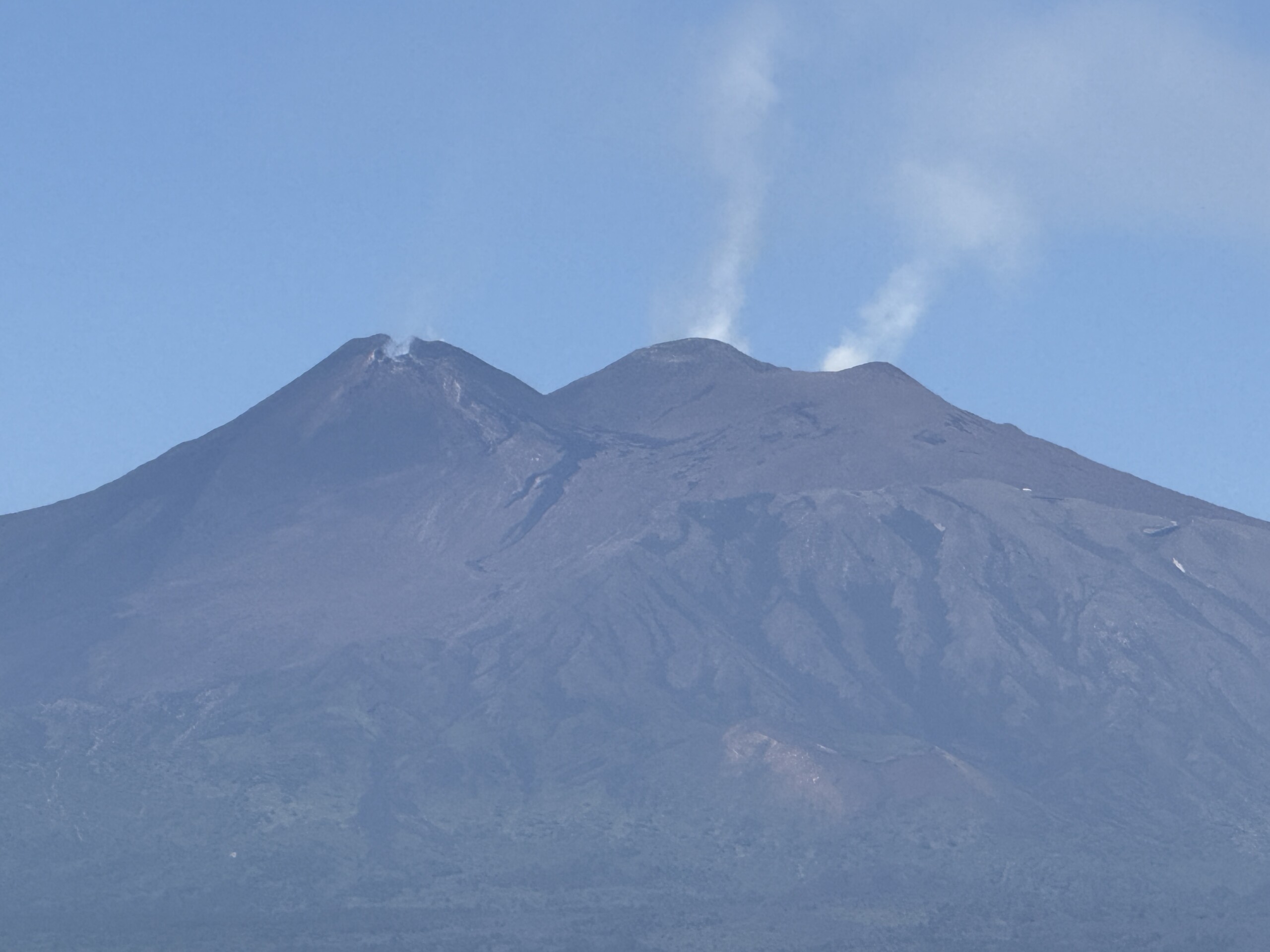
We stayed at Catania’s International 4-Star Airport Hotel. The elevator reminded us on how close we were to Mt. Edna.

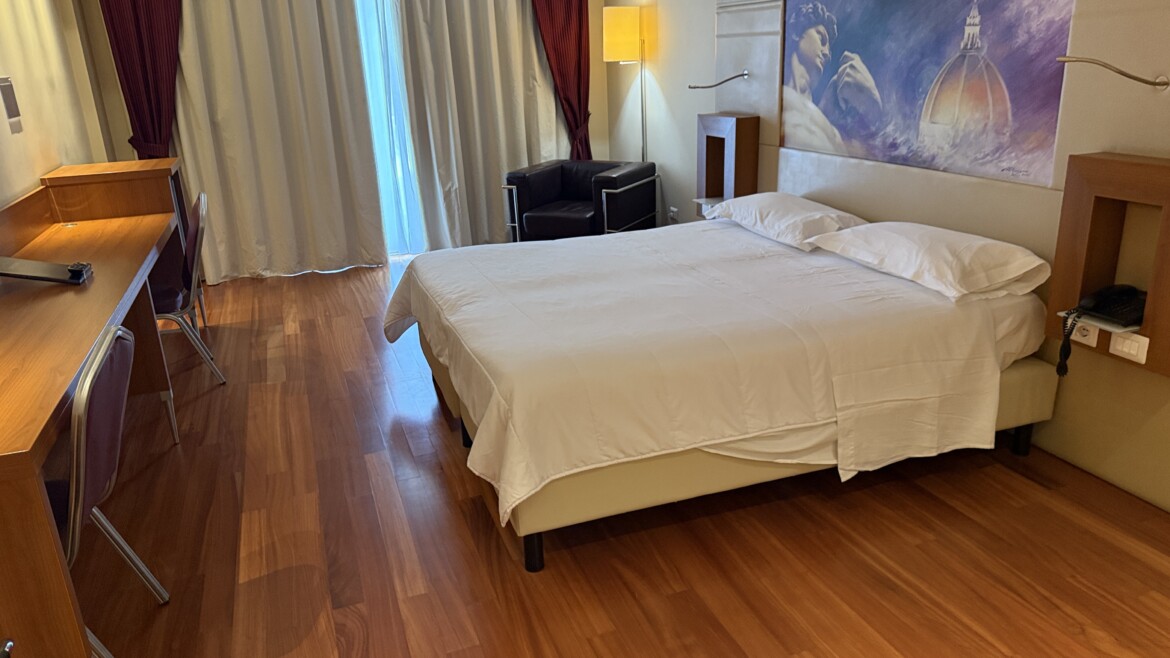
Our room was the largest we encountered on our 19 day Sicilian sojourn.
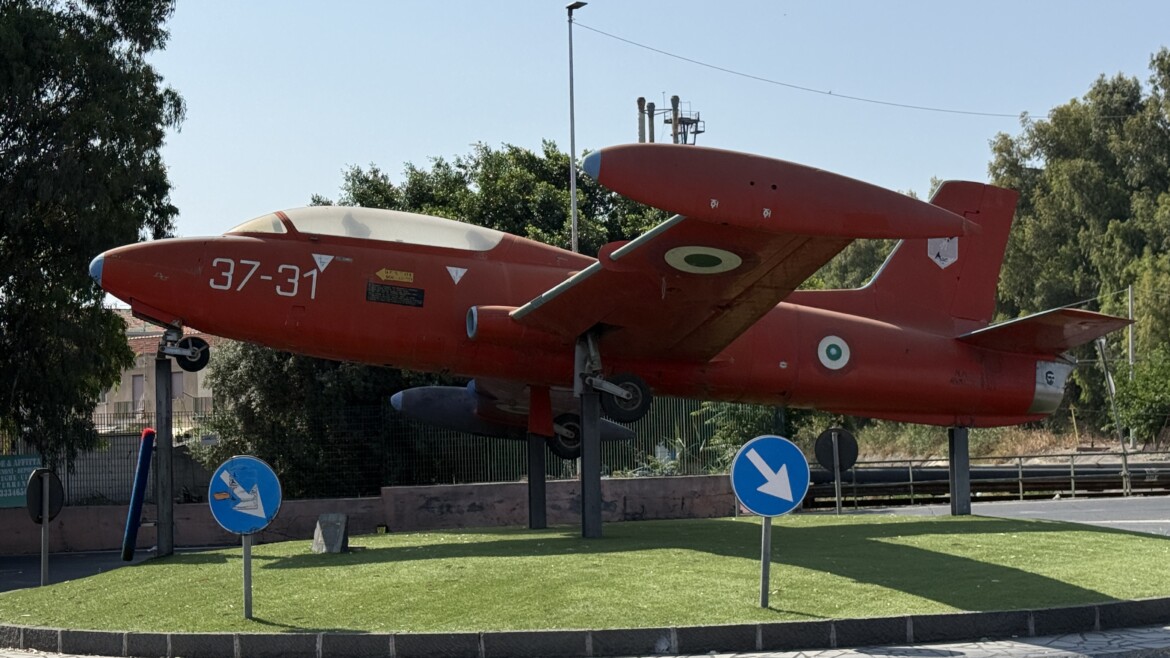
We walked down the street to view an exhibited airplane at the intersection. The history and make of the plane were not clear.
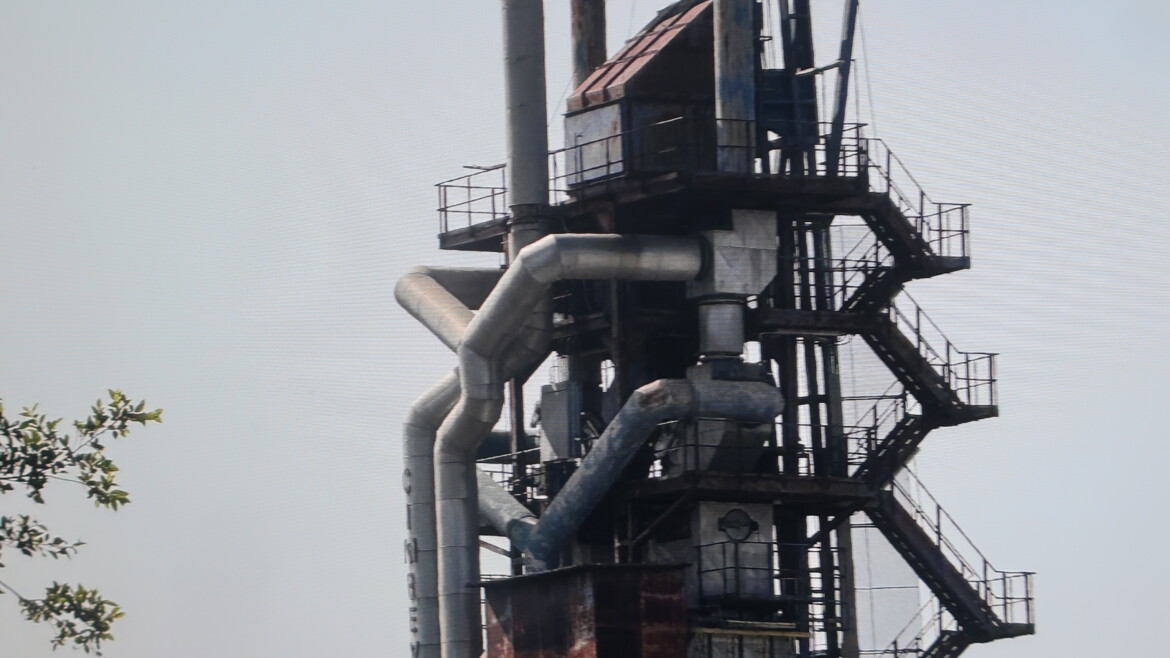
There was also an abandoned factory close by, and not too far away was a huge police academy. The area seemed rather surreal.
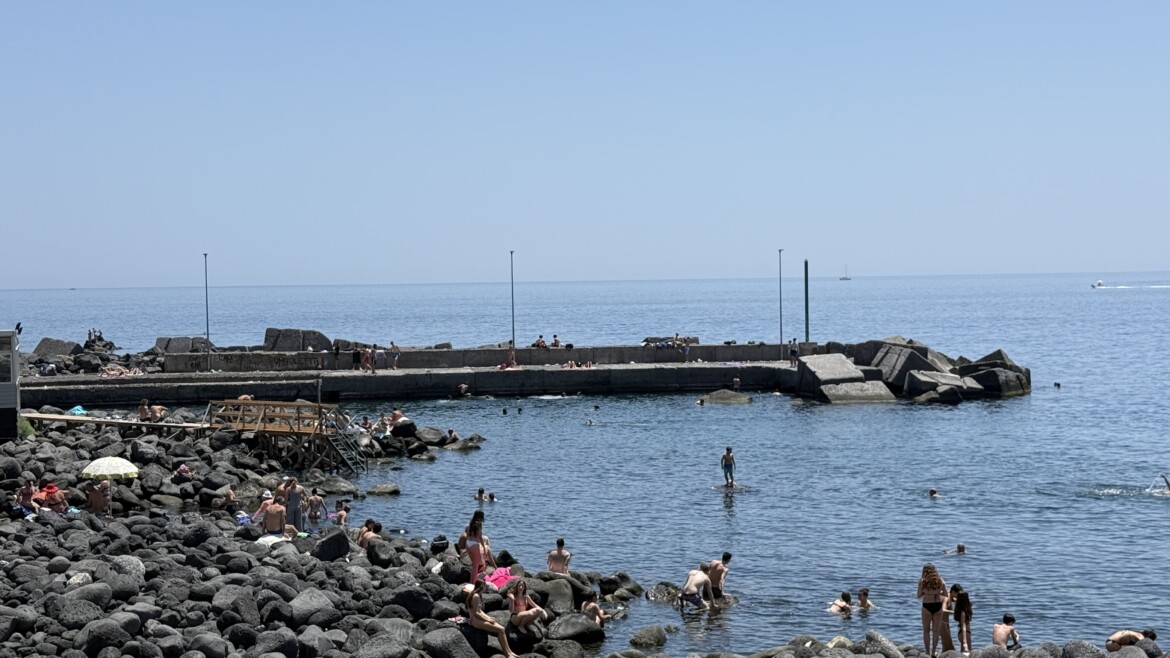
We took an UBER into down along the beach front. It was the beginning of June, and it was hot. Plenty of people were at the lava rock beaches. There is not much sand around Catania. Their situation makes me appreciate the lovely beaches we have back home in Stuart, FL.
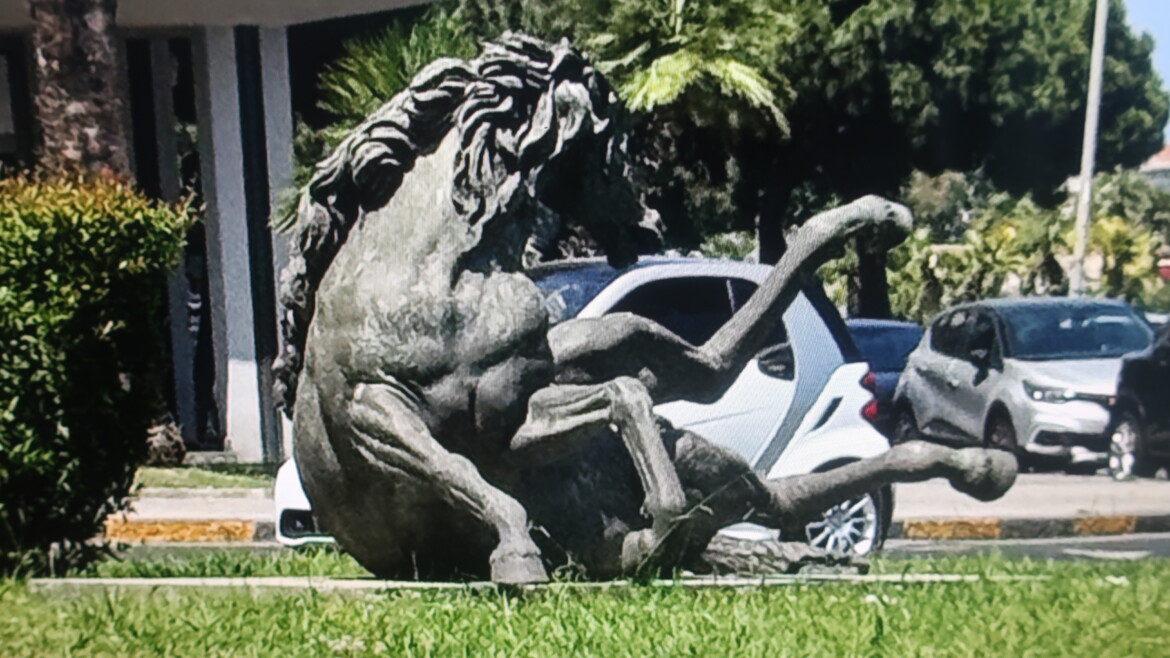
Our UBER driver took us along the coast. We were able to snap this picture of a horse. An unusual picture for sure.
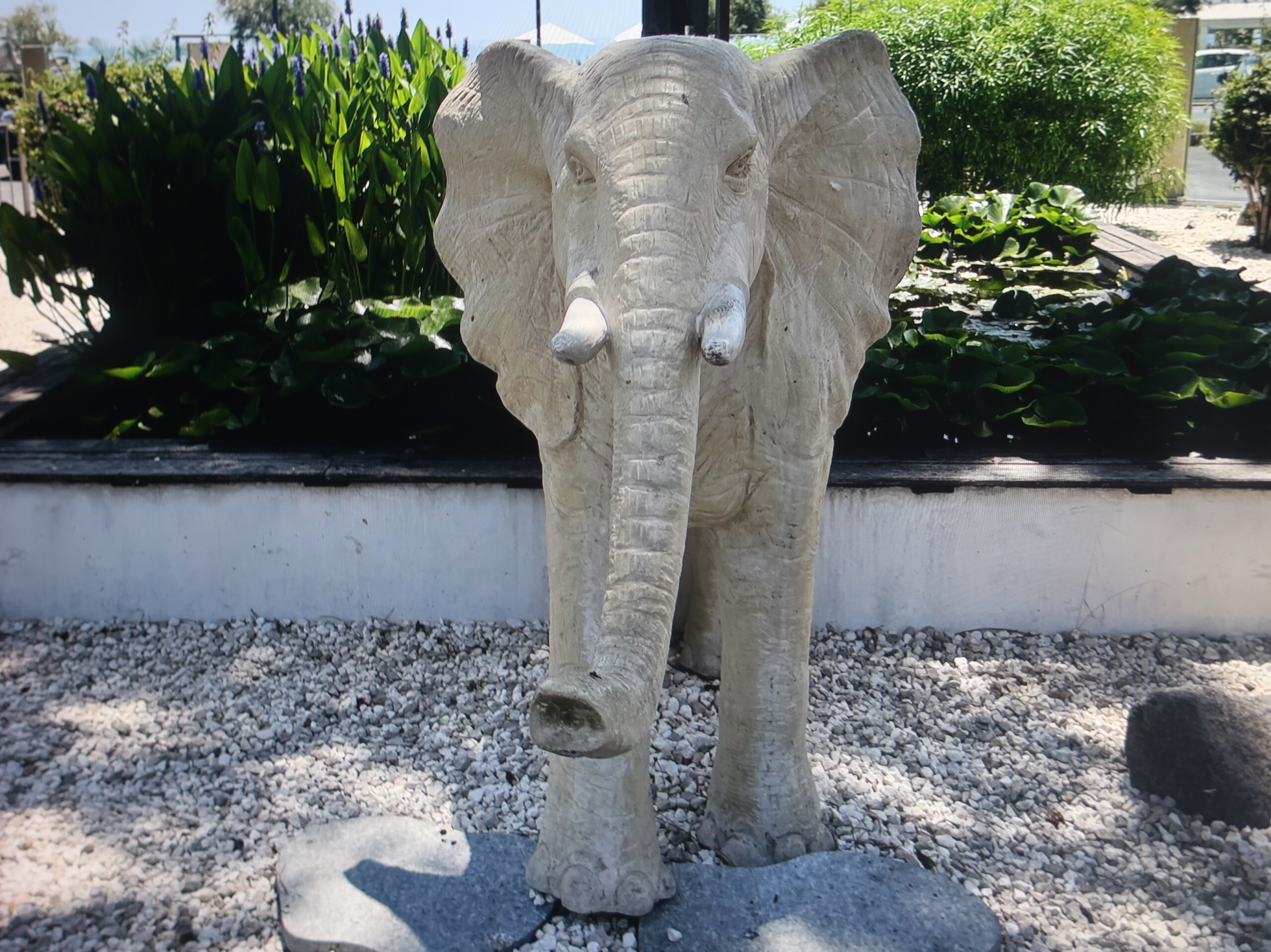
We did come across a statue of an elephant. The phrase of Catania being the “City of the Elephant” is due to its Arab roots dating back to the 8th century A.D. The Arab’s rule is quite substantial in Sicily by giving her crops of citrus, sugar cane and even rice. The Arab rule helped transform Sicily’s culture, economy and agriculture.
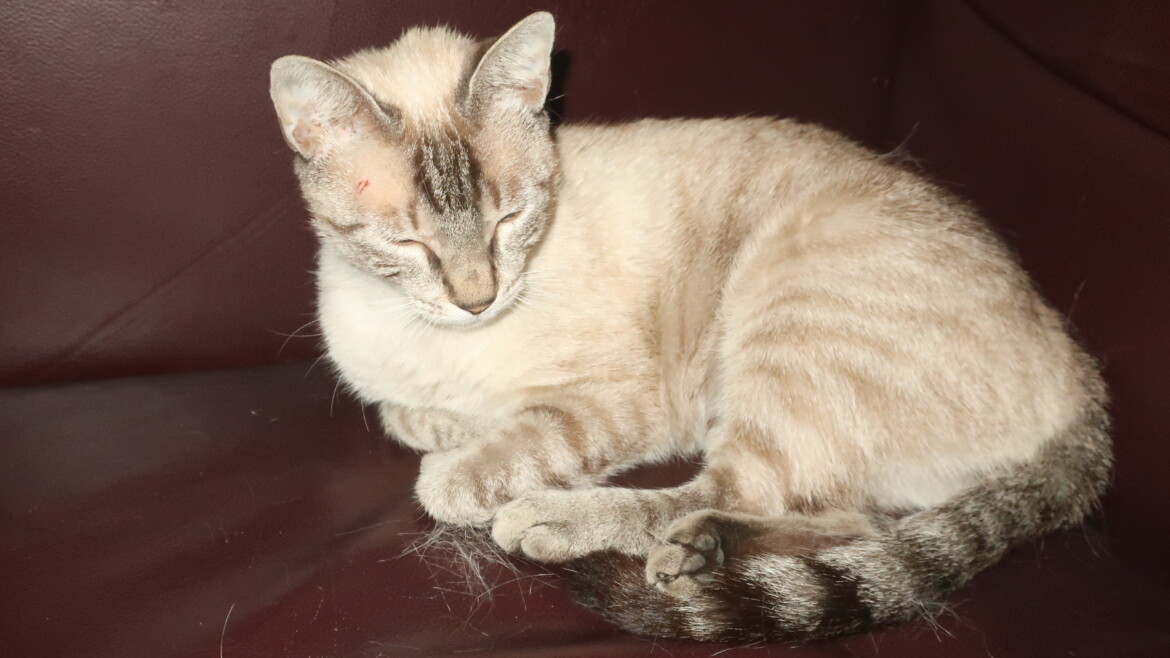
Our plane left at 7:00AM. As we were waiting for the hotel’s shuttle, we made another friend:
We had a half of day to explore Catania. We could spend 3 days here and not see everything. We would have like to have seen the WWII Museum. Nearly 3000 U.S. soldiers were killed in Sicily as the Germans fought fiercely to control the island. Today, most of those soldiers are now buried at Anzio, just south of Rome.
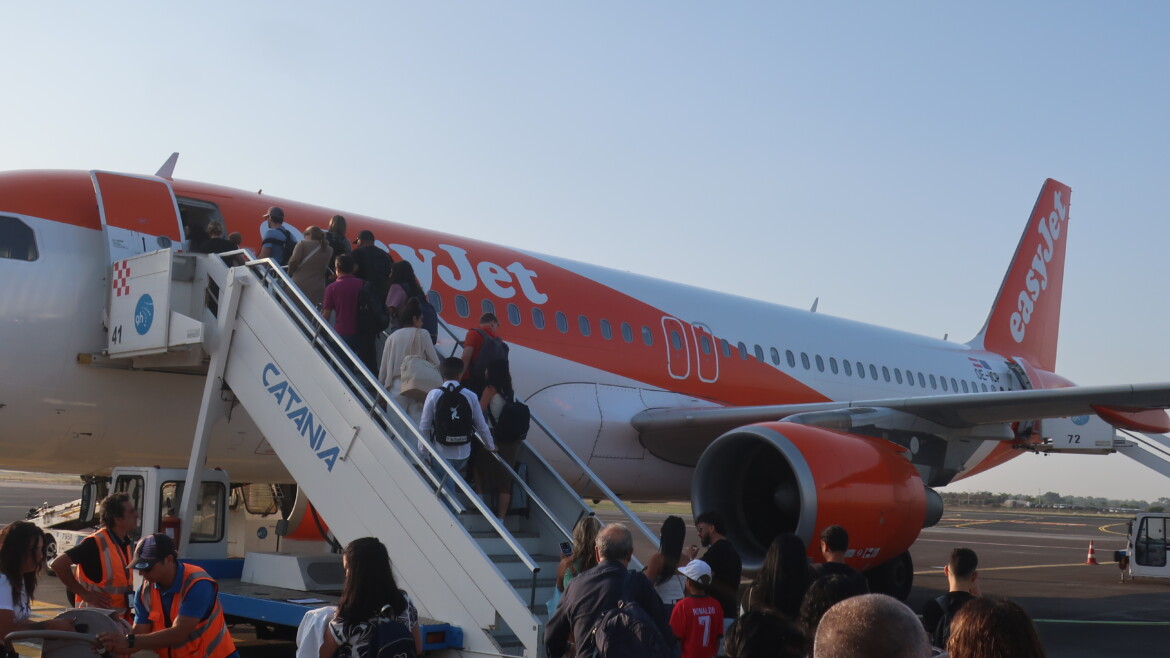
There are a number of airports in Europe and Iceland where you actually walk to or from the plane. It was our first “Easy Jet” flight to Naples. Not bad and on time. Like life itself, our 19-day Sicily sojourn went by awfully fast. We gained further appreciation not only of Sicily, but of Italy which we have come to respect and love.